Showing posts with label learning. Show all posts

23 September 2012

Finding UX, Designing UI

Rocking Reading Duck
If you want to design your school... from scratch or in reshaping... you need to begin with two questions...

First: What is the point of your school, in blunt terms, or, in more "professional" words, What is your school's ethos? Why should a child come to your school? What will your students have at the end of their time in your school which will move them toward being happy, competent, capable, passionate adults who will have real choices in their lives in the Mid-21st Century.

And Second: What is the "User Experience" of your students, and what should that User Experience be to best move all students who come through your doors to get to their goals?

Only if you answer these questions can you begin to imagine/design/create the "User Interface" - which in schools is our building, our grounds, our schedules, our curriculum, our pedagogy, and all of our rules - so that all that our "process" is contributes to our goals.

A few days ago I asked a group of elementary (primary) teachers who were wondering about their cafeteria, "begin with, what are you trying to help students learn while they are eating together in your school?"

In the user experience of "school" our users, our kids, see and respond to absolutely everything. Yes, adults do that as well, but adults, in that "the more you know the less you see" filtering, actually see/hear/feel/smell/taste far fewer environmental clues than do kids. So, when a group of American teachers told me, after I had told a story from an Irish Primary School, that "those teachers are teaching life philosophy and not just content," I responded, "I think we are teaching philosophy every minute, it just might be life philosophies we don't much like."

Kids respond to everything...

Henry Barnard, the "evildoer" who designed the American multi-classroom school as we know it, wrote that everything which students saw and did from when they first saw the school in the forming was important - that every entrance, corridor, even where a child hung up their coat was part of the educational process. And he was, in this, absolutely right. It explains why school architecture from 1850 to 1950 often mimicked the authority structures of their age, from churches to courthouses, and it explains why students were pushed to line up - to form queues - entering the school, as compliance, order, and hierarchy were being enforced long before a kid ever got to his or her seat. And why schools after World War II looked like the factories and military facilities of that age.

An hour before school - high school library, Charlottesville, Virginia
website where I found this 1960s
school image sees nothing in doors
to the outside but, "poor security"
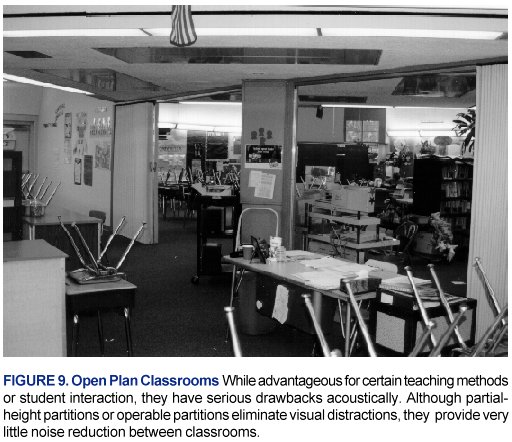
But school design and user experience have hardly ever been joined. Even the John Dewey influenced schools with all the doors to the outside of the 1950s and 1960s (really just a recall of William Alcott's ideas of the 1830s-1840s) were taken from the architects by school administrators who never asked the kids how these spaces could be used. And the "failure" of the 1970s open classroom school buildings was never a failure of architecture, but a failure of almost every adult who worked in those buildings to comprehend the idea of "user experience" - they tried to run Henry Ford's 1913 assembly line in a renaissance studio.

Simply put, the reason we find ourselves stuck in Industrial Revolution Era schools, the reason school success in the United States has only crawled from the 1850s adult design of succeeding with 20% of students to our present succeeding with 33%-40% of our students, lies in our inability to begin to match the User Experience of education to what we really want education to accomplish.

Third graders create their computer lab
So, what do we want for our children? If we want them - all of them - to grow up to be critical thinking global communicators who can investigate and succeed with the widest range of choices possible... effective citizens of democracies able to collaborate with each other and make a better world... voracious creators who absorb stories and information and use all that to dig out the problems which bedevil us and build solutions to those problems... empathetic, healthy members of a planet, a society, a tribe, and a family... well... what is the design of our schools - again, spaces, schedule, pedagogy, curriculum - contributing to those goals? and what is doing the opposite?
Working voluntarily and comfortably, in many ways
Last week we turned to our users to try to understand. We asked 500+ "elementary" school (primary, grades K-5) students - all the students of one school - to participate in a charrette to help begin to design the future of their school. We did show them a few images to begin to free them from "the understood," but we worked really hard to limit any adult influence on this work. We adults have seen so many schools, and we "know" way too much - especially about what we think is impossible - and we needed kids to show us the vision they would build with their unblinkered eyes.

We got many, many ideas - from Kindergärtners wanting cow tables and a castle with a dragon (what good is a castle without a dragon anyway?), to multiple requests for rooftop reading decks and reading treehouses, a cafeteria softserve machine, a soft student lounge, rolling science labs, movable cubes to read/work in, carpets, bean bag chairs, more outside doors, a big slide to get between the upper and lower playgrounds (ending in a trampoline or not), more art, gym every day (they currently have it four times a week), a zip line to get from one end of the school to the other, far more color - and kid-relevant color - in the school, a "giant robot bluebird which would walk the hallways saying hi to students," and choice - choice - choice...

Third and Fifth graders at work in Charrette, we had paper, and we had video cameras
they could explain ideas to...
Choice in classroom seating (or choosing not to sit), choice in tables/worksurfaces, choices in how to read books, choices in when to do what, choices in working inside or out, choices of where to play, and the choice to do work in school - with their peers - not at home with their parents.

The ideas spilled out in all directions...
None of this is absurd. None of it. Why can't kids get softserve frozen yogurt after lunch? Why can't the school build a castle and a dragon with the 5-year-olds? Maybe a zip line could cross the playground? You'd have to be a pretty weak teacher not to be able to use that in teaching many parts of the curriculum. When I mentioned the robot bluebird to Melissa Techman, one of my favorite school librarians, her immediate response was, "that's why I need those big cabinets I want so I would have all the stuff to build that kind of thing all ready."

And why can't school teach constant, continuous, internal feedback informed choice? How else can we help kids grow up into citizens of a true democracy, and able to make choices which work for them as adults?

Fifth graders eat lunch and debrief the ideas - "what will grownups say no to, and
how do we argue with them?"
Essentially, if I took in the vast amount of ideas and grouped them quickly - they wanted choices, comfort, warmth (many requests for wood floors), the ability to be outside, better lighting (dimmer switches, lamps), and places to both work together and to get away to quiet. They wanted to explore the world not just read or hear about it. Plus they wanted a school that was fun and that they looked forward to entering every day.

Anything radical there? Anything which really isn't part of our kids learning how to be the mid-21st century citizens and humans we want them to be?

Our next steps seem like a curriculum built in a great dream - some kids will inventory the school and grounds - what do we have now? how do we use it or not? Others might label the trees and plants around the school. Some might consider how a swing becomes a place to teach physics and math and perhaps poetry and decide how that might work. Still others might work over the idea of what might be quick, and what takes big resources and thus more time, along with what might be easy - and what might be very hard.

And we think the end result will be a better school, better learning, and kids with more skills and more capabilities. Which is what we want our user interface to help create, right?

- Ira Socol

02 February 2012

Textbooks and Encyclopedias and Lectures, Oh My

When I first met Dr. Rand Spiro, the man behind Cognitive Flexibility Theory, he launched an attack on Wikipedia. So, my initial reaction was,"not again." But as I listened, I realized that he was not against the crowdsourced authorship, or anonymous authority, and, in fact, he was a bit more positive after I introduced him to the "Talk" pages, what Rand was complaining about was the recreation of the Encyclopedia format.

Why, he wondered, would we reproduce this first century (AD) form in this age? Couldn't we envision anything better? Yes, Wikipedia is crowdsourced, and thus both more accurate, more diverse, and more updated, but it remains a work constructed on the oldest of classification systems.


The machine is us, Michael Wesch
Digital Learning Day 2012, and I found myself back in 1996. "WASHINGTON -- Hardbound textbooks could go the way of slide rules and typewriters in schools. Education Secretary Arne Duncan and Federal Communications Commission chairman Julius Genachowski on Wednesday challenged schools and companies to get digital textbooks in students' hands within five years. The Obama administration's push comes two weeks after Apple Inc. announced it would start to sell electronic versions of a few standard high-school books for use on its iPad tablet." In 1996 I was working with a high school librarian on developing ways to teach students about search strategies. This was, in historical perspective, at a point just before Larry Page and Sergei Brin would write:
"Some Rough Statistics (from August 29th, 1996)
Total indexable HTML urls: 75.2306 Million
Total content downloaded: 207.022 gigabytes
BackRub is written in Java and Python and runs on several Sun Ultras and Intel Pentiums running Linux. The primary database is kept on an Sun Ultra II with 28GB of disk. Scott Hassan and Alan Steremberg have provided a great deal of very talented implementation help. Sergey Brin has also been very involved and deserves many thanks.
-Larry Page page@cs.stanford.edu"

"You've got mail" The AOL home page
So, early in the process, when Page and Brin's Stanford predecessors were dominating 'web search' with Yahoo! which was, of course, a huge leap from what America On Line was offering. There were actual search engines back then, the dominant one being AltaVista, and we needed to explain to students the difference between a "web directory," Yahoo! and AOL, and a search engine such as AltaVista, Lycos, Excite and even a "metasearch engine" like dogpile. Directories were like physical libraries, we explained, curated collections organized into categories, while search engines represented something entirely new. We asked kids - high school freshmen - to find cars they could buy, finding prices, reliability reports, etc, and we asked them to try both routes.

The search engine was radical in 1996. It opened up a new kind of library, a library without walls, without curation, without limitations. And it was uncomfortable for many, including those who built Yahoo! (and who have never quite recovered). But the search engine is not new now, and I think it is time to embrace what Michael Wesch at K-State has been talking about for years, that the end of the Gutenberg Era gives us dramatic opportunities to re-think.

 
"They put the shelf back" - Michael Wesch in Information R/evolution
The future is not what you think...

And not just the distant future, the near future. I'm always amazed that Sears shut down their catalogue operation the year before Jeff Bezos founded Amazon. One group of corporate whizzes saw home delivery as a thing of the past, and some guy out in Seattle thought it was the future. The F.W. Woolworth (the original "five and dime") chain shut down its US operations just as "Dollar Stores" were exploding. General Motors axed their high gas mileage small Corvair (with the encouragement of Ralph Nader) just before the Arab Oil Embargo made gas mileage the number one issue for car buyers. We needn't even include the legendary Time-Warner/AOL merger...

We probably cannot expect a better track record from education leaders or politicians than we've gotten from our highest paid capitalists, of course, but we do need to challenge the decisions which are made which seem targeted to the past. And right now in education we seem to still be investing in the past in huge ways... in textbooks, in lectures, and in the teaching wall. The only reason we're not investing in encyclopedias is that now, that's free, though we still have those who oppose even that tiny change.

it is time to re-think education and what we can do with technology
The idea that the best use the US government can imagine for a digital device is to reproduce a 15th century format with a couple of 3D animations is sad, though hardly surprising. Apple is just the latest organization to try to rip off schools embracing textbook delivery. "In the early 1900s, textbook purchasing at the local level was notoriously corrupt," many scholars have noted, discussing all who profiteered at the expense of that early 1:1 initiative. That the best way to spread "ideas worth spreading" is by lecture and PowerPoint, seems equally unfortunate. That the best way to re-imagine the classroom is with an incredibly expensive projector system which reinforces the "teaching wall," is, surely, horrifying. But if you don't have a teaching wall, where will all those "sages-on-the-stages" stand? (science of school room re-design?)
Revolution doesn’t happen when society adopts new technologies - it happens when society adopts new behaviors. - Clay Shirky, Here Comes Everybody, p. 160

I visit many schools that have 'new technologies,' but not enough of them also have 'new behaviors.' It's time for us educators to raise our game (leaders, I'm pointing to you first). - Scott McLeod.
There are better ways to do things like textbooks, free ways for teachers, or better, students, to assemble information. And these should be allowing us to fundamentally consider new ways to assemble information, rather than a pre-cooked, pre-arranged text.

CK12
Flat World Knowledge
California Open Source Textbooks
MIT OpenCourseware
Stanford on iTunes
Michael Thornton's Third Graders build their own Textbook in LiveBinder

And there are better, more interactive ways, to "spread ideas" than putting someone on a stage to talk, uninterrupted, for 20 minutes. And better ways to use projection technology than reinforcing the traditional classroom. When I spoke, two years ago, to Glenn Vos, a Christian school superintendent in Holland, Michigan, "he talked about rebuilding classrooms so there was no "front" anymore. He talked about wide hallways where students could gather. He talked about attendance policies which allowed students to sign into classes from elsewhere in the building if that made them more comfortable. He talked about multiple projection screens in every classroom to break "single focus learning." He talked about dropping text books for authentic materials and the acceptance of multiple - and student chosen - ways of demonstrating knowledge."

PowerPoint, circa 1958
If  we do not alter our expectations for how we expect new technologies to be used, they will be used like old technologies. PowerPoint becomes FilmStrips. Computers become typewriters. IWBs become chalkboards. And the tablet form becomes a way to enrich corporations.

We need to seize the moment, when moments like this come. We need to break the bounds enforced by old technologies, not reinforce them. So, let's forget "the textbook," they were probably wronganyway...

- Ira Socol

27 July 2010

Of Cognition and Memory, Technology and Cities, Learning and Schools. Part I

Byzantium. Cities became the engine of human progress
because they were places where diverse voices met...
an early technological clash point - incoherent languages,
customs, and world views.

A couple of years ago I wrote a long, strange "paper" titled Literacy (as) Tyranny. Let's start here with a long quote:
"This focus on privileging one form of literature, one form of communication, can only be maintained by one of two philosophies: A belief that human communication forms are static, or, a belief in a steady trend of human progress in human communication forms which reached its apex in 1900 in northern Europe and the United States and which must be preserved as static now.
'“Technology is frequently held to be transforming social relationships, the economy, and vast areas of public and private life,” David Buckingham says. “As Carolyn Marvin (1988) has indicated, such discourses have a long history. She shows how the introduction of electricity and telecommunications in the late-nineteenth and early-twentieth centuries was both encouraged and challenged by discourses that attributed enormous power to technology. … The telephone, for example, was celebrated for the way in which it could make business more efficient and facilitate more democratic forms of social life, yet it was also condemned for its disruption of intimate relationships and its unsettling of established social hierarchies.”[1]
"Technologies are assigned either magical powers – socially transformative, liberating, democratizing – or they are viewed as demonic threats to established social structures and hierarchies. But in both arguments there is a strong sense of technological determinism. “[T]echnology is seen to emerge from a neutral process of scientific research and development, rather than from the interplay of complex social, economic, and political forces,” Buckingham adds. “Technology is then seen to have effects—to bring about social and psychological changes— irrespective of the ways in which it is used, and of the social contexts and processes into which it enters.”[2]
"Technology, however, rarely arrives without a societal need. The ancient Greeks and Romans both had steam engines, but without a societal function, these essential tools of the industrial revolution were simply toys. The French Second Empire had fax machines but no interest in fax machines. The idea vanished for over a century. Would Gutenberg’s typesetting system have been such the grand success it was without the concurrent rise of the Reformation? Would railroads have been developed prior to the need to transport coal?
"So technology succeeds because it fills an apparent cultural void. And culture responds to the technology by transforming around the new technology. Various genres of writing grow, and the percentage of literate citizens grows, and a religion based on written text develops – then – movable type appears to support those developments – then – using this new technology, new genres of writing grow and literacy expands and changes. Fiction, supported by the printed text in ways poetry – with its oral tradition – is not, outstrips the older form. People learn to write novels and they learn to read novels. The success of novels produces other forms of writing – the beginnings of journalism. These new forms of writing and reading create the need for machine made paper, rotary presses, the linotype machine. And as these new forms of writing – in this case journalism in particular – grow, the need develops for rapid communications, and the telegraph, telephone, and radio are developed, along with even newer forms of representation, photographs and films.
"At each step education tends to lag behind, teaching the prior technologies and prior communication forms."
Information and Communication Technologies (ICTs) change, and these changes change cognition - both individual and community. Once you saw cave paintings, story telling often needed more than words. Once you saw a photograph, paintings didn't look quite so real [3]. Once you watched a newreel, you wanted a different level of proof before fully believing an event occurred. Once you saw live television coverage - think of the Kennedy Assassination and especially the murder of Lee Harvey Oswald - your concept of transmitted reality shifted.

But there is much more. These changes, in turn, change the ways in which we communicate, again, both as individuals and as a community, and change the way we remember, including our collective memories. Those changes in cognition and memory alter information and communication norms in a way which demands new technologies...

Yes, let's begin there. It is not a straight path, of course, and not a stairway. Its more like something out of Mailer's The Naked and the Dead, we're going round and round this rocky mountain, with plateaus and cliffs and lots of places to fall.

Edison film of the Boer War

But along the way things change. This began with the invention of technology number one: language, and technology number two: art. It accelerated when humans first broke tribal boundaries and began to occupy trading cities, where differing technologies (types of languages, types of art, and thus, types of world views) met and collided. There, in those cities, the need for new types of boundary crossing ICTs sped the circle up further. And humans moved through all kinds of technologies, from memorized Greek drama to Egyptian architecture and hieroglyphics to Assyrian seals and Hebraic scrolls, to Opera and Gutenberg's mass printed books. Each technology altering us as we used it.

In 19th and 20th century terms, you can't have John Dos Passos[4] without the cheap newspaper and the phonograph. You can't have Jack Kerouacwithout Dos Passos. But then Kerouac demonstrates (literally) the limits of the page, which is also demonstrated by television and the teleprompter, which then makes the Word Processor essential, which...

And in each of these cycles our entire way of visualizing life, the universe, our experiences, and our memories shift. Did Napoleonic War vets remember battles as newsreels? as paintings? as poetry?

Now, lets give "our field" the benefit of the doubt. Let's say that lots of schools are trying to get themselves current. People are going to Google Teacher Academies and iPad Academies and Intel Academies and EduCons and all, but these are catch up. We know they're catch up because they are almost always tied tightly to the present through their corporate sponsors. So, even if the tech is current, the cognition we're imagining is what led to that tech... in other words, we're back in the 1960s with Tom Wolfeand the modern origins of blogging, and the 1990s and the emergence of AIM.

Today, of course, our technology allows everyone to live in big complex cities. We can all meet globally. We are all impacted by the vast amount of information pouring in. Wherever we are we have more data coming at us than if we were standing in the middle of Times Square. And that is forcing a rapid change in cognition, communication, and memory.


Not everyone joins in, of course. There are people in New York who still speak Ukrainian. There are Americans who only watch FoxNews. There are Brits who hide away with The Mirror. None of this is new. American Mormons walked a thousand miles to hide out with their own kind in the 1840s. English Calvinists fled the Netherlands and religious pluralism in the 1620s. At every technological and cognitive turn there have been dissenters, and yet, things keep changing anyway.

And they will continue to change. We may not know the direction, but we know change will happen.

So, what would it look like if we're enabling the next instead of the present? Even concretely. So, lets face it, whatever I or anyone else says, tablets, iPads, laptops are transitional technologies. What happens to cognition, and to collective memory, when every student at every age has their phone in their hand linking them universally and able to connect both intimately and via projection? To look through augmented reality. To ask any question of anyone? These are actually present, if not yet ubiquitous, technologies. As they appear, and cognition changes, in, oh, 3 years, what do we, as educators do?

What happens to our teaching? Our spaces? Our curriculum? Do we really teach state history anymore? How many languages do we use and translate? Forget the "no teaching wall [pdf]," is there even a "teaching floor" - and what does that mean? Obviously age-based grades vanish... subjects? yeah, those too. But we're still not "there." The very notions of the "student" and the "teacher" are obviously altered. As information becomes more free, expertise becomes more distributed [5][pdf, and yes, trustable] and the controls of grade-level-expectations, standardized tests, and text-books become laughably irrelevant. Does our fixed time schedule - hours, periods, days, semesters - survive?

Is it possible to imagine a school which prepares students for their future? Which operates with, and builds skills for, the flexibility which humans require if they are to succeed when the world changes?

Can we imagine that? Can we train for it? Can we begin to implement it?

I'm asking because we need to do better. I was horrified this past weekend when I watched a University of Phoenix advertisement. OK, yeah, but... after promising this entire new concept of education, the ad ends with a Phoenix graduate teaching a primary school class that is absolutely traditional.


And talking about "how the world works now" is simply not enough. Because when our kids graduate, the world won't work that way anymore.

- Ira Socol

Comments are desperately sought, Part II (and further) depends on the conversation...

[1] Buckingham, D. (2008) Introducing Identity. In Youth, Identity, and Digital Media. MacArthur Foundation paper. p. 11
[2]
Buckingham, D. (2008) Introducing Identity. In Youth, Identity, and Digital Media. MacArthur Foundation paper. p. 12
[3] See Jonathan Crary (1992) Techniques of the Observer: On Vision and Modernity in the 19th Century
[4] "Whereasthe Congressoftheunitedstates byaconcurrentresolutionadoptedon the4thdayofmarch last-authorizedthe Secretaryofwar to cause to be brought to theunitedstatesthe body of an American whowasamemberoftheAmericanexpeditionaryforceineuropewholosthis lifeduringtheworldwarandwhoseidentityhasnot beenestablished for burial inthememorialamphitheatreofthe nationalcemeteryatarlingtonvirginia

"In the tarpaper morgue at Chalons-sur-Marne in the reek of chloride of lime and the dead, they picked out the pine box that held all that was left of

"enie menie minie moe plenty of other pine boxes stacked up there containing what they’d scraped up of Richard Roe

"and other person or persons unknown. Only one can go. How did they pick John Doe? . . .

"how can you tell a guy’s a hundredpercent when all you’ve got’s a gunnysack full of bones, bronze buttons stamped with the screaming eagle and a pair of roll puttees?

". . . and the gagging chloride and the puky dirtstench of the yearold dead . . ."

[5] See James Paul Gee (2007) What Video Games Have to Teach Us About Learning and Literacy

17 April 2009

Learning Video Games and The Cost of Failure

I often hear some variation of these two quotes coming from teachers and school administrators, and even parents:

"He can spend hours learning a video game, how come he can't do the same in school or with homework."

"He pays much more attention when he is interested in something."

Yes, these are "duh" quotes And these are part of a ridiculous, if typical, search for a way to demean children by pointing out that they are disappointing "you." But they are also symptomatic of why schools fail.

Schools fail because they do not connect learning to the learner. And schools fail because they have made the cost of a student's failure so high, that most students will simply not try. and all but a very few (the ones who would do fine without school) will choose to never "take a chance." And schools fail because they make student failure public and permanent, stopping students who otherwise might persist in their learning.

Why do kids learn video games so easily? Why do they persist in the task of learning the game far beyond anything they do in school?

I'm not here (right now) to talk about video games in education, that's a different idea. Instead I am, like James Gee, talking about what schools can learn from video game learning.

What do video games do?

The learning is self-directed. When a kid sits down in front of a video game he or she is in charge. They make the decisions in the game. They accept the consequences. They take breaks when they need to. They don't have to stop when a bell rings. They make themselves comfortable. They collaborate if they want and compete if they want.

There are no age-based grades in video games. It is fully accepted that a ten-year-old might be ahead of a 16-year-old on this game or that, and that the 16-year-old (or 30-year-old) can learn from the ten-year-old. In the world of video games all are teachers and all are learners.

There are multiple paths. Every good video game allows you choices, empowering the learner. The fastest route might not be the best route, or, at least, might be no better than others. You can choose different weapons, different strategies. How different than textbooks or the dreaded "middle school planner."

Speed of learning is never an issue. So it takes you five days to get through level five but only two to get through level six - no one cares. You are neither behind, nor ahead, you are doing it as you need to.

The learning begins with interest. Video games are (well, good ones) interesting. They are also varied. And learners choose what to play. They (for the most part) might be teaching the same things, but you enter through your interests - cars, spies, World War II, wild fantasy worlds. "He pays much more attention when he is interested in something." Duh. Don't we all? (Funny, I can do sports statistics and had no problems with architectural engineering courses, but totally struggle with academic maths and statistics - there are paths of interest, and there's the route to boredom.)

Video game learners collaborate and scaffold each other. "Let me show you." "Here's how you do this." There is an amazing amount of peer-tutoring in person and online. In school, of course, we usually call this "cheating."

Failure can be private. The video game does not call on you to publicly humiliate you. You can be public or private as you choose. Thus practice "costs" much less in social terms.

Failure has almost no cost. What's the worst thing that can happen? You die, either dramatically or in a cool explosion. The game doesn't send a note home or call your parents. The game doesn't yell at you or separate you from your friends. When the cost of failure is low, humans are willing to try again. Raise the cost, and people stop trying. Example, you try to climb a fence and fall, getting a scratch: You'll try again. You try to climb the fence and get a massive electrical shock: You won't try again. Simple psychology. If Edison had tried to develop the light bulb in school, he would have been labelled a failure after the first 50 filament failures, and we might still be lighting gaslights.

In other words, learning in video games is opposite - in almost every way - learning in the traditional school. So, if students are learning, and persistently working on learning, with their games but not in your school, you might want to spend some time considering why this is.

- Ira Socol

19 February 2008

The Instant Anachronism

I can always get myself into trouble - given half a chance. And so last week I picked up a free copy of the Lansing State Journal while eating lunch in the International Centre at MSU and came across a column complaining about the high cost to students of having to buy multiple "clickers" (Student Response System remotes) for MSU courses. I read it (I've included the full column below), finished my "Panda Bowl" (contains no actual panda), went back to my office and quickly - always too quickly - emailed a response to the column's author. Which - in turn - created a Saturday column by the same author quoting me and demanding answers to my concerns from university administrators.

Here's my email:

"Your column today on classroom clickers at MSU was depressing. Once again we find a Michigan educational institution wasting vast sums of money (the taxpayers' money and the students' money) by embracing already antiquated technology in pursuit of antiquated teaching practices.

"
Everything that a "clicker" can do, can, of course, simply be done by embracing the mobile phone and text message capabilities almost all students carry with them. This kind of sophisticated classroom interaction via the mobile phone is in use in many nations, either by using basic text-message capabilities or through small bluetooth receivers attached to instructor computers. These systems can, however, do so much more - allowing things other than guessed multiple choice answers to be transmitted. Short answers, even mini-essays, math solutions, all easily flow through text messaging.

"But what is worse than the waste of money is the way that the clicker reinforces all the worst instructional and evaluation practices, emphasizing the mini-quiz rather than the search for authentic evaluation of student learning and the kind of differentiated instruction which is the key to expanding access to higher education.

"So, the multiple clickers aren't just silly and wasteful. They are destructive to the goals the State of
Michigan should have for Michigan State University."

individualized education at work (photo from Ohio University's Center for Academic Technology)

As a friend noted in an email in response, "We had a demo of our clicker system at the [institution where he works], and it was magical how people felt empowered by having any input in a classroom at all. It was demoed with a class full of teachers, and they were so energized it was sad to see, because it shows how used they are to being passive vessels in learning. It is clearly a transitional technology, and a more politic guy would have found a way to say that, rather than jumping in their face. But that's why America needs you."

Yes, of course, but my anger with the growing "clicker culture" at places like Michigan State University is that if universities with "top ten" schools of education are not leading the way in educational practice, who is? And the problem with transitional technologies in education is that they all too often become permanent - technology adoption in schools being as painfully slow as it is.

But this really isn't just a tech question - it is an education question. "Clickers" feign interactivity - sort of the way the Iraqi Government of today feigns sovereignty. These remotes offer a single-direction communication system - based in purely faculty (or more often, textbook publisher) created content and context. The clickers do not ask questions, they can only respond within faculty or textbook publisher created restraints.

My friend, however, seems right. Preszler, Dawe, Shuster and Shuster (2007) found that first and second year university students preferred lecture courses with clickers to lecture courses without clickers, and that, when "clicking counted" (that is, "clicks" became part of the grade), attendance increased, and, standardised test responses may have increased as well. In other words, something is better than nothing. Just - to extend the metaphor - as Iraqis prefer the fig leaf of their current "protectorate" status to direct imperial rule.

Which brings us back to the question, doesn't it? Or even further back. Is the lecture (as a course model, not an occasional dip into a great illuminating academic performance) still a legitimate learning model? If it is - if we are to continue to dehumanise (de-individualise) education this way - shouldn't we be jumping ahead to the best possible systems? And whatever that decision, shouldn't we be (if only on cost or environmental bases) using ubiquitous technology to do this? Shouldn't we be using (at least) individualisable technology to do this? (if only on equity grounds for students with differing capabilities)

The clicker is, of course, an instant anachronism. It is one more try by the educational powers-that-be to limit the capabilities of technology, and to enforce control. Texting on your mobile is seen as "dangerous" because students might "be distracted" or "do other things" or - is it - because they might engage in "back-channel" learning - choosing to learn other things or the same things in other ways. And texting is more difficult for lecturers because they might have to deal with the range of difficulties or concerns students were having instead of simply taking a quick poll.

With mobiles (as the alternative) the instructor effort required is significantly greater, but the changes wrought in the classroom might be significantly greater as well, "The line between specific educational applications and general uses of the mobile abilities for educational purposes is not always all that clear. This is due to the fact that the mobile phone is a multi application system, and as such, enables educational application to use other utilities of the cellular phone (for example: communication utilities). Thus, the cellular utilities can be seen as building blocks of the global educational application. An example is the Mobile Author application (Virvou, 2004), which helps teachers create and author their computerbased courses. It allows teachers to insert domain data into the application (lessons, assessment tests etc). The data documents are html documents. Both students and the teacher have access to the databases of the application, and they communicate with each other via SMS, email or the databases. All can be done via the mobile phone. Students can read their assignments, do their tests and send them to the teacher for him or her to check them. Throughout teachers stay informed of the progress of their students wherever they may be and whenever they want. Results show that the majority of teachers found the mobile facilities both useful and user friendly (especially those teachers without previous experience with computers)." (Yerushalmy and Ben-Zaken, 2004)

So my problem remains - "clickers" are not just wasteful, they encourage preservation of a system which really does not work, by making it, oh just so slightly less awful. But that gets us back to that eternal question... are you so satisfied with education-as-it-is that you simply want to tinker, or are you so angry that you want to revolutionise?

but perhaps not as engaged as we hoped... as we look closer

(and P.S. to the Lansing State Journal commenter who assumed I owned "stock in Verizon" - well, no, but not in a textbook publisher either. Just as a price comparison - a Verizon Mobile customer could add 250 texts a month to their plan for $5 - so seven months, almost two semesters, for the price of just one clicker. And that's expensive. My unlimited texting plan costs me $5 monthly.)

- Ira Socol

see previous post on Mobiles in the Classroom.

both columns - in reverse order...

Schneider: Classroom clickers already out of date, MSU scholar says

John Schneider
Lansing State Journal

EAST LANSING - Regarding those classroom clickers I wrote about Wednesday, at least one fan of technology at Michigan State University isn't buying them at any price.

In response to Wednesday's column, I heard from Ira David Socol, the College of Education's special education technology scholar.

Socol, a graduate student, was unequivocal in his disdain for the gadgets.

"The multiple clickers aren't just silly and wasteful," he wrote. "They are destructive to the goals the state of Michigan should have for MSU."

Clickers are the informal name for Student Response Systems. They're hand-held gadgets that look like TV remote controls. They allow students to give instant feedback to instructors. Think of the audience in "Who Wants to be a Millionaire?" voting for the correct answer to a question.

In Wednesday's column, the father of a student complained that his son had to buy three clickers (at $35 to $40 each) for three classes. Why, the dad wondered, couldn't the instructors get on the same wavelength?

'Useful tools'

In his response to my inquiry, David Gift, MSU's vice provost for technology, among other things, said MSU is working toward clicker consolidation, but defended clickers as "remarkably useful teaching tools ..."

Remarkably ridiculous, says Socol.

Here's more of what he wrote:

"Your column on classroom clickers was depressing. Once again, we find a Michigan educational institution wasting vast sums of money (the taxpayers' money and the students' money) by embracing already antiquated technology in pursuit of antiquated teaching practices.

"Everything a clicker can do, can, of course, simply be done by embracing the mobile phone and text message capabilities almost all students carry with them. This kind of sophisticated classroom interaction via the mobile phone is in use in many nations. ..."

More options

And, Socol added, the cell phone technology can do so much more, "allowing things other than guessed multiple choice answers to be transmitted. Short answers, even mini-essays, math solutions, all easily flow through text messaging."

Socol went on to say that clickers are worse than anachronistic - they're contrary to the mission of education.

"What is worse than the waste of money is the way the clicker reinforces all the worst instructional and evaluation practices, emphasizing the mini-quiz rather than the search for authentic evaluation of student learning and the kind of differentiated instruction which is the key to expanding access to higher education."

In fact, clickers, Socol says, are practically un-American.

"This is just one more way U.S. education continues to fall behind that of other nations - a failure to embrace transformative technologies," Socol wrote.

Responding to Socol's comments, MSU spokesman Terry Denbow sent me an e-mail that he said reflected the views of various education technology specialists at MSU. It said, in part:

"Technology changes fast, and we don't know where clickers will be tomorrow, but they can be very useful if an instructor incorporates them in smart, meaningful ways.

"Mobile technology is quickly becoming another option for this purpose in classrooms, and, yes, text messages can be used in similar ways. We need to be considering all options, while keeping in mind the potential technical issues."

Schneider: Multiple classroom clickers for MSU students puzzles dad

John Schneider
Lansing State Journal

EAST LANSING - If you're like MSU spokesman Terry Denbow and me, the only "clicker" you ever carried to college was a ball-point pen, described by Denbow as "a wonderful 'new' invention that precluded all the quills from dropping all over my mid-terms."

Denbow was responding to an inquiry I forwarded him from Tony Sporer of Portland, who wanted to know why his son, an MSU student, had to buy a separate clicker (at $35-$40 apiece) for each of his three classes.

The electronic gadgets allow students to give instructors instant classroom feedback.

Now, compared to tuition and textbooks, 35-40 bucks per class may sound like small change, but, as the beleaguered Sporer sees it, college is expensive enough without the nickel-and-diming.

Sporer is hardly anti-MSU. He pointed out that he, his wife and his daughter have six MSU degrees among them. But sending kids to MSU these days, Sporer said, gives "Go Green" a whole new meaning.

"This feels," he wrote, "like another example of MSU's seemingly callous attitude regarding the cost of a college education ... How difficult would it be to standardize the university so that only one of these programmable devices is required?"

Remote responses

Before I answer that question, I must address a more urgent one: What the heck is a clicker?

It's a hand-held gizmo about the size of a TV remote control. Typically, it's used in conjunction with a PowerPoint slide show. It allows instantaneous electronic "conversation" between students and instructors.

It could make the raised hand obsolete, if it hasn't already.

Although clickers can be used, for example, to conduct in-class quizzes, most instructors employ them to gauge how well students are grasping the ideas they're teaching.

As for Sporer's implication that MSU could, if it wanted to, create a universal clicker, Denbow handed that one off to David Gift, MSU's vice provost for libraries, computing and technology.

In his e-mail to me, Gift wrote: "We have heard this message from students, and have responded; the current state of play is NOT a result of inattention, callousness or inefficiency."

Multiple forces

It's the result, instead, Gift said, of a variety of factors, including:

• Clicker technology is racing forward so fast that MSU officials have been reluctant to pick a winner.

• Some early clickers required the installation of expensive receiver systems in classrooms that would have become obsolete within three years.

• Clickers, and their software, often get bundled with textbooks. Instructors are inclined to use the clicker that comes with a textbooks they choose.

That's not to say it's a closed issue. Last spring, MSU officials began recommending that faculty members choose from one of two products that, together, pretty much cover all the instructional bases.

"It will take some time," Gift wrote, "for the older clickers to wash out of the system - and the competitive marketplace will always drive more choices - but we seem to be heading quickly toward a situation where the cost to students of clickers will be better controlled, and faculty will still have the ability to select the best tools for their classrooms."

Academic Papers
SMS in the Classroom - "Pls Turn Ur Mobile On" (Ireland
- Open Access)
Mobiles in the Classroom (Israel - Open Access)
SMS in a Literature Course (Germany)

SMS messaging in microeconomics experiments (Australia - Open Access)
Mobile Learning in Distance Education (Norway - Open Access)
Testing using SMS messaging (New Zealand)
Cell Phones in the L2 Classroom (Korea)
Instantaneous Feedback in the Interactive Classroom (Singapore - Open Access)


The Drool Room by Ira David Socol, a novel in stories that has - as at least one focus - life within "Special Education in America" - is now available from the River Foyle Press through lulu.com

US $16.00 on Amazon

US $16.00 direct via lulu.com

Look Inside This Book

15 February 2008

Too much technology?

"Of course, the big question isn't whether teachers like spending their time learning one new gizmo after another, but whether a parade of new technologies will help kids learn. From what I can see, that's not the case. Says one math teacher: "Math grows out of the end of a pencil. You don't want the quick answer; you want students to be able to develop the answer, to discover the why of it. The administration seems to think that computers will make math easy, but it has to be a painful, step-by-step process."

"A social studies teacher agrees. More than ever, he says, "our students want to push a button or click a mouse for a quick A, B or C answer. Fewer and fewer of them want to think anymore because good thinking takes time."'

A Washington Post column by a Virginia high school teacher named Patrick Welsh included the quote above. I found it when a friend sent me a link to an ed blog discussing the story.


Mr. Welsh complains that his school district built a high school which is focused on technology instead of pedagogy. He says the building suffers from, "Technolust [in] its advanced stages... administrators have made such a fetish of technology that some of my colleagues are referring to us as "Gizmo High." Complaints are listed, with fine anecdotes, about being forced to use Interactive White Boards instead of overhead projectors, about "paperless" classrooms and assignments, and the multiple horrors of distracted students.

Believe me, I can sympathize with these teachers - I really can. They are poorly trained and poorly supported, and they work for a school district which clearly 'bought first and thought later.' As I've said many times, no one on the planet pays more for less effective technologies than the typical American school. But the notions behind Mr. Welsh's column are so completely wrong that I have to say something.

Let's pull apart the quote above - We'll start with the math teacher. "Math," he says, "grows out of the end of a pencil. You don't want the quick answer; you want students to be able to develop the answer, to discover the why of it. The administration seems to think that computers will make math easy, but it has to be a painful, step-by-step process."

Take it one step at a time. "Math," he says, "is dependent on a combination of 19th Century technologies that I have used all of my life." Right, he didn't say those words - but that is what he said. The pencil, machine made wood-pulp paper, the chalkboard - these are all 19th Century technologies. Does the teacher argue that no maths were ever taught before the invention of these tools? Or does he believe that these are natural things - perhaps part of the second seven days of creation? Like most in education he confuses his way of doing things with learning. Could math be done with a finger in the dirt? By counting on one's fingers? Or by writing on an IWB? Or a tablet computer? Or by inputting the right numbers into the calculator on one's mobile phone? It's a legitimate question.

Then he says, "You don't want the quick answer; you want students to be able to develop the answer, to discover the why of it." All of which I wholeheartedly agree with - and I hope this educator never suggests that, say, a shorter proof is better, or gives timed quizzes, and I sure hope that he battles with all his heart against short answer tests and lesson plans which do not allow each student to move forward at his or her own pace.

And finally he notes, "The administration seems to think that computers will make math easy, but it has to be a painful, step-by-step process." This argument is tough to figure out. Does a computer necessarily make 'discovering the why' of math easier? harder? I know that the kind of statistical simulations which I've seen on-line have made certain concepts like curves, coin flips, central tendencies easier for me to grasp. And I know that these have helped especially well when I could sit in a class and play with these simulators on my own laptop until I was satisfied that I understood - and it might have helped the rest of the class that I didn't ask 100 barely relevant questions because I could work on my own. So, my answer is "yes." Computers can help make 'discovering the why' in maths easier. They can also make it easier for myself and others by providing really effective math notation and calculation support through free software like Graph-Calc - software that allows me to put my energy into understanding rather than sweating getting the digits lined up correctly. Thus, my answer is still "yes."

As to whether maths must be "painful," well, I have no idea. I know that I have seen maths explored with great joy and excitement when taught well and taught relevantly. I know that while I failed many maths courses I breezed through the mathematical complexities of architectural engineering courses because I was interested, engaged, and fascinated by the way these otherwise arcane formulas related to things of interest. So maybe maths need not be "painful" after all - that's not a technology question anyway, just a pedagogical one.

And now the social studies teacher, "'Our students want to push a button or click a mouse for a quick A, B or C answer," she says, "Fewer and fewer of them want to think anymore because good thinking takes time."' And I ask - this relates to computers how? I've walked through many book and pencil secondary social studies classrooms, and the people I find most devoted to the short answer are teachers and educational administrators who love multiple choice tests and sneer at what we'd call "authentic assessments." But let's be clear here - no teaching group should be more thrilled to have a computer in every students' hand than one working in social studies. Students can read and compare a world's worth of newspapers or radio stations. They can zoom in on any place on earth through Google Maps or Google Earth. They can dig up any historical document. They can collaborate globally with other students through Google Docs, Skype, Instant Messaging. They can hunt for every statistic, every world fact. It seems to me that there has never been a technology better suited to deeper understandings of the world than the internet.

The article quotes an unfortunate Cisco executive (Peter Cevenini, who heads up the K-12 education division of Cisco's Internet Business Solutions Group) as saying, "Teachers shouldn't have to change how they teach to fit some technological device." But - besides being cause to refuse to allow this misguided exec back into Silicon Valley - this is just a stupid remark. As I've just demonstrated above - any good teacher changes how they teach based on the technology available. Would you teach differently if you lacked a classroom roof and it was raining? Most likely. Would you teach differently without a chalkboard (or whiteboard)? Probably. Would you teach differently if students had no books? Evidence suggests that you would. Would you teach social studies differently if you had no maps? I'll bet you would. Would calculus have been taught differently in 1956 without slide rules? Would science be taught differently without lab equipment?

The problem is - again - that these educators have "naturalized" the technology they were born with and have not been educated in a way that prepares them to adapt to new realities. I commented on the Teacher Magazine blog that referred me to the article, "Weren't the old classrooms filled with technologies? From chalkboards to desks and chairs, from lighting to flooring, from room shape to acoustics, from books to paper and pens - hmmm, does [the article author] feel these are "natural" things?"

Of course he does. And though he has learned to teach with lights and pens, books and papers, walls and desks, he just throws up his hands with computers - stops teaching - and blames the technology. "I see the same thing in my classes, especially when it comes to writing essays," Mr. Welsh says, "Many students send their papers in over the Internet, and while the margins are correct and the fonts attractive, the writing is worse than ever. It's as if the rule is: Write one draft, run spell check, hit "send" and pray."

Gee, what could a teacher possibly do to solve this? Possibly, he could focus less on margins and more on writing, less on spelling and more on finding authentic audiences (via blogs? via shared Google Docs?) that would force the students to write with more care.

Listen, the idea of dumping a super-tech school on untrained teachers is unfair - but refusing to teach with the information and communication technology of the age our students will graduate into is simply professionally irresponsible. I'll take Mr. Welsh's criticisms of his school district's tech purchasing and tech support schemes as legitimate, But I'll also suggest that he (and his fellow teachers) stop complaining, stop blaming technologies, and learn to teach in the 21st Century.

- Ira Socol

The Drool Room by Ira David Socol, a novel in stories that has - as at least one focus - life within "Special Education in America" - is now available from the River Foyle Press through lulu.com

US $16.00 on Amazon

US $16.00 direct via lulu.com

Look Inside This Book

08 February 2008

The Medium is NOT the Message

A million years ago a girlfriend sent me a letter, in beautiful schoolgirl script which I could not possibly read, with lyrics she found special...

"Children behave, That's what they say when we're together, And watch how you play, They don't understand, And so we're, "Running just as fast as we can, Holdin' onto one another's hand, Tryin' to get away into the night, And then you put your arms around me, And we tumble to the ground, And then you say, "I think we're alone now, There doesn't seem to be anyone around. I think we're alone now, The beating of our hearts is the only sound."

In return I gave her a very crudely-made mix-tape that I think included music ranging from the Stones' Sweet Virginia to Al Green romantic classics.

Which of us was violating copyright? Which of us was committing plagiarism?

Stick with me here for just a bit, but think about that question while you do. And add in this... what if instead of a letter she had sent me a You Tube playlist. What if I had shared digital music files with her - perhaps (gasp!) across a computer network at an American university.

Let's put it another way. What if the United States government decided it would open mail being sent to US citizens. No, not all mail. Just all the mail sent to the US from foreign nations. And what if - well, they were just scanning it for keywords and patterns, you know, not really "reading" that letter from your girlfriend vacationing in Algiers - just "scanning" it in order to improve "national security" - no warrants seen as necessary.

Yeah - you'd be outraged. Of course. (The US government has never admitted to doing anything like that, though during World War II they did ask the Brits to do it for them with any mail passing through any British territory.)

But you are less sure - clearly you are less sure - if the same thing is done with emails or mobile phones. You probably (if you read my kind of opinions) think the government is wrong to do that but you're not upset in quite the same way. You are not (perhaps, for example) bashing down Hillary Clinton's Senate office door because she thinks it is ok for the US government to do that.

What does this have to do with education?

Here's a side story. In university classroom after university classroom I see many students carrying print-outs of texts provided to them digitally. Articles, book chapters, powerpoints - all of which have been provided by faculty in digital form or which have been accessed from digital library files - are converted into "ink on paper" because the student "is more comfortable" with that format - they find it easier to (choose one or more) hold, carry, read, highlight, refer to, file. And all of them do that without getting special permission. Not one student who does that needs to bring personal psychological evaluation records to a "disability office" and receive special permission. But - yes, here we go - any student who wants to do the reverse - that is to convert paper text into electronic form and use it in the classroom, needs to give up all of their privacy rights, and often a large chunk of their dignity, in order to be afforded the same "media switching" privilege.

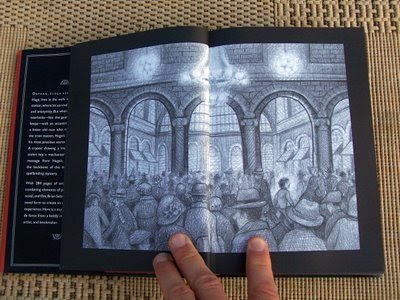
Two things brought this into new focus for me in the past week. First, I read The Invention of Hugo Cabret - the brilliant winner of the Caldecott Medal by Brian Selznick. More on this in a moment.

Second, The Economist began a new debate: "Security in the modern age cannot be established without some erosion of personal privacy." (appearing there again as "PostColonialTech"). Neil Livingstone, in arguing this proposition (and the inherent goodness of it) includes this quote in his mid-debate rebuttal, "This includes the use of surveillance cameras, access to major databases, telephone and email intercepts, and various methodologies for authenticating identity." Notice - he does not suggest the widespread opening of mail, nor the use of general listening devices which might - for example - allow the military to (warrantlessly) survey his living room conversations with his wife, though, in truth, terrorist intentions can - and clearly have - been passed through these "more antique" communications systems.

In other words, Mr. Livingstone is not interested, really, in either privacy or security. What he is worried about is a technological communications grid that he does not (truly) understand.

Because, let's face it. If I post a blog I have no more expectation of privacy than if I write a letter to the editor or publish a newspaper. But if I send an email or call someone from a non-public location, my expectation should be that it is every bit as private as the "snail mail" letter I send. These are the same forms of communication no matter how different the format is. But neither Mr. Livingstone (who NBC declares "an expert"!) nor schools nor employers nor the governments of the US or UK understand this.

Which is why this is an educational issue and a disability rights issue.

Let's go back to the top and Tommy James and the Shondells - a group so fundamentally unhip that Hubert Humphrey wrote the liner notes for one their albums (just had to mention that with real apologies to "Katie"). The letter from the girlfriend was inaccessible text, but was, in the rationalised assumptions of modernist educational and political philosophies, a perfectly legitimate method of quoting (as long as she indicated source and copyright, of course). My mix-tape cassette response was far more accessible (in terms of content delivery if not emotionally), but those same rationalised assumptions struggle with whether I am allowed to do what I did. Shift it to the far more accessible You Tube or to a file sharing system and everyone over 35-years-of-age now calls it "illegal file sharing."

In other words - the media which work for Mr. Livingstone or for your typical teacher or Minister of Education, well, that's protected, sacred, good, safe, etc. The media which work for me, well those are in an opposite category.

Post-Medium-Specific

Brian Selznick's The Invention of Hugo Cabret, named the most distinguished American picture book for children this [2007] year, (yes, back to that) emphasizes this. Mr. Selznick has made a film - about that there is no doubt - but the film is presented as a bound book. Instead of sitting in the theatre, though, or in front of your TV, you turn the pages, rapidly in fact, to take in the tale at the speed of film. Which forces one set of global questions: What does "book" mean? What does "reading" mean? How is "reading" different than "listening," or, specifically, "watching"?


It also raises some personal questions. Since the world of post-graduate education is so caught up in format rather than content, since my university has far more rules about how to bind a thesis than how to make it accessible, could I create a thesis that was a series of drawing as long as I bound it properly for dust-collecting storage in the basement of the library?

I thought of that because in the same week as I read The Invention of Hugo Cabret a professor told me that she considered quotes without cited page numbers to be "plagiarism." When I noted that those of us who utilise alternative formats do not always get accurate page numbering she said, "I never thought of that," but she didn't back down. In education format rules still consistently trump content and communication. And this, as The Economist Debate reveals, is true in government laws too.

But for most of us - we are moving into a "post-medium-specific" world. Brian Selznick puts a film on paper. Amazon puts books on Kindle. Audiobooks make books into podcasts. Television shows appear on your computer. Japanese readers read novels on their mobiles. We have reached a point where we can pick the content and the medium, making it our own in crucial ways.

And that benefits - in massive ways - the huge percentage of the world that has always struggled with "classic" content delivery.

But let me say this - it has both always been this way (at least in one direction). I've seen many teachers of English who ask their students to read Shakespeare (clearly separating content from medium). And Homer, after all, is just a written version of something always intended to be heard. It is like those who print out online PDF documents, or those who read press conference transcripts, we grab for the medium which serves us best.

This does not mean that authorial intent goes out the window. No one is suggesting we eliminate any formats, or that we shouldn't embrace the diverse ways of knowledge available through different formats - a brief digression to "read" from the blog of London design student Gregory Stevenson on Hugo Cabret: "An interesting upside of the imaginative constraints that come with reading a picture book is that it gives the author more control over what the reader sees in their mind’s eye. If a novelist just uses words, the ‘visual story’ created in the reader’s mind will be particular to them – and, for example, a character is likely to appear differently to each of them. Where there is an image of that character, there is no room for interpretation, and no need for conjuring. So, in Hugo Cabret, when we read the text passages what we imagine is likely to have visual continuity from Selznick’s pencil drawings. It’s often said that featuring a protagonist on the cover of a novel is a no-no, because of this very fact – it stops them from imagining their own. But in some instances, maybe this would be useful to an author. An imagined example: some small detail of a character’s appearance is important to the plot. By showing it to us, it becomes fixed in our memory – and in a different way from how we see it in our minds as we race over the text. In Hugo Cabret, another function of the image sequences is in moving the action along at a cracking pace – at least halving the reading time of a book describing the same action using text. This probably explains why I didn’t tend to luxuriate in the pictures, studying the details, as I’d imagined I would. It would have been like freeze-framing a film in the middle of an action scene to admire the colours and composition. It was only when I’d finished that I flicked back to enjoy the pictures as pictures."

Now, think of the ways altering the medium can alter perception and processing. Go back up in this post... if you don't know Tommy James and the Shondells or their song I Think We're Alone Now this medium offers you instant access - right-click on the link and say "open in new tab" and you have it - a "live citation" - the kind that, for my professor friend, makes APA Style and its page numbering requirements not only a quaint anachronism, but a fourth rate method of conveying information.

Or take either the new illustrated version of Seamus Heaney's translation of Beowulf or the 2007 film. Both alter format to deliver content in ways far more accessible than those "old" versions.

The trick is that now, to a significant extent, we can put the power to switch media in the hands of each student, in each human. We can celebrate content and content delivery over the orthodoxy of format. Yes, that is challenging. It pulls the power away from teachers, instructors, and traditional publishers. It requires new thoughts on copyright, on ownership of intellectual property. It surely involves new risks - to everything from "national security" to the transmission of facts. But those are risks we must take.

We must take these risks because the new post-medium-specific world is too important. It is vital to the liberation of so many from the tyranny of the "favoured format." It is essential to expansion of education and human communication. It is necessary, in these days when miscommunication is both so easy and so dangerous, for the likely survival of humanity.

I write mostly about students with "disabilities," but this goes far beyond that. We have too long frustrated human freedom and human learning with arbitrary and nonsensical allegiances to format. Use a number 2 pencil, or this type of pen. Make sure you double-space. Read this edition. Write in this "blue book." Make sure you use "APA" style (or MLA style, or whatever). Sit in that seat. Take this course at this hour. And all these rules have done is limit and exclude and separate and impoverish.

Even if our technology was not what it is we should know better - Brian Selznick needed nothing "21st Century" to put a film on paper - but our current technology wipes out all of our excuses. So let us stop the tyranny, and embrace media choice in a very real way.

- Ira Socol

Essential Blog Alert! - Over at jamessocol.com a three part series on web accessibility. Part one explains the issue, part two helps you analyze, part three helps you design, If you have any educational website this is vital information that you must read...

The Drool Room by Ira David Socol, a novel in stories that has - as at least one focus - life within "Special Education in America" - is now available from the River Foyle Press through lulu.com

US $16.00 on Amazon

US $16.00 direct via lulu.com

Look Inside This Book