False correlation, you will say, and you will be right. But my mind is nothing but a random connector of things, so here I am...
"For
more than half an hour 38 respectable, law‐abiding citizens in Queens
watched a killer stalk and stab a woman in three separate attacks in Kew
Gardens.
Twice
the sound of their voices and the sudden glow of their bedroom lights
interrupted him and frightened him off. Each time he returned, sought
her out and stabbed her again. Not one person telephoned ‐ the police
during the assault; one witness called after the woman was dead." - The New York Times, March 27, 1964
On a Saturday morning - I'll admit a Saturday morning at the end of a frustrated, angry week, I began to throw out challenges to educators on Twitter:
As a former New York City Cop, as a native New Yorker,, the name "Kitty Genovese" can begin a world of conversation and argument. Few stories seem more depressing about how people come to see others as statistics, simply because this story seems to have been - at least in legend - the beginning of something awful.
"The socio-psychological phenomena that were studied after the killing —
notably the “bystander effect,” by which individuals pass the buck to
other witnesses when present at an act of violence — are universal and
ongoing..." - John Anderson in The New York Times
And with these two streams connecting, I went back to my Tweet: "I've been a cop and an educator - and cops are more likely to turn in bad cops than teachers are to do the same."
Austin Street, Kew Gardens, Queens, New York, in 1964
When I first went to work in a high school I thought two things, or maybe it was three. First I thought - I even said it to people - "I think lighthouse keepers have more peer-to-peer interaction than teachers." Exaggeration certainly, but teachers seemed stunningly isolated to me. They locked themselves in their classrooms, never watched each other "practice their craft," rarely discussed what worked and didn't work. I'd worked in many fields on my way to education and I was shocked.
Second I thought, "I know who the great teachers are and I know who the terrible teachers are." And I knew that within a couple of weeks of hearing kids talk and walking the corridors looking into classrooms. Then I realized that pretty much everybody even slightly observant in the building knew the same. And then I said, "Forget that 'blue wall of silence' crap. Cops are more likely to turn in bad cops than teachers are to turn in bad teachers."
Drop a dime... the anonymous call
Cops do turn in bad cops you know. In the NYPD the phrase was (perhaps still is) "drop a dime" on someone (though phone calls had long, long before ceased to be a dime in my day - please). To turn them in anonymously to Internal Affairs. It happened, it does happen, quite a bit. There's something about working day to day with bad cops - people who hurt people - people who ignore people's rights - that gets good cops (in good departments) to break through that blue wall.
Cops are more likely to turn in bad cops than teachers are to turn in bad teachers
Why? Is it because the stakes seem lower?
The fourth thing I realized - back in that first school - was that bad teaching professionals do more damage every day than bad cops and bad doctors. Really.
"Now I know what you are saying, no school would ever do something like
this. I mean, we now know that emotional abuse is bad, and we know that
isolation, rejection, and public shaming is emotionally abusive, and we
would never allow our teachers to engage in it. Shockingly however,
emotional abuse is a problem in school. As a parent I have had to go to
bat for my kids several times. For example, my son’s teacher put his
name on a board and publicly humiliated him for not doing his work
properly. When I told her that her public humiliation was making him
feel bad, all she could say was that if he wanted to avoid the bad
feelings, he’d have to perform to her expectations." - The Emotional Abuse of Our Children - 2013
I know that teachers know teachers who do things like take away lunch periods from kids who haven't gotten work done. Teachers who reduce grades for kids who 'move too much' in class. Who take away outside play time because of minor non-compliance. Who yell and humiliate, or who just humiliate. Who strip adolescents of their evenings because they think homework is a great thing. Who will keep children uncomfortable for hours on end - day after day (wasn't that a CIA torture technique?). I know teachers who know teachers who are bullies every day - but we hide behind the ideas that they are simply "tough" and "old-fashioned."
I know something else - maybe many kids will survive those teachers, but in every school there are kids in the classroom next door who will be permanently damaged - whose allostatic load will be pushed into the breaking realm - by teachers like that. These children are usually our most vulnerable from the start, and they will be most damaged - for life. And I know that those kids are calling for help, just as Kitty Genovese was, and what are we doing?
Minimized or ignored by colleagues who remain silent.
Enabled by inaction of school systems.
Undetected by outsiders.
Undetected by outsiders because, as on that night 51 years ago in Kew Gardens, nobody picks up the phone, nobody makes the call. "Colleagues may know about the behavior through rumors or persistent complaints, but think there is nothing they can do. School officials may
have reason to believe it is occurring, yet fail to act. Almost without
exception, offending teachers mask their mistreatment of students as
part of a legitimate role function, using the rhetoric of “motivation”
or “discipline” to justify their actions."
Extreme, but... how many teachers in this school knew about this? C'mon...
Bystander Effect is Bystander Effect. Whether its a dark night on an urban street or in the bright lights of a middle school. And crime is crime. Is a pursesnatching ok enough that we don't call 9-1-1? Is simply abusing children over homework ok enough that we don't go to our principal? We either step up and hear calls for help or we choose to not do that. Stepping up has risks in every case, even calling 9-1-1 can lead to real issues down the road. "Dropping a dime" on a colleague seems as risky an employee behavior as possible. But do we have room in our schools who will not step up for children?
The cops in 1964 New York City were horrified by the Kitty Genovese case. So horrified that they could hardly not talk about it, if the account I read in the book Tomorrow-Land: The 1964-65 World's Fair And The Transformation Of America is anything close to true. It represented such of break in the social fabric - the social fabric that cops know is the only thing that makes their job possible (see Baltimore today for what happens when that dissolves) .
So no teacher in this school knew what this child was talking about?
Or only the kids?
That social fabric is what wraps our children and let's them grow into healthy, safe adults. It is really just that, and we cannot let that fabric fray. The SPLC notes that, "There is typically a high degree of agreement among students (and colleagues) on which teachers engage in bullying behavior," and that, "Teachers are perceived to bully with impunity; they are seldom held accountable for their conduct."
How do we finally begin to change that? What will you do?
"They were poor because they were lazy, they were lazy because they were Catholic, they were Catholic because they were Irish, and no more needed to be said. This was the transatlantic consensus about Irish Catholics, and it was preached from the finest pulpits and most polite salons in London and uptown Manhattan." - Golway, Terry (2014-03-03). Machine Made: Tammany Hall and the Creation of Modern American Politics . Liveright.
I've been reading Machine Made: Tammany Hall and the Creation of Modern American Politicsin the aftermath of presenting "Breaking the Grit Hammer" at EduCon in Philadelphia. It is a fascinating book which turns many of the staples of our textbooks on 19th Century American History on their heads. It's not just turning cartoonist Thomas Nast into a well deserved vicious villain, not just making us all doubt Walt Whitman, but it forces us to rethink the concepts of "political boss," "reformer," even "abolitionist," in essential ways.
But a critical part of what the book forces is a historic consideration of "Grit" - a consideration that dives way back - before the antisocial imaginings of Angela Duckworth's favorite author, Thomas Galton.
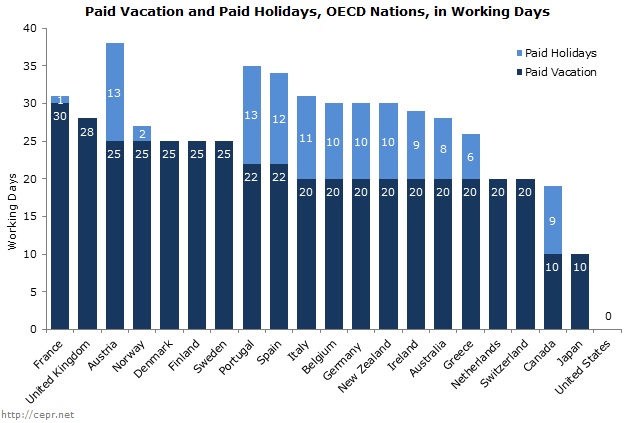
The Irish Catholics who began to arrive in America in the 1820s, who flooded in during the 1840s when British actions turned a potato blight into a "Great Famine," were the first "Gritless" folks to come to the United States voluntarily. The first "Gritless" people to arrive with the power to vote. And thus the first "Gritless" challenge to the Protestant/Puritan myth of excess labor as a moral good in the history of the American Republic.(1) This lack of the so-called "Protestant Work Ethic" - the willingness to trade wealth for stability, and wealth for a different concept of family and community, can still be seen - when the OECD measured weekly parenting time, Ireland came out at the top when both parents were working, and close with stay-at-home moms.
You'd prefer to listen to your friends' stories than do math exercises. 5 4 3 2 1
So that Irish "laziness" - a British and American description - has a history which is deep and complex, and not at all without benefit. Though Angela Duckworth may see herself as a gritty success and the Irish cop patrolling the area outside her Philadelphia office window as a failure without aspiration, others might see it differently.
"Within Irish literary modernism, originating with Wilde and further
developed, especially by means of formal experiments in narration, by
Joyce, Beckett and Flann O’Brien, lies an alternative version of
modernity which gives to an historically complex concept of idleness the
centrality that capitalism and nationalism give to work. Other writers,
Yeats and Eimar O’Duffy among them, elaborated a role for the
intellectual in the formation of the State, but this was consistently
challenged by the notion that labour and work have an oblique and often
sterilizing impact on creativity and emancipatory politics." Gregory Dobbins, Lazy Idle Schemers: Irish Modernism and the Cultural Politics of Idleness, Field Day Publications, 2010
Is a disbelief in that "Protestant Work Ethic" a moral failing? An academic failing? A national failing? Or is the commitment to 'working hard' simply for the sake of 'working hard' - as expressed in Angela Duckworth's "Grit Test" - not the only path to success in life?
A good meal with friends is a worthwhile way to spend an evening. 5 4 3 2 1
"This was a battle that Tammany’s Irish voters recognized as a variation on a conflict that, to a greater or lesser extent, drove them out of their native land. Ireland’s Catholic majority had long been engaged in cultural and political conflict with an Anglo-Saxon Protestant ruling class that viewed the island’s conquered masses as victims of moral failings and character flaws that encouraged vice, laziness, and dependence and rendered them unworthy of liberty." Golway (2014).
That "moral failing" - that eugenicist belief that disconnects between institutions and humans always suggests a failure of the humans - lies at the heart of Duckworth's beliefs, and the "Grit Narrative" as a whole.
"Probably the finding that most surprised me was that in the West
Point data set, as well as other data sets, grit and talent either
aren't related at all or are actually inversely related.
"That was surprising because rationally speaking, if you're good at
things, one would think that you would invest more time in them. You're
basically getting more return on your investment per hour than someone
who's struggling. If every time you practice piano you improve a lot,
wouldn't you be more likely to practice a lot?
"We've found that that's not necessarily true. It reminds me of a study done of taxi drivers in 1997.*
When it's raining, everybody wants a taxi, and taxi drivers pick up a
lot of fares. So if you're a taxi driver, the rational thing to do is to
work more hours on a rainy day than on a sunny day because you're
always busy so you're making more money per hour. But it turns out that
on rainy days, taxi drivers work the fewest hours. They seem to have
some figure in their head—"OK, every day I need to make $1,000"—and
after they reach that goal, they go home. And on a rainy day, they get
to that figure really quickly.
"It's a similar thing with grit and talent. In terms of academics, if you're just trying to get an A or an A−,
just trying to make it to some threshold, and you're a really talented
kid, you may do your homework in a few minutes, whereas other kids might
take much longer. You get to a certain level of proficiency, and then
you stop. So you actually work less hard.
"If, on the other hand, you are not just trying to reach a certain cut
point but are trying to maximize your outcomes—you want to do as well
as you possibly can—then there's no limit, ceiling, or threshold. Your
goal is, "How can I get the most out of my day?" Then you're like the
taxi driver who drives all day whether it's rainy or not." - Angela Duckworth, The Significance of Grit: A Conversation with Angela Lee Duckworth, ASCD Educational Leadership, September 2013 | Volume 71 | Number 1
Notice that the cab drivers Duckworth discusses are not shirking any responsibilities, but they are still failing in her description because they are not working regardless of need. "Calvinism does require a life of systematic and unemotional good
works (interpreted here as hard work in business) and self-control, as a sign that one
is of God's chosen "elect." Thus, ascetic dedication to one's perceived
duties is "the means, not of purchasing
salvation, but of getting rid of the fear of damnation."'
In the fall of 2014 I was in a cab in New York City and the driver and I were discussing a neighborhood we had both been young in - I in my 20s he as a tween - and how we'd survived the crime-ridden time, and then, this was the opening day of the United Nations General Assembly amidst massive climate protests, I asked what he would be doing after he took me and my colleagues from Brooklyn to Queens. "I'm going home to play with my kids," he told me. "If I drive and someone gets in and wants to go to Manhattan I'll have to go, and the traffic will be a disaster. That's just not worth the money."
A man with 'no Grit,' I laughingly thought, tipping him very well. But a man I respect all the more.
You make time to play often during each week. 5 4 3 2 1
Like the Irish of the mid-19th Century - or perhaps the 20th Century - the mostly African and Caribbean taxi drivers of contemporary New York are neither "white," nor "Anglo," nor "Protestant" in fact nor disposition, and Angela Duckworth and "Grit" advocates, like the "reformers" and moralists of the 1840s-1850s, are troubled by a different set of moral imperatives. If the Irish chose "limited opportunities," municipal jobs which were secure and held guaranteed pensions over riskier entrepreneurship with potentially larger payoffs, this was disturbing to the power elite. If African and Caribbean cab drivers choose to go home to their families rather than amassing additional wealth, this disturbs Duckworth. If students choose to "get by" in school rather than chasing the "As" and pursuing Duckworth's Ivy League path to success, this disturbs the Grit advocates in American schools.
"No Irish need apply," was a common employment advertisement tag line in the 19th Century It is a peculiar thing that we limit opportunity for those we then criticize as lacking motivation.
Back in the last century - long ago I guess - a classical literature professor, one of the very best, told us that the most important dividing line in Europe was the old Eastern/Southern Boundary of the Holy Roman Empire. "Americans know nothing because they ignore the historic realities," he said (or something like that) as he explained why Czechoslovakia had split, why Yugoslavia had shattered, why even Italy was hopelessly divided, north and south.(2) The divide, created centuries ago, remains an essential reality of culture, an essential reality of understanding. Those perceiving themselves as having "been included" see themselves as "right." They see those on the other side as "lazy," or to use our current terminology, "lacking Grit."
Czech Republic, in - Slovakia, out. Slovenia and Croatia, in - Serbia and Bosnia, out. Northern Italy, in - Southern Italy, out. The Holy Roman Empire created a cultural divide lasting to this day, as the England/Ireland divide remains.
“Their means of resistance —conspiracy, pretense, foot-dragging, and obfuscation —were the only ones ordinarily available to them, ‘weapons of the weak,’ like those employed by defeated and colonized peoples everywhere,” wrote historian Robert James Scally in his masterful re-creation of Irish townland life." Golway (2014)
You are fascinated by new things you discover. 5 4 3 2 1
How many American history textbooks celebrate the work of political cartoonist Thomas Nast? I don't need to take "someone out of their era" to know a vicious racist, anti-Catholic nativist, and to wonder why his work is used, without caveat, in our schools... (Irish were always portrayed as apes in his work, Catholic Cardinals sometimes as crocodiles)
Taking Duckworth's test I got a "Grit Score" of 1.25, or "grittier than 1% of the population." Ah well, perhaps I have other attributes, attributes worth valuing. It's possible, right? As it is possible that our "ungritty" kids might have other attributes, or might need other things. After all, as I asked at EduCon, "if I managed to get thrown out of your class every day, wasn't I exhibiting grit by Duckworth's measures?" I mean, if it isn't just compliance, as I've suggested more than once, than that kind of commitment to a task demonstrates grit? right?
You enjoy books and stories that have little to do with your daily work. 5 4 3 2 1
"Protestant areas of the island [of Ireland] because “we are a painstaking, industrious, laborious people who desire to work and pay our just debts, and the blessing of the Almighty is upon our labour. If the people of the South had been equally industrious with those of the North, they would not have so much misery upon them.” Golway (2014).
If the 'Grit Narrative' isn't about compliance it is false. If it is about compliance, if all Angela Duckworth wants is for poor kids to behave like her, it is racist and classist and Calvinist (in a political, not a religious, way).
But if our narrative is a question of a lack of abundance, it suggests different tools for our use within our schools. If the British government had stepped in during the 1840s Potato Blight and stopped the massive exports of food from Ireland - stopped the exports so that the Irish could eat rather than letting 1.5 million people starve to death - then the Irish communal memory might be very different, and the aspirations of those who left Ireland and crossed the oceans might have been different. If those nations outside the boundaries of the Holy Roman Empire had not been treated like colonies to be pillaged, the history of the Balkans in Europe might look different. Had African-Americans actually been liberated - liberated from enforced poverty and powerlessness - at the end of the Civil War, the African-American communal memory might be different, and hopes might look different in many communities.
If the poor in America actually saw a path to possibility, then community vision today might be different.
You are willing to shift from one task to another based on interest and value. 5 4 3 2 1
So the only role schools might have today is to offer abundance, not training in grit. We can offer what people have not had, offer 'wealth' of resources, and offer possibilities. And at the same time understand that differing cultures value differing things, and the 'Protestant Work Ethic' is just one path, and not the only path, not necessarily the best path, not necessarily the one moral path.
We offer kids the abundance of choices and that offers an abundance of possibility.
- Ira Socol
(1) If you've ever been to Europe (besides the U.K., the Scandinavian countries,
protestant Germany, and Switzerland), or if you’ve been to Mexico, or Central
or South America (or most of the rest of the world), you've probably noticed
that these cultures have an entirely different orientation to work and leisure
from that of most U.S. people. Residents of these other countries are usually
baffled by the frantic "workaholism"
typical of the U.S. (and parts of Northern Europe). These people can put in
grueling hours, as U.S. citizens commonly do. Unlike U.S. residents, though, if
they work tremendously hard, it's because they need to do so -- the job requires it,
they need the money, or some such thing. They make a conscious decision in
favor of it. Most U.S. people, on the other hand, seem psychologically impelled to
work much too hard for no obvious reason. Many of us actually feel guilty if we aren't
working much too hard. And
we tend to think very highly of people who hate what they do; that is
irrationally seen as somehow more virtuous than having a job one loves! This workaholic attitude is often treated (by people in the U.S.) as just
common sense, just part of human nature. It's not. It's a distinct phenomenon,
only a few centuries old (that is, very, very recent in terms of human
history), localized to a few areas of the globe, and with specific causes in
those areas.
(2) Years later, in this century, I was faced with Robert Putnam's work on the divide in Italian democracy in a research methods class. I earned the undying enmity of a brittle MSU prof by challenging this Harvard publication. "He never considered history before the 19th century," I argued, "he never looked at the inside/outside of the Holy Roman Empire." How could I doubt the Ivy League author of the famous Bowling Alone? I could for the same reason I doubt Angela Duckworth's work. I find that both ignore the facts of history and culture.
A number of us in the school central office I work in share a common thread from childhood. Whatever the circumstances of our lives, whatever the challenges, we were afforded a key luxury: we had in our lives some adult who stuck with us for more than a single year. We had a multi-year mentor. Industrial education has many destructive effects, but one rarely focused on is the refusal of our school design to allow adult support to stretch beyond a single school year. We have sixth grade teachers and tenth grade teachers. We have middle schools and high schools. We have programs, and thus teachers, who only work with certain age kids. We sometimes even have separate coaches for different age-defined sports. And this is disastrous. By doing this we create the ultimate scarcity of support.
"Beside
my father, Coach Conaway was by far the most important man in my life. He knew
about my family and the struggles we had. He gave me a chance. When I spent
time with him, I felt smart and supported. He asked me tough questions. He told
me stories about his childhood. He let me know when he was proud of me and when
he was disappointed, and I always came back for more. He got the best
out of me. He helped me go on to college, and when I became an English teacher and
wrestling and track coach with my first job, I emulated his approach." - Matt Haas
If resilience is our goal, I suggest we need, at a minimum, three things: The abundance which allows children space, time, resources, and safety. An authenticity of task which makes effort relevant. And, I now want to add, the luxury of multi-year mentoring, multi-year adult support, in a deep and meaningful way. For me these three things came together in one person, a teacher named Alan Shapiro. Alan offered me space - the ability to not be in a classroom, time - a lack of deadlines, resources - a city full of learning opportunities instead of those limited by school walls, and safety - the certainty that I would always be welcomed back. He offered me authenticity of task - I did real work, language arts at a radio station, social studies at city hall, with real audiences. And perhaps most importantly he was there for me for four years, long enough to allow trust to build, long enough to impact my habits in significant ways, long enough to alter my long-term thinking.
At its heart, the debate between Paul Tough and I about "grit" is about who the primary burden of change should lie with. Tough's book - How Children Succeed: Grit, Curiosity, and the Hidden Power of Character- is primarily about how to "cure" (I do not necessarily mean this negatively), how to change, children. In his follow ups, and apparently now in his book tour speeches, and yes, in
the last chapter of his book, he argues for some social change -
improved welfare systems, better "wrap around" services, increased
funding, yet his book is - titled, if we remember, How Children Succeed: Grit, Curiosity, and the Hidden Power of Character, not, "What Children Need: The Supports Our Society Must Provide." This is one perspective. As you know, my writings are primarily about how to change systems. (This is different than my argument with Angela Duckworth, which is about both imposing religious beliefs in schools and beliefs in Social Darwinism.) This is another perspective. In this debate Mr. Tough believes me to be elitist and theoretical. He doubts my understandings of "reality." I, on the other hand, have to admit to seeing him as an elitist diletante, at best a reporter for an elite news organization with no commitment to fundamental change, at worst a person willing to use the misery of children for profit without even having the courage to tackle the big issues. Both characterizations are likely unfair, and yet, these characterizations expose the depth of the divide which separates the "character camp" from those of us opposed to that.
A number of years ago, I can't believe I actually found these, at the beginning of our northern hemisphere school year, both The New York Times and the Guardian ran stories about the difficulties of children beginning secondary school. What struck me then - what still hits me in the face - was that The Times story was about what psychiatric medicines should be given to children traumatized by their schools, while the Guardian article was about how schools needed to change adult behaviors, class organization, and even architecture in order to make students comfortable. So Tough and I have been working parallel stories, like those two news organizations were, one embedded in the North American myth of individual responsibility, individual fault, and an individual relationship with God, the other based in, OK, a more Catholic/Socialist, even European, vision of social responsibility. Yet the fact that they are parallel does not mean that they do not collide, and it does not mean that we're not entitled to make our own moral judgements on the argument.
Abundance: Space, Time, Resources, Trust(High School HackerSpace)
For me, it is essential that we first ask questions about our systems, that we first ask what we can do to stop damaging children. If we do not, as I've said in this series before, we create damaged children at a far faster rate than we can possibly help them. Whatever the merits of the interventions Tough's book champions, from poorly prepared principals and questionable chess coaches on one end of the spectrum to deeply caring, deeply involved support on the other, nothing he promotes will halt the damage going on daily. I think we must be better than that. Focusing instead on those three essentials, abundance, authenticity, and adult long-term human support will change the damage equation. We know that. And since we know that, we need to do it.
Authenticity: If the task has inherent value to the child, they will persist (Elementary MakerSummer School)
Abundance: the spaces, time, resources, and supports our children need. This does require things to change, from taxpayer/community attitudes to those of teachers and administrators who put adult needs above the needs of children. It may require changing structures - architectural, time, and curricular. It may require changing work days. It may require different school district divisions. It may require teachers to give up "ownership" of classrooms. It will require investment. It will require new professional learning. Authenticity: One of the keys to persistence on anything in life is relevance. How long would most people stay in a job which did not offer some kind of direct reward? For most jobs that comes as pay which enables the worker to have many other things and to avoid many miseries. For some other jobs - long term volunteering, for example, this comes with somewhat less tangible, but still quite real rewards. But in school we expect children to work - in some cases to work really, really hard, for completely intangible rewards. If you are one of those students for whom As matter, there can be a reward to schoolwork. That's the wonder of school for those completely dependent on adult approval and extrinsic rewards - grades and behavior rules actually work. But for others, what might we offer? We cannot even offer any promise that "education" will be a successful path out for children in poverty, as Paul Thomas makes clear in his most recent post on "The Grit Narrative," the odds are against this being true. A child might be the best, hardest working, best grade-making student on the South Side of Chicago or in inner Cleveland, or even in Martinsville, Virginia and still walk out of his house and get shot. This is, as Thomas says, no meritocracy. So, why would kids in poverty put in the effort? Hell, why would any kid? I say all the time, why would a child who struggles with reading - and a large percentage do - put in that effort if the only reward is the worthless literature of school "leveled reading" books? And we all know that math becomes a disaster when math teachers cannot offer any relevant reason why anyone would need or want to know any of that subject. But for children in poverty this divide begins to extend to everything in school. Eric Juli, who leads an inner-city school in Cleveland, Ohio wrote - on the issues of "grit," "slack," and "abundance":
-->
"I
know students who travel two hours to come to school; a place where they don’t
feel valued, respected, cared for, and accepted...
"I have plenty of students who are below grade level.
But I have plenty of students who are at or above grade level too. Regardless
of how they read, write, or do math, most of my students are currently failing.
And yet they are the toughest kids I know. If grit is just being tough, and
persevering, then why are my kids struggling academically so much? Here’s what
I think. The toughness my kids exhibit in life does not transfer to school.
Academic perseverance, academic stick-to-it-ivness, academic courage, academic
behaviors, academic skills, academic dispositions, do not transfer just because
a student is “gritty” outside of school.
"My students with one shirt, no food, who travel two hours to get to
school, who give up at nothing in life outside of school, give up all the time,
a thousand times a day, in academic settings. I don’t really know Ira, but I
think I can hear him say at this point, that this is what white middle class
conformity expects of them and it isn’t right.
"To that I say, of course it isn’t right. But it’s the world. It also isn’t
right that my students are in poverty to begin with. But they are; so we deal
with it. I can only address what we have control over. To get out of poverty,
my students need to be successful in school. I’ve built a career believing that
education is the ticket out. To be successful in college and careers, my
students need school-tough. And they just don’t have it. What’s right has very
little to do with what is.
Why doesn't "life tough" translate to "school tough"? Because school, all too often, has not a thing to do with the lives of our students. And if school was bad about this historically - think of Mark Twain's documentation of this in Huck Finn - we make it worse every day. Two key fallacies of our Common Core are, (a) that age-based curriculum makes any sense at all, and that (b) localized curriculum - what Yong Zhao calls "mass localization" - is somehow bad. Only a person with no understanding at all of the diversity of America would think that its a "great idea" for Eric's tenth graders and those in Scarsdale, New York to have the same curricular and academic design.
It isn't just that it's OK for Virginia kids to get a different sense of history and literature than do New York kids or Michigan kids, it is that the very understanding of how we read and analyze text might need to change between Fairfax County, Virginia and Esmont, Virginia, between Shaker Heights, Ohio and Eric's school's neighborhood. Why? Because children begin in very different places and live in very different worlds, and the path to success is not made equitable by making it equal.
Now "relevance" does not mean "less," but it should mean "very different." We might need to alter the way we teach completely, the order in which we teach things completely. We might need to make our work much more hands-on for some kids, or connect the work to worlds we, if we're middle class adults, do not know very well. We may need to read different texts, use numbers in new ways, consider science differently. And we're incredibly dumb about that in schools - we all know, for example - that once we put dollar signs in front of decimal numbers kids tend to understand them, but most American schools still refuse to do that first. I once saw a ninth grade biology teacher complain on Twitter that her students weren't interested. "Really?" I tweeted back, "you must be talking about the wrong bodies if you're boring 14-year-olds." I've had to fight with middle school teachers to use YouTube sports videos in speed and velocity lessons. I've seen hundreds of history lessons made completely uninteresting by focusing on dates and the adventures of long dead white guys. And that's what we refuse to do for middle class kids...
Teaching the structure of mythic storytelling need not be a lecture
Breaking the rules of outdated, honestly never particularly effective, pedagogy is step one, for every child, but a crucial step one for our most "at-risk" children. Breaking the boundaries of traditional school rules is step two. From attendance requirement to assignment due dates, we need to think differently to allow children a greater abundance of options which can offer authenticity. Rethinking control can help too. If your school has any WiFi at all, open it up, then go beg Verizon and AT&T to collect used Android phones for you and build your technology options that way. Contemporary technology builds relevance in ways textbooks and the walls of a classroom cannot possibly. Afraid that will open up drug-dealing and bullying? I've got news for you, you are not solving those problems by blocking technology use. Your mission is to make every class, every day, worth your student's time and attention. Not worth it by your standards, worth it by their standards. Every day, every minute, every child makes the microeconomic decision to do the work of your class by comparing the apparent reward to the apparent cost (effort). For kids, all over, who spend an hour or more just getting to school, for kids for whom school attendance has a direct and immediate cost vs. not attending, your need for relevance goes way, way up. But in the end, it's all about relationships. What keeps adolescents on track, as I referenced at the top, are adults who are there. "Look," President Obama said in July 2012 in Roanoke, Virginia - bizarrely controversially, "if you've been successful, you didn't get there on your own... If
you were successful, somebody along the line gave you some help." And that help works best when it extends across real time, not school time.
"somebody along the line gave you some help"
"School time," a class a day for even a year, isn't "adolescent need time" or "child need time." This is why kids usually do better in elementary schools than in secondary schools. Why they do even better with teachers who loop with them, why they do even better than that with long-term multiage environments. This is why high school graduates looking back are most likely to thank their coaches or the rare multiple year or multiple class teachers when they look back.
"The term "mentor" has its roots in Homer’s epic poem, The Odyssey. In this myth, Odysseus, a great royal warrior, has been off fighting the Trojan War and has entrusted his son, Telemachus, to his friend and advisor, Mentor. Mentor has been charged with advising and serving as guardian to the entire royal household. As the story unfolds, Mentor accompanies and guides Telemachus on a journey in search of his father and ultimately for a new and fuller identity of his own." (Anderson and Shannon, 2012)
Length of the mentoring relationship, even the perception at the start of the expected duration, can change everything. "[Y]outh may haveexperienced unsatisfactory or rejecting parental relationships in the past. Consequently, they may have developed internal representations of relationships that incorporate fears and doubts about whether others will accept and support them (Bowlby, 1982; Egeland, Jacobvitz, & Sroufe, 1988)," say Grossman and Rhodes, 2002. "When such adolescents encounter cues that relationships will not proceed, however minimal or ambiguous, they may readily perceive intentional rejection from their mentors." In simpler terms, ones we see every day, research supports what we know. The "at risk" ninth grader is far more likely to invest in the relationship with a sports coaching staff he expects to have alongside him for four years than in the relationship with an English teacher he knows will end in nine months. Why would we provide this kind of essential support for football, basketball, even cheerleading but not with academics? I think that's a question we must ask ourselves. We could reorganize ourselves as faculties. We could assemble teams which might carry middle school or high school children across their time in our schools. That might make our work a bit harder, but it might begin to offer our students that abundance of time, support, and trust they most need.
Laura Deisley wrote on Eric Juli's blog that kids, "are coming to us from different and very real
contexts and yet equally yearning for relationship and purpose. What
your kids learn outside of school, and we are associating with "grit,"
is driven by both relationships and purpose. It is not their choice, and
God knows they should not have to be in that situation. And, you're
right we cannot change their immediate condition. However, if we too
narrowly define outcomes--academic "success" as you call it--then they
aren't going to see a purpose that is worth expending any more effort."
Abundance offers opportunity. Authenticity offers that purpose. Relationship offers that support. And I do not care where we teach, or who we teach, I believe that we can alter our systems to provide more of those three things than we do today. And by doing that we can begin to change the equations which defeat our children.