Showing posts with label angela duckworth. Show all posts

17 February 2015

Grit and History


"They were poor because they were lazy, they were lazy because they were Catholic, they were Catholic because they were Irish, and no more needed to be said. This was the transatlantic consensus about Irish Catholics, and it was preached from the finest pulpits and most polite salons in London and uptown Manhattan." - Golway, Terry (2014-03-03). Machine Made: Tammany Hall and the Creation of Modern American Politics . Liveright.
You like to spend time with your family.  5 (yes, definitely) 4  3  2  1 (No)
http://si.wsj.net/public/resources/images/BN-BV429_bkrvta_DV_20140309135232.jpg
I've  been reading Machine Made: Tammany Hall and the Creation of Modern American Politicsin the aftermath of presenting "Breaking the Grit Hammer" at EduCon in Philadelphia. It is a fascinating book which turns many of the staples of our textbooks on 19th Century American History on their heads. It's not just turning cartoonist Thomas Nast into a well deserved vicious villain, not just making us all doubt Walt Whitman, but it forces us to rethink the concepts of "political boss," "reformer," even "abolitionist," in essential ways.

But a critical part of what the book forces is a historic consideration of "Grit" - a consideration that dives way back - before the antisocial imaginings of Angela Duckworth's favorite author, Thomas Galton.

http://www.inetours.com/New_York/Images/Irish-HM/Irish-Hunger_Ent_4292.jpg
New York City: Irish Hunger Memorial
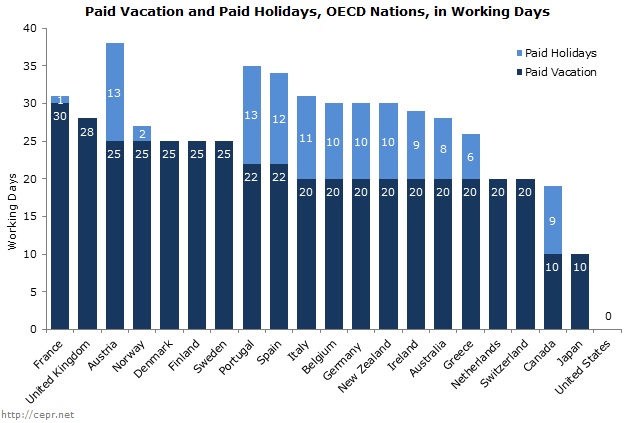
The Irish Catholics who began to arrive in America in the 1820s, who flooded in during the 1840s when British actions turned a potato blight into a "Great Famine," were the first "Gritless" folks to come to the United States voluntarily. The first "Gritless" people to arrive with the power to vote. And thus the first "Gritless" challenge to the Protestant/Puritan myth of excess labor as a moral good in the history of the American Republic.(1) This lack of the so-called "Protestant Work Ethic" - the willingness to trade wealth for stability, and wealth for a different concept of family and community, can still be seen - when the OECD measured weekly parenting time, Ireland came out at the top when both parents were working, and close with stay-at-home moms.

American paid vacations

You'd prefer to listen to your friends' stories than do math exercises.  5  4  3  2  1 


So that Irish "laziness" - a British and American description - has a history which is deep and complex, and not at all without benefit. Though Angela Duckworth may see herself as a gritty success and the Irish cop patrolling the area outside her Philadelphia office window as a failure without aspiration, others might see it differently.
"Within Irish literary modernism, originating with Wilde and further developed, especially by means of formal experiments in narration, by Joyce, Beckett and Flann O’Brien, lies an alternative version of modernity which gives to an historically complex concept of idleness the centrality that capitalism and nationalism give to work. Other writers, Yeats and Eimar O’Duffy among them, elaborated a role for the intellectual in the formation of the State, but this was consistently challenged by the notion that labour and work have an oblique and often sterilizing impact on creativity and emancipatory politics." Gregory Dobbins, Lazy Idle Schemers: Irish Modernism and the Cultural Politics of Idleness, Field Day Publications, 2010
Is a disbelief in that "Protestant Work Ethic" a moral failing? An academic failing? A national failing? Or is the commitment to 'working hard' simply for the sake of 'working hard' - as expressed in Angela Duckworth's "Grit Test" - not the only path to success in life?

A good meal with friends is a worthwhile way to spend an evening.  5  4  3  2  1

"This was a battle that Tammany’s Irish voters recognized as a variation on a conflict that, to a greater or lesser extent, drove them out of their native land. Ireland’s Catholic majority had long been engaged in cultural and political conflict with an Anglo-Saxon Protestant ruling class that viewed the island’s conquered masses as victims of moral failings and character flaws that encouraged vice, laziness, and dependence and rendered them unworthy of liberty." Golway (2014).

That "moral failing" - that eugenicist belief that disconnects between institutions and humans always suggests a failure of the humans - lies at the heart of Duckworth's beliefs, and the "Grit Narrative" as a whole.
"Probably the finding that most surprised me was that in the West Point data set, as well as other data sets, grit and talent either aren't related at all or are actually inversely related.

"That was surprising because rationally speaking, if you're good at things, one would think that you would invest more time in them. You're basically getting more return on your investment per hour than someone who's struggling. If every time you practice piano you improve a lot, wouldn't you be more likely to practice a lot?

"We've found that that's not necessarily true. It reminds me of a study done of taxi drivers in 1997.*  When it's raining, everybody wants a taxi, and taxi drivers pick up a lot of fares. So if you're a taxi driver, the rational thing to do is to work more hours on a rainy day than on a sunny day because you're always busy so you're making more money per hour. But it turns out that on rainy days, taxi drivers work the fewest hours. They seem to have some figure in their head—"OK, every day I need to make $1,000"—and after they reach that goal, they go home. And on a rainy day, they get to that figure really quickly.

"It's a similar thing with grit and talent. In terms of academics, if you're just trying to get an A or an A−, just trying to make it to some threshold, and you're a really talented kid, you may do your homework in a few minutes, whereas other kids might take much longer. You get to a certain level of proficiency, and then you stop. So you actually work less hard.

"If, on the other hand, you are not just trying to reach a certain cut point but are trying to maximize your outcomes—you want to do as well as you possibly can—then there's no limit, ceiling, or threshold. Your goal is, "How can I get the most out of my day?" Then you're like the taxi driver who drives all day whether it's rainy or not." - Angela Duckworth, The Significance of Grit: A Conversation with Angela Lee Duckworth, ASCD Educational Leadership, September 2013 | Volume 71 | Number 1 
Notice that the cab drivers Duckworth discusses are not shirking any responsibilities, but they are still failing in her description because they are not working regardless of need. "Calvinism does require a life of systematic and unemotional good works (interpreted here as hard work in business) and self-control, as a sign that one is of God's chosen "elect." Thus, ascetic dedication to one's perceived duties is "the means, not of purchasing salvation, but of getting rid of the fear of damnation."'

In the fall of 2014 I was in a cab in New York City and the driver and I were discussing a neighborhood we had both been young in - I in my 20s he as a tween - and how we'd survived the crime-ridden time, and then, this was the opening day of the United Nations General Assembly amidst massive climate protests, I asked what he would be doing after he took me and my colleagues from Brooklyn to Queens. "I'm going home to play with my kids," he told me. "If I drive and someone gets in and wants to go to Manhattan I'll have to go, and the traffic will be a disaster. That's just not worth the money."

A man with 'no Grit,' I laughingly thought, tipping him very well. But a man I respect all the more. 

You make time to play often during each week.  5  4  3  2  1 

Like the Irish of the mid-19th Century - or perhaps the 20th Century - the mostly African and Caribbean taxi drivers of contemporary New York are neither "white," nor "Anglo," nor "Protestant" in fact nor disposition, and Angela Duckworth and "Grit" advocates, like the "reformers" and moralists of the 1840s-1850s, are troubled by a different set of moral imperatives. If the Irish chose "limited opportunities," municipal jobs which were secure and held guaranteed pensions over riskier entrepreneurship with potentially larger payoffs, this was disturbing to the power elite. If African and Caribbean cab drivers choose to go home to their families rather than amassing additional wealth, this disturbs Duckworth. If students choose to "get by" in school rather than chasing the "As" and pursuing Duckworth's Ivy League path to success, this disturbs the Grit advocates in American schools.

https://dontforgetyourshovel.files.wordpress.com/2014/10/noirishnelson.jpg?w=640
"No Irish need apply," was a common employment advertisement tag line in the 19th Century
It is a peculiar thing that we limit opportunity for those we then criticize as lacking motivation.


You enjoy sitting outside doing nothing.  5  4  3  2  1 

Back in the last century - long ago I guess - a classical literature professor, one of the very best, told us that the most important dividing line in Europe was the old Eastern/Southern Boundary of the Holy Roman Empire. "Americans know nothing because they ignore the historic realities," he said (or something like that) as he explained why Czechoslovakia had split, why Yugoslavia had shattered, why even Italy was hopelessly divided, north and south.(2) The divide, created centuries ago, remains an essential reality of culture, an essential reality of understanding. Those perceiving themselves as having "been included" see themselves as "right." They see those on the other side as "lazy," or to use our current terminology, "lacking Grit."

Czech Republic, in - Slovakia, out. Slovenia and Croatia, in - Serbia and Bosnia, out. Northern Italy, in - Southern Italy, out. The Holy Roman Empire created a cultural divide lasting to this day, as the England/Ireland divide remains.

“Their means of resistance —conspiracy, pretense, foot-dragging, and obfuscation —were the only ones ordinarily available to them, ‘weapons of the weak,’ like those employed by defeated and colonized peoples everywhere,” wrote historian Robert James Scally in his masterful re-creation of Irish townland life." Golway (2014)

You are fascinated by new things you discover.  5  4  3  2  1 

http://www.printmag.com/wp-content/uploads/Nast01_black+white-orig.jpg
How many American history textbooks celebrate the work of political cartoonist Thomas Nast?
I don't need to take "someone out of their era" to know a vicious racist, anti-Catholic nativist,
and to wonder why his work is used, without caveat, in our schools...

(Irish were always portrayed as apes in his work, Catholic Cardinals sometimes as crocodiles)

Taking Duckworth's test I got a "Grit Score" of 1.25, or "grittier than 1% of the population." Ah well, perhaps I have other attributes, attributes worth valuing. It's possible, right? As it is possible that our "ungritty" kids might have other attributes, or might need other things. After all, as I asked at EduCon, "if I managed to get thrown out of your class every day, wasn't I exhibiting grit by Duckworth's measures?" I mean, if it isn't just compliance, as I've suggested more than once, than that kind of commitment to a task demonstrates grit? right?

You enjoy books and stories that have little to do with your daily work.  5  4  3  2  1

"Protestant areas of the island [of Ireland] because “we are a painstaking, industrious, laborious people who desire to work and pay our just debts, and the blessing of the Almighty is upon our labour. If the people of the South had been equally industrious with those of the North, they would not have so much misery upon them.” Golway (2014).

If the 'Grit Narrative' isn't about compliance it is false. If it is about compliance, if all Angela Duckworth wants is for poor kids to behave like her, it is racist and classist and Calvinist (in a political, not a religious, way).

But if our narrative is a question of a lack of abundance, it suggests different tools for our use within our schools. If the British government had stepped in during the 1840s Potato Blight and stopped the massive exports of food from Ireland - stopped the exports so that the Irish could eat rather than letting 1.5 million people starve to death - then the Irish communal memory might be very different, and the aspirations of those who left Ireland and crossed the oceans might have been different. If those nations outside the boundaries of the Holy Roman Empire had not been treated like colonies to be pillaged, the history of the Balkans in Europe might look different. Had African-Americans actually been liberated - liberated from enforced poverty and powerlessness - at the end of the Civil War, the African-American communal memory might be different, and hopes might look different in many communities.

If the poor in America actually saw a path to possibility, then community vision today might be different.

You are willing to shift from one task to another based on interest and value.  5  4  3  2  1

So the only role schools might have today is to offer abundance, not training in grit. We can offer what people have not had, offer 'wealth' of resources, and offer possibilities. And at the same time understand that differing cultures value differing things, and the 'Protestant Work Ethic' is just one path, and not the only path, not necessarily the best path, not necessarily the one moral path.

We offer kids the abundance of choices and that offers an abundance of possibility.

- Ira Socol

(1) If you've ever been to Europe (besides the U.K., the Scandinavian countries, protestant Germany, and Switzerland), or if you’ve been to Mexico, or Central or South America (or most of the rest of the world), you've probably noticed that these cultures have an entirely different orientation to work and leisure from that of most U.S. people. Residents of these other countries are usually baffled by the frantic "workaholism" typical of the U.S. (and parts of Northern Europe). These people can put in grueling hours, as U.S. citizens commonly do. Unlike U.S. residents, though, if they work tremendously hard, it's because they need to do so -- the job requires it, they need the money, or some such thing. They make a conscious decision in favor of it.
  Most U.S. people, on the other hand, seem psychologically impelled to work much too hard for no obvious reason. Many of us actually feel guilty if we aren't working much too hard.   And we tend to think very highly of people who hate what they do; that is irrationally seen as somehow more virtuous than having a job one loves!  
  This workaholic attitude is often treated (by people in the U.S.) as just common sense, just part of human nature. It's not. It's a distinct phenomenon, only a few centuries old (that is, very, very recent in terms of human history), localized to a few areas of the globe, and with specific causes in those areas. 

(2) Years later, in this century, I was faced with Robert Putnam's work on the divide in Italian democracy in a research methods class. I earned the undying enmity of a brittle MSU prof by challenging this Harvard publication. "He never considered history before the 19th century," I argued, "he never looked at the inside/outside of the Holy Roman Empire."  How could I doubt the Ivy League author of the famous Bowling Alone? I could for the same reason I doubt Angela Duckworth's work. I find that both ignore the facts of history and culture.

08 February 2014

Summarizing Grit: The Abundance Narratives

Procter&Gamble has the tagline very wrong, but their Olympics ads explain what is crucially wrong with the argument espoused by those writing the "Grit Narratives"...


...for what P&G is saying in their "#BecauseOfMom" campaign is that what children need is not "grit" but abundance. They need the support, time, resources, and love which makes persistence possible.

It is not "falling down" which makes you stronger, it is the people who help you get up after you've fallen, who teach you to get up after you've fallen, who tend your wounds after you've fallen, and who supply the resources which allow you to keep trying with a growing expectation of success.


I don't know if I've been a good father or not - as a long-term single dad I kind of object to the #becauseofmom meme, I bought the Tide for our house - for that analysis you'd have to ask the kid. But despite real money struggles, real resource issues, I tried to offer abundance when I could. The musical instruments he played, the soccer equipment he used (for which I often traded work), the drives to a distant high school which met his needs, the access to the computers he learned to build and control. But for the ability to do that I am grateful for the abundance I received as a child. My parents rarely had any money, but they had essential things. They both had university educations, they both had wide-ranging interests in the world, they both talked - in front of us kids - about anything and everything. The offered us a home in a place where everything from high culture to the fascinations of the natural world were easily accessible from very early ages. They lived in a place with a high school which brought all kinds of children - all socio-economic classes - together so I could see choices and opportunities. And they knew how to stand up for me, to prevent huge problems from becoming a death sentence.

Abundance being a relative term, measured on a sliding scale.

Abundance also being an inherited opportunity in a nation of vastly unequal wealth and opportunity. And if we do not work towards offering abundance to children in poverty, nothing we do via "intervention" will alter these facts of inheritance.
"But we have to be very careful, given the political tenor of our time, not to assume that we have the long-awaited key to helping the poor overcome the assaults of poverty," Mike Rose writes, "My worry is that we will embrace these essentially individual and technocratic fixes—mental conditioning for the poor—and abandon broader social policy aimed at poverty itself.

"We have a long-standing shameful tendency in America to attribute all sorts of pathologies to the poor. Writing in the mid-nineteenth century, the authors of a report from the Boston School Committee bemoaned the “undisciplined, uninstructed…inveterate forwardness and obstinacy” of their working-class and immigrant students. There was much talk in the Boston Report and elsewhere about teaching the poor “self-control,” “discipline,” “earnestness” and “planning for the future.” This language is way too familiar."
In a study of those proposing character education as a primary solution, those like Angela Duckworth and Paul Tough,  Smagorinsky and Taxel (pdf) noted, "We inferred from this list of at-risk students that the proposal authors believed that those most in need of character education were largely poor students from uneducated families in which standard English is not spoken at home. These young people, according to the proposals, tend to be sexually active, have histories of violence, abuse drugs, and have absentee parents. We further inferred that the document authors assumed that people not fitting these categories were not particularly in need of character education. We then classified this discourse as being in the category of class-based morality."

"Class-based morality," and class-based colonialism in my mind, for as James Gee asked, "What sort of social group do I intend to apprentice the learner into?" Not that you can't say, "I need my children to learn to act, to be, like white middle class Americans." You certainly can, and you can for some very good reasons. But you need to be aware of what you are saying.


The "Everyday Effect" - middle-class privilege in action

The debate about "the grit narrative" has ranged widely across the digital networks recently, which is a great thing. Because the next time a school administrator rises and quotes Paul Tough's book title, or shows Angela Duckworth's TEDtalk, there will now be other voices in the room, voices calling for the "abundandance narrative" as our essential foundation.

Here are some of the conversations:
Mike Rose: The Misguided Effort to Teach Character (Washington Post)
Paul Thomas: The Poverty Trap   
Paul Thomas: The Grit Narrative  
Nancy Flanagan: Kiss My Grit

Grant Lichtman: Does Grit Need a Deeper Discussion?
which includes a Paul Tough vs. Me "debate."

Josie Holford: Grit Hits the Fan

Joe Bower:
Let them eat grit - 4 reasons why "grit" is garbage  
 
SpeEdChange: Grit: Part One
SpeEdChange: Grit: Part Two
(Slack, not Grit)

SpeEdChange: Grit: Part Three (Abundance)
SpeEdChange: Grit: Part Four (Abundance, Authenticity, and the Multi-Year Mentor)
Eric Juli: Grit or Slack? Are we asking the right questions? 
Eric Juli: Grit: Context Matters   
Peter Gow: In Which I Confess to Lacking Grit    
Vicki Davis: True Grit


I, of course, cannot tell you how to think about this. I cannot tell you how to read Tough's book, or how to consider Duckworth finding most of her inspiration in the work of "the father of eugenics." But I do hope you will wonder about, and perhaps challenge, the current pop psychology of "grit" education. I hope you will ask, if we do not go after the causes of the pathologies of poverty, how can we ever "cure" children fast enough to keep up with the damage we are doing?

The other side of #becauseof mom, the feminization of poverty

- Ira Socol

23 January 2014

"Grit" Part 2 - Is "Slack" What Kids Need?

Paul Thomas, a Furman University professor who - in that best tradition of academic discourse - I alternately fight with and agree with, tells me that I was way too nice to Paul Tough when I wrote about "grit" back in December.

Turns out he was probably right.

The more feedback I received on the "Tough/Tough Kids" concept, the uglier, the more destructive, the more vicious the whole "movement" by America's elite seems to me...

Just this morning educators told me on Twitter that teaching "grit" was essential because of "mistakes made by the US governments "No Child Left Behind" law" and because of the pace of contemporary life. Even someone I think of "as smart" as @coolcatteacher - Vicki Davis - jumps in the water with pro-eugenics professor Angela Duckworth and brings "teaching grit" into her classroom.

Right up front on her website, queen of "grit" Angela Duckworth of the University of Pennsylvania
joins herself to the theories of notorious Eugenecist Francis Galton.
"Be careful," I like to say, "who you're jumping into bed with."
Horatio Alger's 1869 Pluck and Luck.
Alger sold the "grit" myth for half a
century via books like
Ragged Dick,
Brave and Bold, Sink or Swim.
In the end I realize that there is no difference at all between Paul Tough and Horatio Alger - including their respective research methods, and I realize that there is no difference between the researchers Tough quotes in his book, or those educators jumping on the "grit bandwagon," and those mid-19th century American preachers screaming about the lazy Catholics arriving from Ireland.
 "Irish beggars are to be met everywhere, and they are as ignorant and vicious as they are poor. They are lazy, improvident and unthankful; they fill our poorhouses and our prisons, and are as brutish in their superstition as Hindoos." - Toronto Globe 1851.
"Catholics, and most specifically, the Irish, were frequently vilified in the curriculum of New York’s public schools. Public schools used textbooks that portrayed the Irish immigrants as “extremely needy, and in many cases drunken and depraved…subject for all our grave and fearful reflection,”' PBS notes, "nearly seventy-five percent of our criminals and paupers are Irish," said Harper's Weekly in 1860. There is simply no doubt that the Irish who arrived in America between 1840 and 1910 - the Catholic Irish as opposed to the Protestant Irish (Scots-Irish) who arrived earlier - lacked "grit" in the minds of political leaders, religious leaders, journalists, and teachers. They were lazy - amazingly they need not even get to a specific Sunday church service at a specific time. They were easily distracted - did you know that in their churches they move a lot and have all these things to look at? They weren't motivated - wow! they like being home or with their community more than working - they're satisfied with low paying municipal jobs like being police officers! They were illiterate - in their churches there aren't prayer books! They don't all read the same thing at the same time like in our churches/schools!

Lacking "grit," the 19th Century
Irish immigrants could simply
not be assimilated.
Today, conceptual identical slanders are used against groups "we" don't like who are trying to enter They won't do homework! They won't try for hours to complete the same stupid worksheet! They won't retake that test! They wear their pants so you can see their underwear! They won't take off their hats! They won't sit up straight! In other words, they won't be like "us," and we better bang on them until they learn that they must.

"Grit is simple – it is developed by situations that require it.," Vicki Davis writes, "We all have tough in our life – but what do we do with it? Do we grit our teeth and push forward or do we fall back and lay on our floppy cushion with excuses in our mouths?" "I often set a goal but later choose to pursue a different one," is a negative phrase in Angela Duckworth's almost comical "grit analysis" (on which I received a 1.75, or "grittier than 1% of the US population") because we know, thank God, that Samuel Clemens stuck with that riverboat career and Albert Einstein fully committed himself to his Patent Office clerkship.

Let's be clear. What Duckworth, Tough, even Davis are referring to is essential to traditional school success. But the word they are seeking is not "grit" - as I said before, the kids they want to give "grit" to are the "grittiest" kids on earth - that's how they've survived - the word these "grit proponents" are seeking is "compliance." They want kids working hard at what they themselves value, which is, apparently, "white middle class conformity."

"Grit," school leader Dave Meister says, "is simply a term by which the privileged try distinguish their behavior from those they define as unworthy."

And this is the key. There is a reason Angela Duckworth quotes and relies on one of the "fathers" of the Eugenics Movement. Like IQ scores, like the Prussian Model of age-based school grades and grade level standards, like the institutionalized racism of certain dress codes or the KIPP SLANT formula, "grit" is a way of limiting the opportunity of those who might - measured by their own standards - compete educationally and economically with the children of rich people.

Let's go back to Dr. Thomas:
"Children in poverty line up at the starting line with a bear trap on one leg; middle-class children start at the 20-, 30-, and 40-meter marks; and the affluent stand at the 70-, 80-, and 90-meter marks.

"And while gazing at education as a stratified sprint, “no excuses” reformers shout to the children in poverty: “Run twice as fast! Ignore the bear trap! And if you have real grit, gnaw off your foot, and run twice as fast with one leg!”

"These “no excuses” advocates turn to the public and shrug, “There’s nothing we can do about the trap, sorry.”

"What is also revealed in this staggered 100-meter race is that all the children living and learning in relative affluence are afforded slack by the accidents of their birth: “Slack” is the term identified by Mullainathan and Shafir as the space created by abundance that allows any person access to more of her/his cognitive and emotional resources."
Because this is what kids need. Slack. This is what I was discussing, without the word, at the end of my last post. Because I thought about this over the last couple of days: What "grit" did Bill Gates demonstrate when he quit Harvard because his dad hooked him up with an amazing contact at IBM and his buddy found an operating system Gates could buy for almost nothing and sell for a fortune? What "grit" did George W. Bush show when he walked away from a National Guard commitment because, suddenly, he was more interested in a political campaign? What "grit" Barack Obama show evidence of as the child of a PhD student, with very supportive grandparents, at a multi-ethnic private school in Hawaii?

What "grit" does the Yale University student show when she calls home for more money from dad? What "grit" do upper middle class parents teach their kids when they drive them to school? When they go talk to their teachers about problems? When they provide money for sports lessons or music lessons? See Paul, Angela, Vicki, I'm confused, because all those I'm asking about have succeeded or will succeed famously...

What the people I mention above have is "slack" - the moments when necessity is not the sole driver. "The cost [of "scarcity" - the primary element in "grit theory"] is an undue focus on the necessity at hand, which leads to a lack of curiosity about wider issues, and an inability to imagine longer-term consequences. The effect of this scarcity-generated "loss of bandwidth" has catastrophic results..." The Guardian writes in a book review on the topic. The "struggle" that Tough, Duckworth, Davis, et al want for kids is the creation of "scarcity" among children already scarred by "scarcity." The "grit" they discuss imposes "scarcity" by focusing kids on the problems, the deficits, "the mountain" as Davis puts it, instead of the solutions, or, what we might call, the highway we try to build to our students' futures.

And now let me go back to Peter Høeg's Borderliners, but via a quote from my older sister a long long time ago when I called her desperate for a couple of hundred bucks to fix my car. She said, "no problem, I'll mail the check now," and then she said, "see, that's the difference now. I can help, and so you're ok. For a lot of people, the car breaks, they can't fix it, they lose their job, they end up homeless." Living in Brooklyn in the late 1970s, I saw evidence of what she meant on every corner. She had given me "slack," and no matter how much "grit" I might have had - no matter how much "grit" Angela Duckworth might think I have - only "slack" could save me in that moment. (I suppose I only got 1.75 on Duckworth's scale because I listed myself as "white" and well educated, without that I would probably have been closer to 0)

And so this is why the scene I alluded to in Peter Høeg's Borderliners has always been crucial to me: 
"We were going to shower. We were last. Valsang was standing on his side of the window. Humlum went in ahead of me. He walked straight through the warm shower as though it did not exist and in under the first of the cold ones. And there he stayed. He did not move, he just stood there, while his skin first went red and then white. He looked at his feet, I knew he stayed there so that I could stay in the warm shower and not be made to get a move on. I had shut my eyes, the warm water closed up, like a wall. I had never stood for as long before. - Peter eg, Borderliners
"Slack," "space that doesn’t force anyone to consider trade-offs," is the magical alternative to the "grit" and misery proposed for children by The New York Times, by Paul Tough, by the University of Pennsylvania's Angela Duckworth, by the University of Chicago School of Economics, by the American Economic Elites.

And "slack" is the idea I was reaching for, and found most wonderfully recalled in the work of eg.

And "slack" and "abundance" are what our "at risk" children need: "They show that abundance allows people slack, space that doesn’t force anyone to consider trade-offs. Conversely, scarcity removes slack. In moments of abundance, then, people behave differently than in moments of scarcity. The consequences for people in poverty are much greater, then, than the consequences for people in affluence."

In my understanding of "slack," "Negative Space," not the SLANT concepts of KIPP nor the "misery index" of Duckworth, is the path to opportunity. "this is really about allowing students to breathe. "It was a kind of no-man’s-land, a place of possibility," Beller says of Manhattan's [Central Park], and I thought of all the "places of possibility" of my youth, from an abandoned military base to an abandoned railway station, from the catwalk above the stage in my Junior High's auditorium to the odd turret spaces which ended the corners of my high school, from the long corridor linking the high school library to the rest of the building - broken into caves by panels displaying artwork - to the tops of the stair towers overlooking the river in the Kresge Art Center at Michigan State. These were places I could breathe, dream, fantasize, imagine, hope, cry. I thought of how a curve of rock along a winter beach might be the safest place I knew at age 13, or how the space in front of the air-conditioner on the roof of Macy's might have been the most intimate at 15," I wrote 18 months ago.

So we need to call out the "grit lobby" and their Eugenics belief system: When people put out things like,  Angela Duckworth (University of Pennsylvania). Christopher Peterson (University of Michigan), Michael Mathews (United States Military Academy), and Dennis Kelly (United States Military Academy) [pdf] and write: "Why do some individuals accomplish more than others of equal intelligence? In addition to cognitive ability, a list of attributes of high-achieving individuals would likely include creativity, vigor, emotional intelligence, charisma, self-confidence, emotional stability, physical attractiveness, and other positive qualities..." we need to point out that what they are pursuing is social reproduction and the preservation of wealth and power for elites. We have to point out that a religious paradigm of behaviors is not to be confused with a science of educational opportunity.

But most of all, we need to fight to do for all of our children what Oscar Humlum did for the narrator in the Borderliners passage. He interrupted the brutal industrial flow and gave a child a moment of abundance.

My God, isn't that our job?

- Ira Socol