Showing posts with label education. Show all posts

11 December 2016

Godspeed, John Glenn

Heros for our children
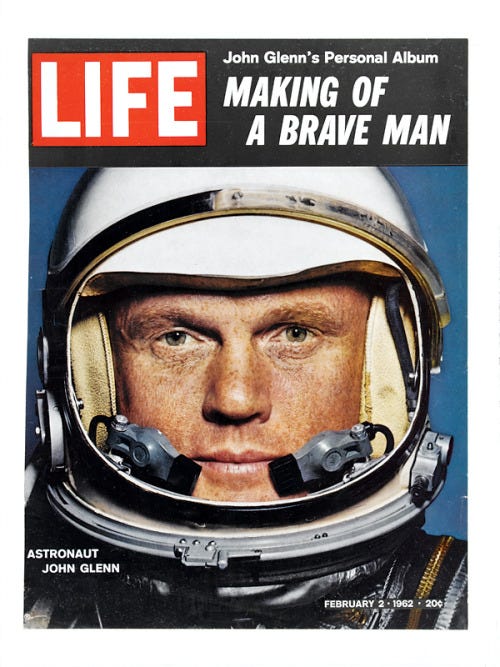


I can’t claim to remember the specifics. Yes, I’m old enough to have been in school, but there were a lot of other things going on during those school days.
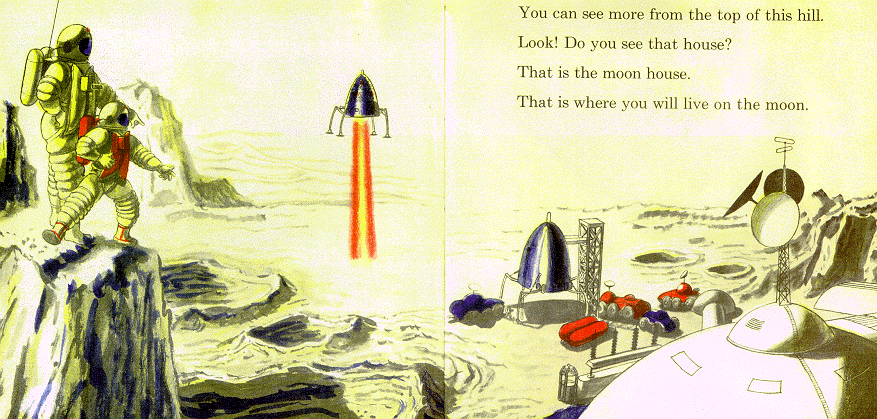

Still, by all reports I was obsessed with astronauts and space. I’d spend hours with the pictures in Life magazine. I had coloring books and sticker books and a paperback version of You Will Go to the Moon. I was a major Alan Shepard fan, but John Glenn was mighty cool too.

But if I can’t quite remember I still know the scene exactly. My gigantic elementary school had a thousand-theater-seat auditorium, but that wasn’t nearly big enough for the whole school. Across the main hall from that giant room was a smaller, more ‘spartan’ space — maybe 250 seats without cushions, but still an auditorium — though we called it the “General Purpose Room.” It’s is that room that I have in my vision.

An enormous — black and white of course — television on a huge rolling stand has been wheeled to the center of the stage, and tuned to Channel 2, WCBS-TV, and Walter Cronkite. And we would watch, waiting for the moment when we could shout the countdown along with — was it Chris Kraft? — as soon as we got to “T minus 10.”

Once upon a time we were surrounded by heros. Listen, I could add the postmodern spin here — John Glenn was the third human to orbit the earth and the fifth to be launched into space, not exactly Columbus — but my point is the opposite. So, once upon a time we were surrounded by heros.


I came to world awareness surrounded by John Fitzgerald Kennedy, The American Astronauts, Pope John XXIII, Martin Luther King, John Lewis, Robert Kennedy, Walter Reuther, Mickey Mantle, Willie Mays, Sandy Koufax… a pantheon laid on top of the heroic narrative of our fathers and grandfathers who had crushed Nazism, defeated Imperial Japan, tamed the nucleus of the atom, and beaten the Great Depression.

Heros matter.

About five years ago I stood outside the White House fence in Washington DC. On my right was an African-American mother and perhaps 10-year-old son. And I realized, in that moment, the power in the face that that little boy knew that the President inside that mansion looked like him. Just as John Kennedy’s election had meant so much to my father — and thus, by extension, to me. I had hoped this January might bring a similar effect for our girls, but…
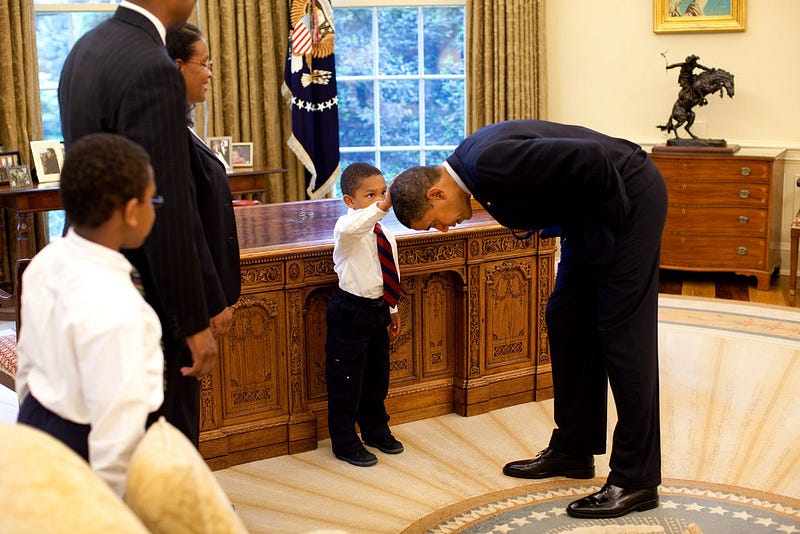


Heros matter

And we don’t offer our children heroes any more. We offer celebrities, but that is different. There are some really nice sports figures these days, but where is the heroism of Curt Flood — tossing away his career for a point about race and labor. Or even a Sandy Koufax — refusing to pitch a World Series game because of his religion. I sort of hoped that LeBron James would walk the small cities of Ohio campaigning for what he believed in, risking his home state popularity for a cause… but that didn’t happen
.
There are some good politicians, but where is the John Kennedy going into Protestant Texas to talk about religion? Or Attorney General Robert Kennedy going into fully segregated Georgia to demand and integrated nation? Where is even the Nelson Rockefeller actually getting things hurled in his face as he tried to stop his political party’s roll to extremism? Where are the political leaders marching at the head of anti-racism protests, daring the police to hit them first?
Where are those who take enormous personal risks to take a stand or do a job?

Heroism matters.

Heroism takes many forms. But I just want to be clear, heroism is never the act of being unafraid. If you are unafraid and do something incredibly risky you are either uninformed or just dumb. Heroism is doing that risky thing despite being terrified.
____________

"Most people admired Koufax for putting his religion before his job. I’m sure there were others who were furious, saying that he wasn’t that religious -- and I don’t think he really was -- but that didn’t make any difference. It was his decision and everyone respected it. They understood."
- Longtime Dodgers broadcaster Vin Scully
____________

Yuri Gargarin was afraid. John Glenn was afraid. I’m damn sure John Kennedy was afraid when his PT boat was cut in half. I sure know I was afraid many nights when I was a cop in New York. John Lewis was afraid when he stood in front of protesters and faced police clubs and dogs. Curt Flood had to be afraid as he tossed away the only career he knew.
_________________

“For the record, Flood gave up the $100,000 the Phillies would have paid him for the 1970 season to challenge the reserve clause. How many of those who vilified Curt Flood would have given up their jobs to fight for a principle? Not many.”
__________________
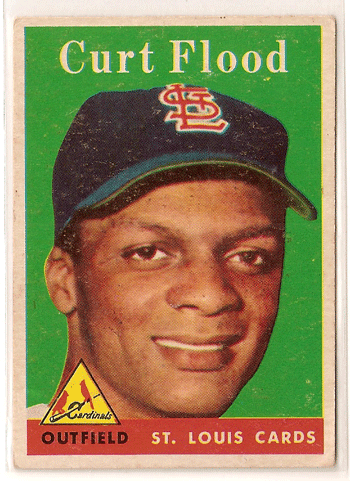

And this model is important.

Kids need to know that risk is ok. That high risk is ok. That fear is ok. That overcoming fear is, dare we say? Noble.

And if this is important, how do we bring this to our students?

The Hero Model

Is the hero model still possible? I think it may be but we need to build it carefully. We have children in our schools whose parents, uncles, aunts, siblings, cousins may be in heroic professions — combat military, police officers, firefighters, emergency medical services — and that’s great but it should never be our job to raise one family’s choices over another’s when talking to kids.

We of course have those same people — not directly related — within our communities and we can ask them to be present and to talk — in age appropriate ways — about risk and fear and responsibility.
And we have history. How do we talk about historical heroes in ways both real and yet effective. I’m not talking about ancient history, like the heroes of my youth necessarily, though they’re included, but any heroes. And maybe that begins with how do we find heroes…
____________________

“Not all acts of heroism need to have a global effect to be defined as brave or courageous. There are many people who, in a variety of ways, have taken up causes in their daily lives. Their efforts show how simply getting involved can open doors to bigger projects involving human rights or rescue opportunities.” — Teaching Tolerance
____________________

A few years ago I worked with some high school students on John Kennedy’s book Profiles in Courage. It’s a hard book to read now, with not just an academic writing style but a curiously mid-century moral neutrality as to purpose. And yet, it got the kids thinking about political courage. Who demonstrates it now? I suggested a few unheard-of people to them. I asked them to look at Robert Schuman, a French politician who had already been disgraced because of his decisions, who risked his very fragile post-World War II government to make a radical kind of peace with Germany — a peace that has grown into the European Union, and which turned the blood-soaked continent of Europe into the world’s most peaceful, prosperous, and democratic place. Then I presented Everett Dirksen, a right-wing Republican, war hawk, opponent of the idea of ‘one man/one vote,’ who nevertheless joined liberal mid-1960s Democrats to pass the Civil Rights Acts over the opposition of Southern Democratic Senators.
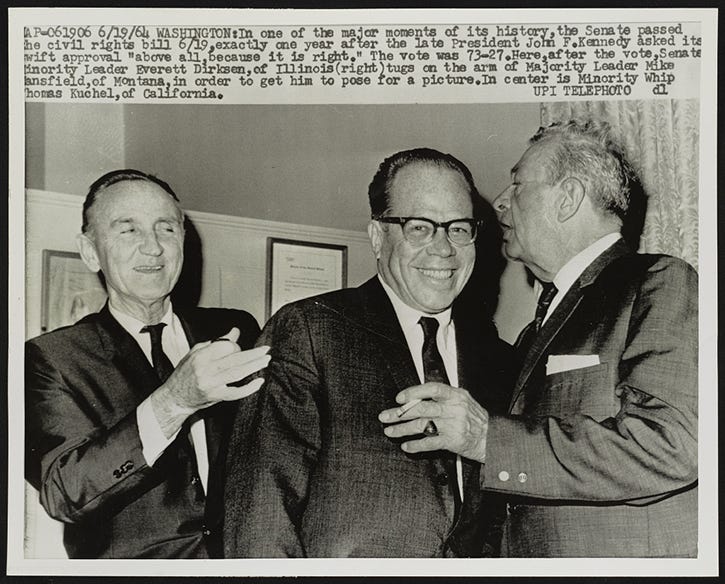

So, one man who briefly collaborated with the Nazis occupying France but who risked all for a united Europe. Another, who thought big city voters should have less of a vote than rural voters (as Trump Republicans do, the idea has not gone away), but who helped pass the most significant civil rights legislation since the US Civil War. Heroes? How do we decide?

Does one act, like Dirksen, make a hero? Do a few flaws, whether Schuman or Mickey Mantle or John Kennedy, deny hero status?

I think about two recent “heros” from my own home town. Mariano Rivera, Yankee relief pitcher and a transplant, employed people, supports kids, built a church. Ray Rice, now disgraced Ravens running back and a born native, worked tirelessly with kids and generously supported the schools. How do we help kids distinguish?
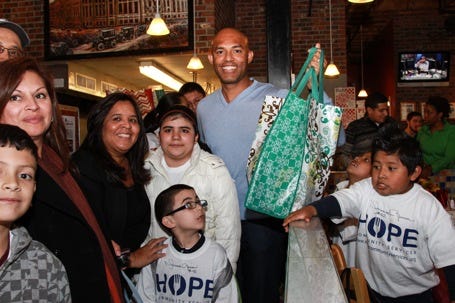

If we want our kids to have heros we must reclaim the heroic narrative. We need to stop focusing, especially with our younger kids, on the historic figures of a disconnected past, and start looking at heroic action and heroic lives in the world our children know.

John Glenn is a hero to my generation because he risked his life not just for his nation but for a belief in science, a belief in wonder, and, we discovered later, for a deep love of his wife, of his community, of his nation and its most vulnerable citizens. He lived a model life through a series of historic moments.

Who is out there today being that kind of person? Let us find them, celebrate them, and abandon our willingness to accept much less in our leadership.
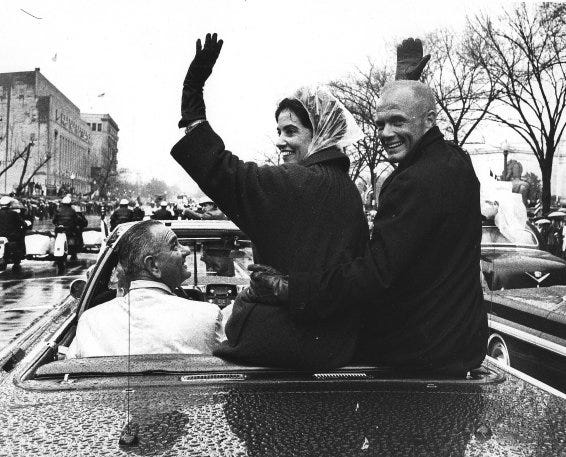

“We tend to think of heroes as being those who are well known, but America is made up of a whole nation of heroes who face problems that are very difficult, and their courage remains largely unsung. Millions of individuals are heroes in their own right.” — John Glenn
  • Ira Socol

02 August 2015

Kitty Genovese and the kid in the classroom next door


False correlation, you will say, and you will be right. But my mind is nothing but a random connector of things, so here I am...

"For more than half an hour 38 respectable, law‐abiding cit­izens in Queens watched a killer stalk and stab a woman in three separate attacks in Kew Gardens.

Twice the sound of their voices and the sudden glow of their bedroom lights interrupted him and frightened him off. Each time he returned, sought her out and stabbed her again. Not one person telephoned ‐ the po­lice during the assault; one wit­ness called after the woman was dead." - The New York Times, March 27, 1964
On a Saturday morning - I'll admit a Saturday morning at the end of a frustrated, angry week, I began to throw out challenges to educators on Twitter: 
9h9 hours ago
What will you do this year about the teacher in the room next door who's doing a lousy job?
What will you do this year about the teacher in the room next door who's punishing kids for nonsense?
What will you do this year about the teacher in the room next door who's boring kids to death?
What will you do this year about the teacher in the room next door who's blocking kids from using contemporary tools?
It's time to stop being part of a wall of silence and fight for kids in every room in every school.
I've been a cop and an educator - and cops are more likely to turn in bad cops than teachers are to do the same  

http://gvshp.org/blog/wp-content/uploads/2014/03/new-york-times.pngAnd as I threw these out, and got a flood of responses...
Hubby's a cop... That insight is so interesting and true. Sad considering both can destroy people.

The New York Paywall Times chimed in with the story of a new film being made called "37" - about the legendary 1964 Kitty Genovese murder case in Queens, New York.

As a former New York City Cop, as a native New Yorker,, the name "Kitty Genovese" can begin a world of conversation and argument. Few stories seem more depressing about how people come to see others as statistics, simply because this story seems to have been - at least in legend - the beginning of something awful.
"The socio-psychological phenomena that were studied after the killing — notably the “bystander effect,” by which individuals pass the buck to other witnesses when present at an act of violence — are universal and ongoing..." - John Anderson in The New York Times
And with these two streams connecting, I went back to my Tweet: "I've been a cop and an educator - and cops are more likely to turn in bad cops than teachers are to do the same."

Austin Street, where the crime took place, in 1964. (Photo: Edward Hausner/New York Times)
Austin Street, Kew Gardens, Queens, New York, in 1964

When I first went to work in a high school I thought two things, or maybe it was three. First I thought - I even said it to people - "I think lighthouse keepers have more peer-to-peer interaction than teachers." Exaggeration certainly, but teachers seemed stunningly isolated to me. They locked themselves in their classrooms, never watched each other "practice their craft," rarely discussed what worked and didn't work. I'd worked in many fields on my way to education and I was shocked.

Second I thought, "I know who the great teachers are and I know who the terrible teachers are." And I knew that within a couple of weeks of hearing kids talk and walking the corridors looking into classrooms. Then I realized that pretty much everybody even slightly observant in the building knew the same. And then I said, "Forget that 'blue wall of silence' crap. Cops are more likely to turn in bad cops than teachers are to turn in bad teachers."

http://www.ibeacon.com/wp-content/uploads/2014/10/UnitedStatesNewYorkNewYorkCityUnionSquareTelephoneBoothsB-20121211-940x705.jpg
Drop a dime... the anonymous call
Cops do turn in bad cops you know. In the NYPD the phrase was (perhaps still is) "drop a dime" on someone (though phone calls had long, long before ceased to be a dime in my day - please). To turn them in anonymously to Internal Affairs. It happened, it does happen, quite a bit. There's something about working day to day with bad cops - people who hurt people - people who ignore people's rights - that gets good cops (in good departments) to break through that blue wall.

Cops are more likely to turn in bad cops than teachers are to turn in bad teachers

Why? Is it because the stakes seem lower?

The fourth thing I realized - back in that first school - was that bad teaching professionals do more damage every day than bad cops and bad doctors. Really.  
"Now I know what you are saying, no school would ever do something like this. I mean, we now know that emotional abuse is bad, and we know that isolation, rejection, and public shaming is emotionally abusive, and we would never allow our teachers to engage in it. Shockingly however, emotional abuse is a problem in school. As a parent I have had to go to bat for my kids several times. For example, my son’s teacher put his name on a board and publicly humiliated him for not doing his work properly. When I told her that her public humiliation was making him feel bad, all she could say was that if he wanted to avoid the bad feelings, he’d have to perform to her expectations." - The Emotional Abuse of Our Children - 2013
I know that teachers know teachers who do things like take away lunch periods from kids who haven't gotten work done. Teachers who reduce grades for kids who 'move too much' in class. Who take away outside play time because of minor non-compliance. Who yell and humiliate, or who just humiliate. Who strip adolescents of their evenings because they think homework is a great thing. Who will keep children uncomfortable for hours on end - day after day (wasn't that a CIA torture technique?). I know teachers who know teachers who are bullies every day - but we hide behind the ideas that they are simply "tough" and "old-fashioned."

I know something else - maybe many kids will survive those teachers, but in every school there are kids in the classroom next door who will be permanently damaged - whose allostatic load will be pushed into the breaking realm - by teachers like that. These children are usually our most vulnerable from the start, and they will be most damaged - for life. And I know that those kids are calling for help, just as Kitty Genovese was, and what are we doing?

The Southern Poverty Law Center lists the characteristics that create education's Bystander Effect. These offences, these psychological assaults are:
  • Rationalized by offenders.
  • Normalized by students.
  • Minimized or ignored by colleagues who remain silent.
  • Enabled by inaction of school systems.
  • Undetected by outsiders.
Undetected by outsiders because, as on that night 51 years ago in Kew Gardens, nobody picks up the phone, nobody makes the call. "Colleagues may know about the behavior through rumors or persistent complaints, but think there is nothing they can do. School officials may have reason to believe it is occurring, yet fail to act. Almost without exception, offending teachers mask their mistreatment of students as part of a legitimate role function, using the rhetoric of “motivation” or “discipline” to justify their actions."

Extreme, but... how many teachers in this school knew about this? C'mon...

Bystander Effect is Bystander Effect. Whether its a dark night on an urban street or in the bright lights of a middle school. And crime is crime. Is a pursesnatching ok enough that we don't call 9-1-1? Is simply abusing children over homework ok enough that we don't go to our principal? We either step up and hear calls for help or we choose to not do that. Stepping up has risks in every case, even calling 9-1-1 can lead to real issues down the road. "Dropping a dime" on a colleague seems as risky an employee behavior as possible. But do we have room in our schools who will not step up for children?

The cops in 1964 New York City were horrified by the Kitty Genovese case. So horrified that they could hardly not talk about it, if the account I read in the book Tomorrow-Land: The 1964-65 World's Fair And The Transformation Of America is anything close to true. It represented such of break in the social fabric - the social fabric that cops know is the only thing that makes their job possible (see Baltimore today for what happens when that dissolves) .

So no teacher in this school knew what this child was talking about? 
Or only the kids?

That social fabric is what wraps our children and let's them grow into healthy, safe adults. It is really just that, and we cannot let that fabric fray. The SPLC notes that, "There is typically a high degree of agreement among students (and colleagues) on which teachers engage in bullying behavior," and that, "Teachers are perceived to bully with impunity; they are seldom held accountable for their conduct."

How do we finally begin to change that? What will you do?

- Ira Socol

23 September 2014

Getting to Making, Getting to Education which actually Works

"He was a kid with a lot of issues," our teacher told a crowd at the World Maker Faire at the New York Hall of Science (NYSCI) last weekend, " you know, getting into trouble all the time, real crazy stuff." We were discussing a summer school for Middle School - not often the happiest place on earth - but one of our summer schools converted into a Maker Camp, with all content taught through student generated projects.

"Now he couldn't pass math, he had never coded anything, he really didn't know how to use any tools, but he did love baseball. We told him, we told all the kids to just find a project and start it. This kid built a pitching machine which used an Arduino and lasers to determine pitch location. He did that in three and a half weeks."
Our teachers and a MakerEd leader
OK, what did this child learn? And how might that learning be compared with his learning in a traditional educational setting?

We are trying to go "all in" on Making because we believe it is the right way for kids to learn. "Learn to Make, and Make to Learn" is what we say. In doing so we are trying to undo a century and a half of education designed to filter kids out, to stratify, to limit, and to train compliance.

We think that our children all need to have the opportunity to succeed. We think that in these times our nation and our world need everyone contributing to our society to their highest capability. Our school board has declared that we have just one strategic goal, to "unleash potential" of our students through helping them achieve our "Life Long Learning Competencies." And we aim to unleash that potential by following our "Seven Pathways" to a new form of pedagogy.

Unleashing Potential
The day after the fair, as our teachers sat with the "informal educators" of NYSCI discussing Maker Education and debriefing the fair, a fourth grade teacher told of a building project designed to generate improved writing skills in a class of mostly rural kids who, "can tell you every kind of story, but froze when asked to write it down."

So with thick cardboard tubes and all kinds of junk and lots of hand tools, her kids built creations of their own imaginings. As they built they used Google Forms to answer simple questions, requiring one, two, or three word answers at first, then moving up. From "are you finished?" to "what do you want to do next?"

This "making" filled the reading/writing time in her class, and more, and might have seemed like a 'wasteful diversion' to some less observant observers, but after a couple of weeks, when the kids had created their creations, they began to write stories about what they had made. Now, to quote one of the NYSCI team, they already had "skin in the game." Unlike most school writing assignments - whether in fourth grade or twelfth grade - which are essentially meaningless exercises disconnected from any student's actual existence - kids who had spent a couple of weeks making something fully theirs had stories they were quite anxious to tell, and to tell to a wide audience, so they wanted to write.

So, she said, they wrote and wrote. In pairs or as individuals they grabbed laptops and wrote, and as they wrote and edited, they gained all kinds of skills - from what we refer to as "text entry" - not touch typing but feeling confident that you can get text on a page one way or another - to the basics of grammar - and they did that without anyone sitting at a desk staring at a teacher in front of a board. She ended by noting that one of her 'cognitively challenged' students wrote a full three-page story about her construction.

All of our student computers combine a full suite of accessibility tools
with multiple ways to do everything... creating student choice.
We came to the World Maker Faire because we believe that it is an extraordinary professional learning opportunity, not just for those who can make the trip, but for the teachers those teachers can influence. We see learning opportunities in this kind of event - or similar trips to places like the Chicago Children's Museum - that simply seem impossible at 'education conferences.' Here we see how informal educators educate - which is essential for us to learn. I know that I often ask: "Why would children come to your school if they didn't have to?" And informal educators work in a world where they must get children to voluntarily come to them and participate.

Why would kids come to your school if they didn't have to?
(World Maker Faire 2014)

So when we talk about engagement we probably won't find it in canned programs from educational consultants who offer us classroom plans. Instead we need to look at, and adapt, ideas from people who literally have just seconds to grab attention, and who must continuously hold engagement through individualizable experience. It's not that we can throw a massive party every day like Maker Faire, but we are learning that Making to Learn allows the children themselves to create their own engaging context.

One of our high school teachers told the story of our summer "Pop Up MakerSpace" in a borrowed doublewide in, umm, a "socioeconomically challenged mobile home community." Also a community where speaking English can be a rare thing. We honestly didn't do much planning, he told people, we borrowed the space from a church, we hired someone quickly to add electrical capacity for lighting and computers, we borrowed a variety of tables and seating from the closest high school - also a laptop cart. We brought in lots of cardboard, lots of tape, lots of scissors, some wires, some soldering guns, some hand tools, oh, and a MiFi. And we began. "C'mon in and make stuff," we told the community, and the kids came. Kids 4 through 19, including he remembered, two kids who came within 12 hours of their family arriving in the country. And as they "made" they learned vocabulary - "you're making a house? that part is the gable." "you're making a circuit, let's talk about the wiring..." They learned the mathematics of measurement, the science of geometry and the physics of electricity. "And the kids loved it so much, their parents started coming, and learned to use the sewing machines we had borrowed, and in the end they took over one room of the trailer and started their own cooperative business making things."

Later, with the NYSCI group, he described how his computer science class operates. They work on what they want, from video games to Android Apps, and essentially his curriculum is that students create their own internal Stack Overflow database, which grows each year, so each group of students builds on the knowledge base of those before. Making has a simple role in schools, my friend and colleague Chad Ratliff says, "it is putting content into student-created context."

NYSCI lobby during Maker Faire. What's in your school entry?
Whatever we do, from learning to edit those words that matter in a seventh grade middle school room...


...to developing language skills, engineering skills, and math concepts in a music studio...


...that's the high school principal on the far right...
the music studio cost us about $5,000 including construction - it filled an old computer lab

...to putting science and engineering and entrepreneurship together, or learning history through reverse engineering historic technologies and printing them on a Makerbot, we see Making as the path to engagement, and engagement as the only way to get kids on the path to learning.

One of our middle school teachers, whose engineering/shop students collaborate across the curriculum, and who have made everything from a reimagined 1837 electric motor to sound amplifying stands for their phones, told the story of a sixth grader coming in and saying, "I want to build a batmobile."

"Why would you want to build a batmobile?" the teacher recalled saying, "isn't Superman better? He flies, he doesn't need a car."

The child considered this for a few moments, then said, "Maybe I'll design and build my own kind of car." "Now we're going someplace," the teacher responded.

And if we can't teach every middle school subject through a student's desire to build his own car, what kind of educators are we anyway?

- Ira Socol

03 September 2014

Why Choice? Why Comfort? Why Student Control?

If you are in North America or Europe school has just begun, and in hundreds of thousands of classrooms things have gotten off on the wrong foot. Teachers and administrators and introduced themselves as "enemies" of students, and students responded in kind.

In those classrooms seating charts have been introduced. Students have been expected to sit for long periods in brutally uncomfortable furniture. Odd rules have been announced - limiting children's ability to use the toilet for example - or to get a drink - or required forms of "paying attention." Punishments have been announced before any rule has been broken. In schools where computers or has limited the functionality, and has screamed to the students, "We don't trust you!"
similar devices have been distributed the set up of those devices
Why?

OK, disclosure. I was one of those students who, faced with a classroom environment like those described above - right up through graduate school, would leave that class and never come back. Most students don't do that, they either shut down or revolt in ways big or small. They do this in third grade. They do this in middle school. They do this in high school. And teachers often sit there and wonder what went wrong, or they grade on a curve, admitting publicly that they cannot help more than a third of their students do well.
"I don't understand this boy," a math teacher said to a librarian at the first high school I worked at. "He'd rather get detention and go to Saturday School than come to my class." "Well," the librarian responded, "I guess you have to think about that."
Learning is all about trust. If a learner doesn't trust the source of information, very little good happens. That's one thing if the learner is at home or in a coffee shop online, and can choose another source. Its something else again if this is "school" and "we," the educators, are being paid to support this knowledge gain.

High School Library Music Studio
Student-created content and context
And trust is always a mutual concept. If Americans don't trust their government - their government doesn't trust them - and spies on everyone while complaining about a lack of trust. If the police in Ferguson, Missouri don't trust their community, and go out into as if dressed for a foray into the Afghani mountains, the people of Ferguson do not trust their police, and presume all of the worst. And if a school won't trust a 16-year-old to use the toilet when they need to, the 16-year-old will behave as if an aggrieved prisoner.

Aggrieved prisoners are learners, but they sure ain't learning what you want them to be learning. They learn how to distract themselves. How to ignore you. How to excape your class. How to annoy you. I'm always amazed be educators who begin a class by listing the things that upset them most... "coming in late, chewing gum, talking in class, leaning back in the chair" ... and are then shocked, shocked, that students do those very things.

'nuff said...

If only we began from the idea that students - that children - are humans. If only we realized that there is only one moral universe and one standard of behavior, not "us" and "them." If only we started with the thought that if something - say, a rule - is "school only" we need to wonder why school cannot operate like the rest of the world...

Imagine if, at your home, you had to ask to go use the toilet and had to first get a pass. Imagine if you were told that you were not allowed to add a program to your computer or an app to your phone, or that you couldn't change a setting. Imagine if someone filled your house with traditional classroom furniture. Imagine if - as a teacher - you were docked pay if every student didn't learn every lesson on time. Imagine if you - as a state legislator - had your pay held back if every third grader didn't read at grade level. Imagine if you, as a principal, were required to sit in your standard student chair all day long.

Becky Fisher - my colleague - challenged schools to loosen up on technology controls recently in a
Every day my email brings me ideas from
profiteers suggesting how I can limit
student opportunities.
brilliant blog post
. And her post has inspired me to ask you to treat your students as humans - as you would like to be treated - on everything.

It's not just about what also applies to you, its about - because education is about our future - how you would like to be treated. Because in a free society we must learn to be free, and learn what it means to be free.

Where I work we ask our teachers and administrators to ensure that students have choice, are comfortable, and have control of their environment, their technology, and their learning, every day. We do that because we believe that we are helping our children become happy, healthy, successful adults who can thrive in their future, not just comply in our past.

So today, take the shackles off. If you want students to trust you, to be willing to learn what you feel is important, you must trust them.

It is really that simple.

- Ira Socol

14 August 2014

Leadership in Education?

I've seen many kinds of leadership in education across my life. I've know many directly, I've observed far more. At the far point on the scale I've watched the Chicago Public Schools and their leaders create one of the worst places to attend a public school on the planet, and its hard to believe that there has been anyone in charge of that system over the past 40 years who didn't really really want poor children to suffer, and to begin life as far behind as possible. They (Paul Vallas or Arne Duncan or Rahm Emanuel) can certainly argue with me, but I'd love to see any of them produce any actual evidence to the contrary.

Dr. Jonathan White, a real mentor to me, on leadership

At the other end are school systems like the one I work in now where the entire leadership, from the school board on down, is willing to take informed chances to continually do what is right for children. (That system is not great because I am in it, I have chosen to be in it because it is great.)

In between there are places like Detroit - a weakly led system sabotaged by a vicious anti-school state political agenda (pdf). And New York - where political style points over a 20-year-period have taken precedent over what children need.
I listened one day as Dr. Jesse Turner, the principal of our Monticello High School, explained to visitors from Australia and Michigan why he always calls his students "children." "My children don't always have a chance to be children," he said. "They go home and they need to work at jobs, or as caretakers, or sometimes to really be parents. So when they are here I want them to get to be children. I want them to play and explore. That's why I call them children, and they understand that."
And there are places like New Rochelle, New York - where I grew up and a system I continue to observe - which always seems to find ways to keep most kids - and, in contrast to Chicago, the full socio-economic range of kids - coming to school for the right reasons. And the Godfrey-Lee Schools in Western Michigan where great leadership is hamstrung by the horrendous inequality of resources for childhood we casually accept in the United States.

So I've watched for leadership. I think my elementary school - no matter what I thought about it - had pretty damn good leadership when I was a student there. It was a place of teacher innovation. I know my "junior high school" had terrible, unresponsive leadership which left students to fight for themselves. My high school had great leadership despite a tough place at a tough time. It was risk-taking leadership which greatly expanded opportunity across the spectrum of students and which began a tradition of trust in students - the open campus among others - which continues to this day.
"Of course there are other reasons why the 3Is [My alternative high school] is falling apart: the Steering Committee doesn't work (does the U.S. Congress do any better?), tutorials don't work (do you want them to do anything? If not, get rid of them; if so, do it), some classes don't work (complain, complain loudly and insistently or make some constructive criticisms or stop going to those that don't work for you). [Alan Shapiro wrote to students in the mid-1970s. Alan founded this school-within-a-school with Neil Postman, Charlie Weingartner, and Don Baughman in 1970.]

That sage, Kurt Ochshorn (also a non-classtaker, by the way) once said ["See Ira Socol and Tom Murphy on the art of not taking classes; on the other hand, for the art of taking classes, see Kim Jones, who amassed something like 12 credits and graduated after her sophomore year"], "The 3Is isn't a program. The 3Is doesn't have a program. You can do whatever you want." Kurt did. And he discovered what anyone discovers when he/she can do what he/she wants. T. H. Huxley, a 19th century biologist and teacher, said it well: "A man's worst difficulties begin when he is able to do as he likes."

Now you may not be able to do exactly as you like, but even if you could, you wouldn't be satisfied. The problem with doing whatever you like is that first you have to discover what that is. That's a real problem. And further, assuming you do discover what you want to do, how long will it be before you don't want to do it anymore and recommence the search? Partial definition of a human being: a creature who is chronically dissatisfied (see Freud, Civilization and Its Discontents).

Nevertheless, Kurt was at least partly right -- 3Is is less a program than an opportunity. Admittedly one that has its limitations. Probably because the restless fires of youth no longer flame in me (wow), I don't mind the limits much, but am thankful for the opportunity. What that opportunity has been for me I discussed as well as I could at last year's graduation. (Those who missed this remarkable address, gnash yer teeth.)

So when I return this fall I expect to be greeted with an inadequate orientation and cries that 3Is is falling apart. But in my 25 years of teaching, I haven't found any group I like to fall apart with as much as you."
I saw meaningless leadership as an undergrad at Michigan State University long ago - a leader who wanted a different kind of job. I saw stronger leadership at two other schools I attended, Pratt Institute's School of Architecture and the New York City Police Academy, where there were clear, defined missions and yet a general respect for diversity. At Grand Valley State University I saw great leadership both where I worked - in Academic Computing - and where I studied - in Social Sciences. In Academic Computing we were groundbreakers in serving students - especially vulnerable students. In Social Sciences I watched a Dean take care of student needs above all other concerns, and I watched him lead in new ideas, such as digital curriculum (in 1998).

Unfortunately at Michigan State University a second time, I found no leaders at all, save a retired professor named Cleo Cherryholmes (Rest in Peace), in the College of Education - just gatekeepers and status builders. That's a terrible thing to say, but I'll defend MSU by noting its pretty universally true among US schools of education.
This July we ran Professional Learning seminars for about 750 educators (this August we got the other half of our professional staff). I led sessions on our "Seven Pathways" (with Meg Franco) and on "Design for Learning."  In two of those sessions I had wonderful elementary school principals - Kendra King and Lisa Molinaro join us. They both led by example - joining their, and other teachers, in committing summer hours to this work, and they led by effective conversation. Lisa gave examples. Whenever a teacher doubted that he or she could "make this work," Lisa waited through the conversation and then gave an example of similar transformation in her school - crediting the teacher involved, not herself. Kendra was quieter, but she raised essential questions at key moments. When we were talking about classroom rules such as "make eye contact" or "sit still," she spoke up. "Whenever you make a rule," she asked in moment I won't forget soon, "ask yourself, who am I leaving out?'
What I've learned is that leaders protect those under them, but not at all costs. And that real leaders most protect those risk takers who try to make things better for those served. That was true when I was in the NYPD, it is true in any school. That leaders constantly challenge those they lead to do better, and expect them to do better.

I've learned that leaders never accept the status quo, one who does that may be a "boss" but is not a leader. And I've learned that leaders never have double standards or differing moral systems. In schools that means that adult behaviors need to match expected child behaviors. If they don't, well, kids know exactly what's going on.

Management by Walking Around
Mostly I've learned that leadership is about listening and watching. It's surely not about talking and sending out directives. When leaders listen they enable conversations which have impact. When they don't listen, neither does anyone else.
My boss at GVSU Academic Computing listened one day while I told him that an Ed Psych prof had recommended that I investigate Text-To-Speech computer systems - this was early 1998 - and he looked at me and said, "huh, if you need that I bet a bunch of other people here need that." Without my asking a thing he gave me a year to investigate what we'd need to make the university computer system universally accessible and a budget to "buy one of everything and see what works." I loved that year, but that was hardly all I did. I'd do anything the department needed. I was the most loyal, productive person there. I'd finally really been heard and understood.
- Ira Socol

29 January 2014

"Grit" - Part 3: Is it "an abundance of possibility" our kids need?

Note: Clearly, I will need a "Part 4" here, but I will publish this today, to support the ongoing conversation...

Dave Meister left a comment on my last post which included this story:
"Days like today remind me of my first year as an elementary administrator and going to school and finding a student in the window well of the school on a sub zero morning. She had a horrific life at home that the authorities (and I) failed to save her from. Her progress through school followed my mine ascension to a high school position. She became a very angry high school student that eventually dropped out. As far as I knew she never had any slack. She was smart in her own way...avoiding the worst of her world, but she became pregnant and dropped out. I have lost track of her, but know that we as a community failed her, but I know this, she had grit. It was ground into her by life experiences and she could not get past the scars."
The discussion of "grit" heated up across the Twittersphere in fascinating ways, and with that discussion a deeper conversation began about the components of "grit" and the origins of Angela Duckworth's theories.

Nancy Flanagan: Kiss My Grit 
Grant Lichtman: Does Grit Need a Deeper Discussion? which has become, perhaps, the conversation on the topic.
Josie Holford: Grit Hits the Fan 
Joe Bower: Let them eat grit - 4 reasons why "grit" is garbage  
Grit: Part One 
Grit: Part Two
and Vicki Davis: True Grit 

There are two key questions to get to, but first, maybe we should define "grit" if we're going to argue about it. And because of her deep role in "the selling of grit," let us use Angela Duckworth's definition as expressed in her "Grit Test" (pdf):
"Author Rose noted the key elements of the Protestant ethic to be “diligence, punctuality, deferment of gratification, and primacy of the work domain”' (Rose 1985, 102).
  • I have overcome setbacks to conquer an important challenge.  This is good according to Duckworth, and perhaps, to all of us.
  • New ideas and projects sometimes distract me from previous ones.  This is bad according to Duckworth, but certainly might be debatable for many of us, and for many who work in what is called, "the creative economy."
  • My interests change from year to year. Also bad according to Duckworth, but also quite debatable. 
  • Setbacks don’t discourage me. This is good according to Duckworth, but, really? We do not get discouraged by repeated failures? What would we need to accomplish that?
  • I have been obsessed with a certain idea or project for a short time but later lost interest. Again, bad according to Duckworth, but also highly debatable.  
  • I am a hard worker. Of course, the very heart of "good" according to Duckworth and the essential belief behind the "Protestant Work Ethic." But what if someone said, "I'm a good caregiver" instead, or "I'm a deep thinker"? Why aren't those statements here?
  • I often set a goal but later choose to pursue a different one. Very bad in the world of Duckworth, which makes everyone from Steve Jobs to Paul Allen, Thomas Edison to Sergei Brin, a loser on this grit scale.
  • I have difficulty maintaining my focus on projects that take more than a few months to complete.  Another bad one on the Duckworth scale, keep your noses to your grindstones, lads.
  • I finish whatever I begin. Of course, this is what Duckworth wants, and why anyone who drops out of any school-based thing is a failure in Paul Tough's How Children Succeed. But is giving up on a task really a sign of weakness?
  • I have achieved a goal that took years of work. Another Duckworth "gold star"- you can see the type of personality being prized here. In school this is the single-minded pursuit of all As and graduation.
  • I become interested in new pursuits every few months.  Bad, how could it not be here? People who have wide-ranging interests make poor drones on the assembly line.
  • I am diligent. Ah, yes, like "hard worker," this is another Duckworth code word for "compliant" and "self-sacrificing to white middle class expectations." It is another "good" on the scale.
Note: if you use the PDF those questions with an asterisk are "bad" - they're marked to make it easier for us to judge our students.

Let's put this together - anything at all like ADHD is very bad, those "renaissance" types are bad, kids with high-level street survival skills are bad, but compliance with the expectations of "white" "western" society is very good. Leonardo da Vinci, Paul Allen, Steve Wozniak, Bill Clinton, John Kennedy are all in the problem mode. The winners on Duckworth's measuring stick? The guys who spend their lives hunting for Big Foot in all kinds of weather, the Unibomber, the person spending 30 years in the same job.

If you read through Duckworth's "scale" you will see a pattern. Everything she sees as "good" is about scarcity - scarcity of time, scarcity of resources, scarcity of attention, even scarcity of support - her "good" is relentlessly independent, single-focused, and committed to whatever is expected. Everything "bad" is about abundance - many ideas, many projects, many interests, a belief that there is time to get things done.

This is not a "scientific" divide. Rather, it is a religious divide, and division created by whether one believes in Social Darwinism or not. Angela Duckworth believes in Social Darwinism, the root of the reprehensible eugenics movement of the 20th Century. She extensively quotes Francis Galton, "the father of eugenics," in her work, and, one tends to believe than an Ivy League professor knows who she is quoting and chooses to quote someone for a reason. 

But Angela Duckworth is also fierce in her religious convictions, a true believer in what I call "American Calvinism" - a secularized version of the Calvinist Protestantism which mythically arrived in North America with the early Massachusetts settlers.  

Let's see how Duckworth and the Puritans line up:
"[T]he key elements of the Protestant ethic [are] “diligence, punctuality, deferment of gratification, and primacy of the work domain” (Rose 1985, 102)"... "[John Calvin] believed that people could serve God through their work. Professions were useful, and work was the universal base of society and the cause of differing social classes, every person should work diligently in his own occupation and should not try to change from the profession into which he was born. To do so would be to go against God's own ordination since God assigned each person to his own place in the social hierarchy (Lipset 1990, 61-69)."
In Twitter conversations people have argued that the "work ethic" expressed above - and in the work of Duckworth and Paul Tough - is "not religious," and cannot really be seen as "racist." Those promoting "grit" are not "Calvinists" they say, and Duckworth isn't even "white," but in fact the nature of Duckworth's work, and the essence of Tough's reporting, are both fundamentally religious and fundamentally "racist" in terms of belief in what those back in the day might have called "Godly behavior," and in terms of group identities being "closer" or "further" from "God's plan."  

That the myths of the Protestant Work Ethic, and mythic identity racism, are embedded in the American power structure does not make them less religious in nature or origin, simply more troubling, because they have been used for all time to abuse those not wanted within that power structure. The Irish, as I noted in the last post, are lazy, illiterate, drunkards. African-Americans are lazy and uninterested in success. Italians are lazy and disrespectful of the law. Latinos are lazy, illiterate, and can't stay put and focus.

The myths of the Protestant Work Ethic and identity racism grew in America and has been carried forward for almost four centuries because it made those born to wealth and power feel good about themselves. How much better to describe your ancestors as having struggled alone against a brutal wilderness and wild savages than saying that your ancestors were "illegal immigrants" who stole a remarkably resource rich continent from its inhabitants. How much better to embrace Jackson's "Frontier Theory" than to worry about slaves and underpaid immigrants who built the early national roads, dug the Erie Canal, and built the railroads. How much better to celebrate "American Invention" than to discuss the wholesale intellectual property theft - from woolen mills to those railroads to the telephone debuting across those 1876 fairgrounds - which had enriched the American Republic's first hundred years.

Those myths continue to this day. How much better to say that your children get into the University of Pennsylvania, or Harvard, or the University of Virginia because they are smarter, because they work harder, because you, as a parent, have educated them better, than to discuss the advantages of race and class. How much better to say that you have succeeded in business because you speak correctly, or have the right "work ethic," than to discuss what you inherited.

This is "understood" so deeply that it has been "naturalized." To quote Edward Said (from his essay on Rudyard Kipling's Kim in his 1994 book Culture and Imperialism, in a way which describes Paul Tough's work quite well, “its author is writing not just from the dominating view-point of a white man in a colonial possession but from the perspective of a massive colonial system whose economy, functioning, and history had acquired the status of a virtual fact of nature.”

In other words, the myths of the Protestant Work Ethic and Identity Racism explain why we need not bother to build a fair and equitable society. And the myth of educational "grit" explains why we need not create fair and equitable schools. Life made easy for those in power.

But what if the key to resilience in school, in life, was abundance. What if "grit" was something which taught you the lessons of scarcity - of pure survival - but abundance offered you the "slack" you needed to get where you might want to go?

After all, would there be a Facebook if Mark Zuckerberg, from 18 to 21, had been working 40 hours a week at a mini-mart in White Plains while commuting to Westchester Community College? Where might Apple be if Jobs and Wozniak had not had that famous garage and food provided by parents? Where would I be if not for a fabulous high school teacher who gave me the time, space, and resources to keep going?

"Grit" - that response to scarcity - taught me to cheat. to lie, at times to steal (yes), to find any shortcut, to fight, to flee. Abundant moments, that opportunity for "slack" - those very Catholic "feast days for the soul" - taught me what I could aspire to.

This is not an idle, theoretical, conversation. In my "debate" with Paul Tough on Grant Lichtman's blog, I brought up examples of high schools which have provided "abundance," and Tough fought back by saying that these schools lacked the "concentrated poverty" of the schools he visited. But as I responded, that is the point. The schools he visited exist in school systems which have created a vicious level of socio-economic segregation, the schools I suggested exist in systems have done the opposite. New Rochelle, New York, or even Albemarle County, Virginia, could easily create significant sized high schools filled with nothing but poverty, as the City of Chicago has done. All it would take to do so would be for those places to mimic Chicago's school policies. But they have not. And the result of those political choices - even though both school systems do lose a good number of children to less inclusive private schools - are inclusive public secondary schools which offer abundant possibility and strong supports. Diverse academic and arts programs, strong counseling programs, and student-based choices.

creating "abundance" - time, space, choices, safety
Here are two examples. In Albemarle County, Virginia, in our most "at risk" high school - no, not a Fenger - we have not allowed that to happen, we added, a few years in response to student request, a music studio in our library.  This allowed a range of high poverty students, and we’re talking both black and white poverty, to come together around an existing set of community passions, from rap to hillbilly blues, and then to bring the middle class students, with rock, show tunes, and classical added, to join with them. We allowed these students to present their work, and to construct their core course learning via music, we did not impose our passions, our paths on them – rather we embraced theirs. From there we expanded an already inclusive theater program, including what we might call “street dance” and “street music” if we had real streets in that area. We kept kids in school. We kept kids in class. We kept kids engaged and involved in the positive. It changed, the students told us, the entire character of the school for the better. We have continued to build on those kind of efforts in that high school and others, because we have discovered the value of abundance.

"slack" generated by "abundance"
In our "at risk" elementary schools we have pursued a differing, but similar course. Our classrooms are now designed around what we call "choice and comfort," with kids able to discover what makes them comfortable in terms of learning environment and learning style. Kids lie on the floor, perch on stools, lean against high tables, sit on low tables. They write using differing technologies, from pencils to handhelds to tablets to laptops. They move when they need to. We no longer enforce Calvinist church behaviors, and so now we allow children to harness the full power of their cognitive energies on their learning. By providing an abundance of choice, an abundance of time, an abundance of tools, we have encouraged persistence in ways that "grit theorists" can only hope to emulate.

In other words, offering children abundance is a choice. It is a choice a community - a nation - can either make or not. And if a community, or a nation, chooses not to offer children abundance, I still find it remarkably unfair to complain that our children of scarcity lack character.

What Paul Tough ignores, from his perch at The New York Times, is the responsibility of organizations such as The Times to promote fundamental change. Tough does call for a better welfare system, which is lovely, I suppose, but not the equity our children need. In fact, The Times has waged quite the war for inequity in education through the reporting of Matt Richtel, an Tough, in a book which - whatever he says now - promotes the sense that what is primarily needed is "character," has done his own substantial harm.

Myth matters in the struggles for power. And understanding mythic belief matters even more. And as I have said on more than one occasion, education is the most political thing a society does, because it is a struggle for our future.

What Duckworth and Tough do in their, perhaps conscious for her, unconscious for him, unquestioning belief in the Protestant Work Ethic, is to give the power structure a pass, no matter how much either of them calls for more charity.

That is a a pass I will not sign on to.

- Ira Socol

_______________________________________________

I need to repeat, if necessary, those beliefs of mine which underlie my commitment to what I am writing. I was thrilled when @jonbecker (Dr. Jonathan Becker) called me a "scholar/advocate" in a tweet about my last post, because while some others would pretend otherwise, I never hide what drives me to tell the stories I am telling. So let me say again, I am the job-changing son of a job-changing father. I've given up on many things - attempts at school, careers, political efforts, writings, hobbies. I like to nap. I like to lie around and stare at the television. I cannot focus through a half hour meeting - none of which particularly matters. What does matter is that I am committed to the future of children who "fail to meet" societal expectations. I see ADHD as a positive, not usually a pathology requiring high levels of medication. I see social and cultural variety as a tremendous positive, and efforts like "the Common Core" as misguided attempts at homogeneity. I see age-based expectations and standards as an assault on the natural differences in children. And I believe that much which we take for granted in "white," "educated," "middle class," society needs to be questioned if opportunities are to be democratized.
"Scholars are often wary of citing such commitments, for, in the stereotype, an ice-cold impartiality acts as the sine qua non of proper and dispassionate objectivity. I regard this argument as one of the most fallacious, even harmful, claims commonly made in my profession. Impartiality (even if desirable) is unattainable by human beings with inevitable backgrounds, needs, beliefs, and desires. It is dangerous for a scholar even to imagine that he might attain complete neutrality, for then one stops being vigilant about personal preferences and their influences—and then one truly falls victim to the dictates of prejudice.

"Objectivity must be operationally defined as fair treatment of data, not absence of preference. Moreover, one needs to understand and acknowledge inevitable preferences in order to know their influence—so that fair treatment of data and arguments can be attained! No conceit could be worse than a belief in one's own intrinsic objectivity, no prescription more suited to the exposure of fools." - Stephen Jay Gould, The Mismeasurement of Man (revised), p. 36