Showing posts sorted by relevance for query reading. Sort by date Show all posts

09 February 2012

...in which I may suggest that I oppose literacy

"Skill in reading is desirable. However, the importance of reading may be overemphasized in schools. Reading skills are determined relatively and not absolutely. Thus, relatively poor readers will persist. Schools cannot eradicate individual differences. Biological makeup and societal pressures are the important factors in determining reading skill. Present methods of reading remediation are of questionable efficacy and are traumatic to some children. Time with its associated normal development succeeds in remediating the majority of children with dyslexia. Most poor readers eventually attain reading levels that enable them to comprehend the types of printed materials commonly encountered. If a child finds reading difficult or distasteful, that child should be encouraged to read but should have the right not to be forced to read." - R.D. Snyder, 1979
I have been introduced, more than once, as, "this is Ira, he's against literacy."

It's a funny introduction. I think of myself, in some weird ways of course, as a "prophet" of literacy, bringing the love of stories, yes, of books, to many who have grown up without it, but when I run into your typical "literacy advocate" I often fly into a rage.

My rage now has been created by two things, first, this "What if everyone could read" campaign by Pam Allyn and her organization "LitWorld and LitLife," and a Guardian article somehow mixing Dickens 200th Birthday with government mandated phonics ("Please sir, may I have another Pseudoword?"), and the British government's desire for all students to visit the libraries the British government is closing as an austerity measure.

Allyn is perhaps less ironic, and more hateful, fully demonizing me and all others who struggle with decoding text - she actually extends this generationally, choosing to bash our children. "When a child cannot read or write at an appropriate level for her age, it affects her ability to understand other subjects. Struggling readers connect learning with embarrassment and frustration, which puts stumbling blocks in their way and prevents them from reaching their full potential. Later in life, struggling child readers become struggling adult readers who are far less likely to vote and secure jobs than their literate counterparts. In addition, literacy levels correlate with health outcomes, both for the individual him or herself as well as his or her children." Thank you dear, I feel all better. May I now psychoanalyze a person who chooses to make their living describing others in pathological terms?

I like to read sci-fi and mysteries as I fall asleep...
The Decoding Obsession

Who reads? Who reads well? What does "reading well" mean? "In the hypothetical “average school,” 50% of the students will read at or below grade level when grade level is defined as the class median. This statistical fact is generally not recognized. Educators and parents tend to view below average performance as unsatisfactory. A student performing below average in a classroom should not necessarily be considered an adverse reflection on either the parent or the teacher." - Snyder, 1979. Actually, "below" is the "norm." 67% of American fourth graders fail to read "proficiently" for their imagined "grade level," along with 66% of eighth graders, raising questions about that "grade level" concept. According to "KidsCount" from the "Annie E. Casey Foundation," in all of the United States, only Massachusetts has 50% of fourth graders reading "proficiently." This is no doubt due to the individual health insurance mandates, and required services provided by religious hospitals, of RomneyCare.

So, if so few are reading well... how the hell are people getting information or working?

If you listen to this, you simply will not know anything of
Dylan Thomas's
A Child's Christmas in Wales
The argument made is that our failures, whether "our" means the United States or the United Kingdom, lie in the failure of schools to beat more children into submission via phonics. If only our kids were better at decoding alphabetical text into tiny fragments of words which are tiny fragments of ideas, we'd beat those damn Chinese, Germans, Brasilians, Singaporians... whoever. Then the argument accelerates, abetted by educators who talk to human resources mismanagers. You can't do any job anymore unless you can decode alphabetical text and prove that by answering multiple choice questions on trivia included in the text.
"Although this is a common argument today, it ignores the fact that modern science and technology create many jobs in which literacy demands go down, not up, thanks to human skills being replaced by computers and other sorts of technological devices (Aronowitz & DiFazio,i994; Carnoy, Castells, Cohen, & Cardoso, 1993; Mishel & Teixeira, 1991). This is true not just for service-sector jobs, but also for many higher status jobs in areas like engineering and bioscience. Indeed, there is much controversy today as to which category is larger: jobs where science and technology have increased literacy demands or those where they have decreased them." - James Gee, 1999.
Of course Gee, here criticizing the general "Educational Industrial Complex" belief system, is talking about the narrow definition of "literacy" adopted by way too many, rather than the broad definition of "reading," "Reading is defined as getting information from a recorded source into your head, Writing is defined as getting information from your head into a form which others can access," which I, and Gee, advocate. People like Pam Allyn of LitWorld, and the current British and American governments, believe in an untruth: "Is it intrinsically incorrect to learn from audiovisuals or even from actual experience?" Gee asks. "Why should a student be forced to take written notes or written examinations when a recorder or a direct personal dialog might be used equally well? For many students with severe reading deficits, the oral-aural route is the major alternative route for education." And I will add that, since Gee wrote this, the ability to convert text to speech and speech to text has become not just absurdly inexpensive, but completely ubiquitous everywhere except in schools. Gee goes on to make the key point...
"Remedial reading programs may be emotionally damaging to a child. These programs focus not on the child’s strengths and accomplishments but on his failure. With our present methods of remediation, a child with dyslexia can very rapidly become a child receiving special attention to reading during school, remedial instruction after school, and special tutoring from his parents at night. A large percentage of the child’s waking day can be occupied by the very thing he cannot do and often finds distasteful. Childhood can thus be marred by systematic humiliation. Any interest the child may have in the reading process can be abolished."
Obviously, its not just literature which can be transmitted - and learned - without "decoding literacy"
The instruction manuals of this century...or earlier
So, every day "we," led by politicians of dubious education and intentions, and by self-enriching dogooders like Pam Allyn, label children as pathologically diseased because their brains don't work exactly like "our" brains. And then, we administer daily doses of humiliation because we somehow forget that someone like Socrates managed to know a whole hell of a lot without being "literate" at all - and, in fact - opposing literacy in every form. We forget that almost nothing comes with instruction manuals anymore - unless its from Ikea - because when "we" need to learn to do something, we go to YouTube, or we ask for help - in person or perhaps via Twitter. We forget that storytelling - that critical transmission of culture - occurred long before alphabets were created and continue to occur in this Post-Gutenberg age.


We also forget that the tools to switch media, as I said above, are everywhere. Right from the post below: "Read the book on paper. Listen to it via WYNN (the tool which changed my life), via Balabolka (Free), via WordTalk (Free), via FoxVox (Free), or via an audiobook,or watch the video, or talk with someone, it makes no difference cognitively."

As I said, I love books, I've written books. I've "read" tons of books. I want to share this with kids. And I want to tell all those who will unwittingly support Allyn's "Forced Reading Day," or other sad initiatives, that I'd much rather you help kids learn how to use Kindle for PC and Balabolka (or some other combination) to let them access the books they want than do any or all of your "reading interventions."

What we need to get better at is accessing information and expressing ourselves. And if that is what we want to do, and decoding - or handwriting - is likely effective for us, the evidence suggests that we will learn it. And that evidence is a hell of a lot stronger than any evidence you can present for your "teach me to read" programs.

- Ira Socol

20 March 2009

CSUN 2009: Text-To-Speech from the Start

(As the CSUN 2009 - Technology and Persons with Disabilities Conference goes on I will post my three presentations and add short posts about what I see and hear. You may want to also follow the CSUN Twitter feed at #csun09)

Text-to-speech software is not just an accommodation for struggling readers, it can support primary literacy instruction in ways that prepare all readers for lifelong learning. And it can build literacy skills from the very beginning of school, if only schools would bring these systems in.

There is often a bizarre fear of this. I constantly hear that using text-to-speech systems will, "make students lazy," or "mean they will not learn to read." These arguments make absolutely no sense - if they were true, parents or teachers reading to children would be a bad thing - and yet, we know this is not true.

Exposure to text, through text made accessible - via parent bed-time story, teacher story time, or computer text-to-speech, builds vocabulary, builds comprehension and understanding of literary form, builds an understanding of grammar, and perhaps most importantly, builds an understanding of the value of reading. Computer text-to-speech can do even more, increasing sightword recognition, improving the understanding of the idea of sentence and paragraph, and offering support for the idea of independent reading.

The pressure for literacy success in schools is a worldwide policy event that has as much potential for harm as it has potential to improve human progress. Literacy initiatives, be they national or multinational, the work of governments or NGOs, based in theories of democracy or theories of capitalism, certainly have the ability to transform the lives of millions. But they can do something else: these initiatives can place unrealistic expectations on a wide range of young people – those with cognitive issues, those with dyslexia, those with vision issues, those with attentional issues, and those who, simply are developing, physically, emotionally, or cognitively, in a way different than medically-determined norms suggest.

In addition, there are unrealistic expectations placed on the families least likely to be able to provide in-home support for literacy instruction – families where the parents are English-language-learners themselves, families with all parents working multiple jobs, and families where the parents lack their own literacy competencies.


If you are teaching in a primary classroom, you are be faced with students with literacy issues. You are faced with students who are failing to master literacy as expected. And you have students who will be blocked from many forms of educational and social success because they are struggling with this single skill.

In some US states a student who might be on top of his class in every other measure of academic achievement may be retained in third grade simply because of reading test scores. In EU nations students with high potential fail to achieve sufficient scores on secondary school entrance exams because of literacy issues. In classrooms everywhere students who fail to master effective literacy are isolated, fail to progress in other subjects, suffer with significant self-esteem issues, and within a few years, are far more likely to find themselves as drop-outs, and even as convicted criminals.

Sophisticated text-to-speech systems are often thought of as accommodations for readers who have already fallen behind their classmates, and these systems are rarely employed with students in the primary grades, yet these are the very supports which might make massive differences in school success, right from the start.

Software such as Freedom Scientific’s WYNN (chosen for its ease of use with even very young readers) can dramatically increase "read-to" time, can enhance the connection between word shape and word sound, can offer content, information access, and sophisticated story access, can support student writing, and can assist in effective student evaluation.

Bringing these text-to-speech systems into primary schools, from the start of the literacy learning process, is an idea whose time has come. Combining the sophisticated tools in premium software such as WYNN with free web-based and computer-based home supports, will create best early literacy practices which can support most students.

Time-stretched teachers may build “read-to” time for students by converting any type of book into a WYNN document, and creating custom toolbars and settings which provide the best starting points for young students.

Teachers needing effective tools for evaluating reading comprehension and content knowledge may use the interactive structures within WYNN to bypass decoding problems.

Teachers with students struggling with sight words may use the bi-modal (see/hear) text-to-speech system to build these essential skills. They may also use WYNN’s dual-highlighting system to emphasize sentence and/or paragraph structure.

Teachers with students whose decoding capabilities lag behind their cognitive and academic capabilities may use WYNN to make content (book or on-line) accessible, and through WYNN’s voice notes can allow interaction even if writing and keyboarding skills are minimal.

And teachers concerned about preparing any students for lifelong learning may use WYNN’s tools, and it’s web browser, to help young students learn to interact effectively with digital text.

WYNN is not the only software capable of these supports. Text Help’s Read-and-Write-Gold and Kurzweil 3000 both offer similar support structures, but WYNN was chosen for the case studies which underlie this research for its simplicity of interface. This interface seems the easiest to learn at a young age, although the software remains a lifespan learning tool.

There is not enough current research on utilizing these newest reading and writing support technologies with very young students, a failure of both academic imagination and proof of the limitations of traditional research "rules" as applied to a rapidly developing field, but research into literacy issues raises the likelihood that high-tech accommodations can provide significant and effective support.

[Warning! A few paragraphs of insufferable academic-type writing follow...]

Florida State University's Joseph K. Torgesen, in Individual Differences in Response to Early Interventions in Reading: The Lingering Problem of Treatment Resisters (2000), stated, "What is the best method, or combination of methods, of instruction for these children, and how much special instruction will they require? At this point in the development of our field, we have the beginnings of a consensus about the first question but are still far from a consensual answer to the second. For example, we know that approaches featuring systematic, explicit instruction in phonemic awareness and phonetic decoding skills produce stronger reading growth in children with phonological weaknesses than do those that do not teach these skills explicitly (Brown & Felton, 1990; Felton, 1993; Foorman et al., 1998; Hatcher, Hulme, & Ellis, 1994; Lovett, Borden, Lacerenza, Benson, & Brackstone, 1994; Torgesen et al., 1997; Torgesen, Wagner, Rashotte, Rose, et al., 1999; Tunmer & Nesdale, 1985). It also seems clear that these phonemically explicit approaches should include careful instruction to help children apply their phonetic decoding skills to real words and that they should provide many opportunities to read connected text for fluency and meaning (Foormanetal., 1998; Gaskins, Ehri, Cress, O’Hara, & Donnelly, 1997; Lovett et al., 1994; Vellutino, Scanlon, & Tanzman, 1994)."

Russell Gersten, Ph.D., and Scott Baker, Ph.D., in Reading Comprehension Instruction for Students with Learning Disabilities: A Research Synthesis suggest that, "Finding ways to help students generalize their newly acquired reading comprehension skills is essential. It's important to learn how these skills can be transferred to other academic areas and what needs to be done to make sure that students either continue using the specific strategies they've learned after the instructional intervention ends or internalize the essential parts of the strategy so that improvements in reading comprehension continue." They also say the following, "Students with LD often show signs of giving up too quickly when faced with a difficult passage. This so-called task persistence, a skill that must be acquired by all readers, is especially important for successful reading of expository text, such as history and science textbooks, newspapers, and voter pamphlets." They continue, "Children with LD, who have a history of academic difficulties, have documented gaps in grade-appropriate knowledge of history, geography, and other subjects. These knowledge gaps interfere with their understanding of material they encounter in new texts and compound their reading comprehension problems."

The University of Wisconsin-Milwaukee's James Gee speaks of research indicating that a kindergartener's spoken specialized (non-vernacular) vocabulary correlates with 3rd/4th grade reading comprehension levels, and that "The only realistic chance students with poor vocabularies have to catch up to their peers with rich vocabularies requires that they engage in extraordinary amounts of independent reading."

Faced with these facts, and a classroom of between twenty and thirty primary students, how can a teacher start to compensate for hours of missed parent-child reading sessions, or at-home exposure to specialized learning? How can a teacher make sure that struggling readers stay engaged with content learning so that students do not fall behind in every subject area? How can teachers provide extra phonological support, writing skill support, and reading support without cloning themselves and providing one-on-one work with a dozen students at a time?

It is the need to meet these needs for these students which drives the need to bring Text-To-Speech into early primary classrooms, and to integrate these systems into the very start of literacy learning. Put WYNN in your primary classrooms, and if you can not afford to send WYNN home, develop a dual-system with WordTalk and CLiCk-Speak, DSpeech or NaturalReader, or just PowerPoint Books linked to PowerTalk providing out-of-school support.


Microsoft PowerPoint:How To Create A Talking Book In Microsoft Office PowerPoint 2003

If your students begin to read, they will have reason to continue reading, to work on reading, and they will learn the value of written human communication. If not, they may become that typical 'book hating' fourth grader.

- Ira Socol in Los Angeles

03 November 2013

The Wilful Ignorance of Richard Allington

Initials after your name don't make you smart, or worthwhile to society. That's always been the problem with the credentialist society of the past 150 years. People with doctorates, for example, hand out doctorates, and maybe they do so in ways which limit intellectual and career competition.

Anyway, this is largely my case against our colleges and schools of education. Credentials trump knowledge, credentials trump experience, credentials trump value to our children in many of our "hallowed halls" of academe.

This fact appeared again - powerfully - in an EdWeek story about that impending bane of children of America, the Common Core test and its refusal to treat read-aloud - Text-To-Speech - as a fully equal testing regime for students with dyslexia. The key part of the story for me was a stunning ignorant and offensive statement from, yes, a professor of education:
"Richard Allington, a professor of education at the University of Tennessee and one of the country's most recognized experts on early literacy, calls the accommodation "cheating."

'"What special education does best is create illiterates," Mr. Allington said. "I know why they don't want their kids tested on reading activity. It's because they've done a terrible job of providing those kids with high-quality reading instruction."' - EdWeek
So, in a national educational publication, this "Doctor," this "Professor," is willing to call me - and millions like me - an "illiterate cheater," and he thinks that's a perfectly reasonable thing to say about a person, about people, he knows absolutely nothing about. In response, on Twitter, I called him a "moron" in the best slang use of the term - but here's the difference. From these quotes, I know a great deal about Richard Allington, and I know he is dangerous.


Dangerous because he is willing to mix his position of credentialed authority, and control over who becomes a teacher (and perhaps PhD) from the University of Tennessee at Knoxville, with his desire for fame, with wilful ignorance and a firm disrespect for humanity.

Dr. Richard Allington:
Please take his glasses away,
accommodations are cheating

Whatever Allington's credentials - and he claims an awful lot on his web page and - I'm sure - his office walls...
"Dick Allington is professor of education at the University of Tennessee. Previously he served as the Irving and Rose Fien Distinguished Professor of Education at the University of Florida, and as chair of the Department of Reading at the University at Albany – SUNY.
   "Dick has served as the President of the International Reading Association, as President of the National Reading Conference, and as a member of the International Reading Association Board of Directors. He is the co-recipient of the Albert J. Harris Award from IRA in recognition of his work contributing to the understanding of reading and learning disabilities and the William S. Gray Citation of Merit for his contributions to the profession. In addition Dick has been named to the IRA Reading Hall of Fame.
  "Dick currently serves on the editorial boards of Reading Research Quarterly, Remedial and Special Education, Journal of Literacy Research, Journal of Disability Policy Studies, and the Journal of Educational Psychology. He has previously served terms on the editorial boards of the Review of Educational Research, Elementary School Journal, and the Reading Teacher, and as associate editor of the Journal of Literacy Research."
... he has proved to be an irresponsible person to have within the field of education, because he is willing to hurt children in the pursuit of his career.

In order to make the statements he made, this "Doctor" has to be willing to ignore almost all the actual brain research of the past fifteen years, everything we now know from genetics research around the world and fMRI research. This is probably OK with him because if there is one thing most education graduate programs teach it is to pick and choose research which supports your initial biased guess (called a "hypothesis" in the Alice in Wonderland research paradigm of education). And he probably believes he can get away with slandering a wide group of people because his "credentialed status" labels him as an expert.

Now, "Doctor" Allington, who appears to cheat using accommodations daily (if photos can be believed), also proves himself a hypocrite of the first order, accepting a solution for his inabilities as "normal" - his prescriptive eyeglasses - but seeing solutions for the inabilities of others - the digital reading support and audiobooks I use - as "cheating" and proof of illiteracy.
This "illiterate cheater" will be happy to debate the issues
of contemporary literature with "Doctor" Allington
Now, "Doctor" Allington and I can agree on the shortcomings of much of Special Education - it does, all too often, breed dependence. But the difference is that while my response is respect for, and the attempt to empower those students within the Special Ed-Industrial Complex, his solution is to blame them for their genetically differing brain structures, and to insist that they become just like him.

Now, since "Doctor" Allington has called me a "cheater" and "illiterate" - let me list my credentials - and I will argue that these are contemporary - post-Gutenberg - credentials. Sure "Doctor," I struggle mightily with decoding alphabetical text, and sure, unless I am drawing my letters, copying them in fact, my writing is just about useless, and - well, to go further, I've never learned to "keyboard" with more than one finger. So yes, "Doctor," by your standards I can neither read nor write. And to get around that I do indeed "cheat." I use digital text-to-speech tools, from WYNN to WordTalk to Balabolka to Click-Speak and I use audiobooks all the time, whether from Project Gutenberg or LibriVox or Audible. Yes, I "cheat" by writing with Windows Speech Recognition and Android Speech Recognition and the SpeakIt Chrome extension.

Hey "Doctor," we put these "cheating" tools on computers for every child.
And "Doctor," I not only use them, I encourage students all over the United States, all around the world in fact, to cheat with these tools as well. I've even helped develop a free suite of tools for American students to support that "cheating."

But beyond that, I'll match my scholarship with "Doctor" Allington's anytime, including my "deeply read" knowledge of the history of American education, and my "actual" - Grounded Theory Research - with real children in real schools in real - non-laboratory, non-abusive-control-group - situations.

And beyond that, I tend to think I'm as "well read" as any non-literature major around. So if the "Doctor" wants to debate James Joyce or Seamus Heaney or current Booker Prize shortlist fiction, or argue over why American schools often teach literature and the real part of reading, the understanding - so badly, I think I'll be able to hold my own.

Finally, in terms of recognition and accomplishment, well, for over 15 years I've been making real differences in the lives of people - from creating one of the earliest universally designed university campus computer networks at Grand Valley State University in the last century, to working for over a decade with children and adults through Michigan's Vocational Rehabilitation agency, to supporting the universal design and assistive technology initiatives of many K-12 schools, to research and teaching at Michigan State, to my present work in Virginia, and I have shared this work and knowledge base freely, never putting anything behind paywalls which might limit the access of teachers and students to essential information. And thanks to contemporary forms of social media, people know what I do.

Perhaps I should mention the books this illiterate has written - cheating with Speech Recognition, and oh yeah, spellcheck too, and WYNN for editing help - but, that's just extra...

I list my credentials not to compete, but to suggest that I have a deep kind of knowledge of these issues which is quite different from the knowledge listed on the "Doctor's" CV. It is a kind of "street," on-the-ground knowledge not available to university office researchers. And a prime part of that difference is that I deal with humans, and human brains, and human learning, and not just data points.

And with that knowledge, I would like to challenge "Doctor" Allington to a debate. We can do it in person or we can do it via those contemporary technological affordances, but we should do it in public, with the largest audience we can get.

I will ask the "Doctor" to explain and defend his definitions of "cheating," "illiteracy," "literacy," and "reading." And he can ask me whatever he wants. I will challenge his knowledge of contemporary research, and he is welcome to challenge mine.

I will ask him about his willingness to assault children in public by labelling them as he has done, and he can surely challenge my use of the term "moron" as it relates to him, and my use of "quotation marks." But I think that "Doctor" Allington should answer me before he steps back into any University of Tennessee classroom, or talks to any more future teachers.

Reading and Writing - "Reading is getting information from a recorded source into
your brain in a way which allows you to work with it. Writing is getting information
from your brain into a form which can be accessed asynchronously."
In the end our children deserve not just our respect but every opportunity we can give them. They also deserve respect for their differences, and must not be forced into conformity. Perhaps they need this most from those who claim the right to prepare our future teachers. Perhaps they do not need "credentialist experts" insulting them and attempting to deny them opportunities - especially those "experts" who have actual power over what the user experience of our students will be.

So, "Doctor" Allington, join me on an international stage, and let's let the world understand your argument, and let's let the world decide whether you get to keep using technology to fix that eyesight of yours.

- Ira Socol

31 January 2009

Curling up with... Literacy

I love to curl up in bed with a good... story.

I am, in fact, one of those people (I think this includes more males than females but have no evidence) who has never outgrown the childish delight in absorbing favorite stories again and again ("Damn," my dad once said, as he read One Fish Two Fish Red Fish Blue Fish to my then young son, "I hated this book the two hundred times I read it to you and I hate it now.").

So, at night, I can drop into bed and fall asleep to Turner Classic Movies playing familiar movies, or my computer playing the LibriVox recordings of books I already know. Slowly, my mind takes over. I stop watching the screen and just hear the words, or I even stop really hearing the words, and the world of these stories surrounds me, and leads me off to sleep.

Or by day I can sit and listen (or watch and listen). I've done a great deal of this these past seven weeks as I've tried to keep myself engaged recovering from surgery. Yes indeed, curled up in bed or on the couch with my computer and WYNN or CLiCk-Speak (or Hulu or direct download NetFlix). This wild winter raging outside the windows. New worlds, and new ranges of information flowing to me.

Am I reading?

A New York Times writer named Virginia Heffernan isn't sure. She is the author of this month's anti-technology tirade in that paper, amusingly titled Click and Jane. Let's skip Ms. Heffernan's confusion about her role as a parent, that her three-year-old child's attitudes toward what is a "book" and what "isn't" undoubtedly reflect her own beliefs, and get to the heart of what this author misses:

"Point missed entirely," says "Scott" - commenter number 5 on the associated blog (I was commenter number one! something I've never achieved before on The Times's site). "A book once published becomes a thing. It makes no difference if it is on a computer, bound in covers, serialized in a magazine, or written on the sky. The concept of “book” is not hard to teach children. The software was not trying to trick or fool Ben, it presented a book and wanted feedback on the contents. What Ben read was a book. How he read it was unimportant. Opportunity for learning missed entirely."

It is not that Ms. Heffernan doesn't realize that on-line literacy is literacy. She does avoid that mistake. It is that she - as so many "cultural conservatives" (a term I of course use provocatively) - does not understand that human storytelling is both (a) what really matters, and (b) remains a constantly evolving thing, continuously changing itself as technology changes.


These different technologies aren't "easier" or "more difficult," or more or less complex, or more or less important to our cultural history. They don't "require interpretation and imagination" or "not require" that. The cave paintings of Lascaux required active imagining and sophisticated symbolic conversion, and the film clip above (from Hitchcock's Rear Window) requires a really complex imagining of what is outside of the frame and behind the darkened windows (just as any decent first-person shooter video games does). The construction of worlds by a reader from limited authorial description is not the exclusive domain of those who absorb stories through ink on paper.

And Ms. Heffernan's child will not end up 'not appreciating literature' because she uses a Kindle (or reads her books and watches her films on her phone) and doesn't line her shelves with leather-bound volumes, if literature - of all types and in all forms - is a cherished part of her family home.

So I'd like us to stop. Please, just stop. When you read on a computer screen you are, indeed, reading. When you read Braille, you are reading. When you listen to an audiobook, you are reading. Even when you are watching a film, a TV show, or playing a narrative-based game, you are effectively reading. No, your brain isn't translating visual symbols, but it is absorbing, interpreting, analyzing, and filing information. It is building a unique "reader developed" world within the construct created by the "author." Reading changed when the Greeks started putting spaces between the words and adding vowels and punctuation (some things those ancient Hebrews skipped). Reading changed again when books became affordable and could be carried home. And again when a wide range of types of literature appeared in print (because, you know, perhaps reading Ulysses is a bit different than reading Middlemarch). Reading changed when film arrived. It is changing now. It will change again.

So stop worrying. A "book" is an idea. It is a conceptual thing. It is a story set down in a specific set of words and/or constructed images. What matters is that our children, our students, engage the broadest possible range of stories, and learn to work with them, learn from them, and to develop their own, so that they may spread their own ideas.

Unless, of course, I wasn't really reading Ms. Heffernan's story at all. The Times won't deliver where I live, so I have to read on the computer, and I listened to a lot of it.

- Ira Socol

10 April 2014

When "Education" is Used as a Weapon

I began watching the 1968 movie Charly last weekend. I thought, at first, that I wanted to see it again. But as it began to play I remembered the first time I'd seen it, in New Rochelle, New York's Town Theater, when I guess I was 13 and trying very hard to impress a young woman.

Charly 1968.(YouTube) It only took about two and a half minutes...
So I went to this film with this girl and a few of her friends, kids who were not in any of my circles. They were Honors Classes kids at Isaac E. Young Junior High School, and they had parents who were doctors and lawyers and stuff. They were also, being both African-American and professional-parent middle class, two unusual circumstances for kids in that school at that time, were keenly aware of their status. So, I was uncomfortable at the start, but then, the film began. And before three and a half minutes had gone by, I heard, "damn, look at his writing. He's already way smarter than Ira."

The Town, towards the end of its existence
Five years before that afternoon I might have cried. Three years before I probably would have hit someone. At that moment though I did neither. I guess I retreated into a silent stare and watched myself be compared to a white rat. The other kids knew the story, honors English kids read Flowers for Algernon, my classes didn't, so I didn't, but it hadn't taken me long to figure this out.

Dumb kids can get bullied and its all fun. Dumb kids don't get the girl. When you're "smart" life is good. Being dumb, becoming "dumb" again, is tragic. And how do we know Charly Gordon is dumb? He plays on a playground, and he writes like I write, or, as my "friends" pointed out, better.

There are many ways to feel superior to others, and to make that supposed superiority apparent. There are, I suppose, "natural" ways, you might throw or hit a ball further than most others can, or you might draw pictures others cannot, or play music in ways few others are able. And then there are invented ways. Games are one of those, constructing a specific, invented experience at which some can excel and others fail (I know about this too, in high school I was on a basketball team that lost 107-30, no sh**). And much of the academic experience is traditionally another of those specific, invented experiences. In school you get belittled for expressing yourself the wrong way, taking in information the wrong way, often sitting the wrong way. As I've often said, I began school with them telling me I was making my fives wrong - they could tell they were fives but I wasn't following the "correct" order...

You're making your fives wrong. I mean, really?

...and I ended school with people telling me that my citations were wrong. They understood the citations well enough but I wasn't following whatever nonsensical protocol was in fashion. (I believe that the only valid citation these days is a link to your source, otherwise, honestly, nobody will check up on your sources.)

Of course I didn't just make my fives wrong, I made all my letters wrong. And not just in the wrong order, I made them backwards and upside down and often fully incomprehensible. And I couldn't read either. And in the world of "school" that meant that it didn't matter that I could take in stories - fiction and non-fiction - or that I could tell stories - fiction and non-fiction - effectively. It didn't matter that I could work in math in real life. All that mattered was what I couldn't do.

No, that's not quite it. It wasn't just what I couldn't do... it was who I couldn't replicate. I couldn't do things the ways those "in power" wanted them done.

What made me "dumb" was not what my brain might be able to do, or what my abilities or capabilities were. What made me "dumb" was that I didn't write, read, sit, or even persevere like those in power wanted me to. I was "dumb" because I couldn't, and wouldn't, comply.

One flew over the Cuckoo's Nest. Non-compliance will cost you

With that in mind I found endless Tweets about a story about the decline of "serious reading" in the Washington Post. "Serious reading," if you can believe the pretense that this is somehow a technical term.

"I worry that the superficial way we read during the day is affecting us when we have to read with more in-depth processing," said Maryanne Wolf, a Tufts University cognitive neuroscientist and the author of Proust and the Squid: The Story and Science of the Reading Brain," in this paean to the sad level that academic research has seemingly sunk to in America.

The best selling author of the 1920s?
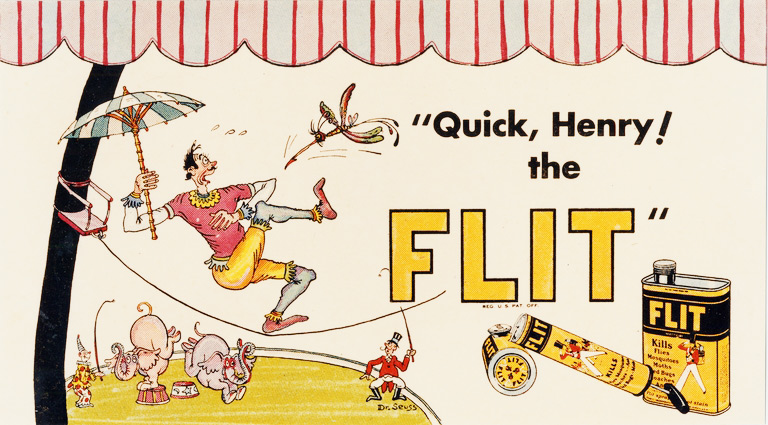
Dr. Wolf imagines a world which never existed. A world where everybody read like she does. I've met many academics who think like this. These are people who actually believe that F. Scott Fitzgerald was the best selling author of the 1920s. In fact, I'm quite certain that it was Dr. Seuss's original work, "Quick Henry, the Flit!"

These are the same people who railed against the "Dime Novels" of the 1890s, against film, radio, comic books, television, computers, the early internet... whatever didn't look like the kinds of information and story intake these "leaders" had found comfort in.

"Wolf, one of the world’s foremost experts on the study of reading," says the Post in a completely unsubstantiated assertion, "was startled last year to discover her brain was apparently adapting, too. After a day of scrolling through the Web and hundreds of e-mails, she sat down one evening to read Hermann Hesse’s The Glass Bead Game. ...“I’m not kidding: I couldn’t do it,” she said. “It was torture getting through the first page. I couldn’t force myself to slow down so that I wasn’t skimming, picking out key words, organizing my eye movements to generate the most information at the highest speed. I was so disgusted with myself.” Ahh... I say, wanting to give both the professor and reporter failing grades in research methods. Dr. Wolf begins research not with quality observation, and not with a developed research question, but with a Seinfeldesque random anecdote. "I was riding the subway the other day and noticed someone reading a TV Guide with Al Roker on the cover, and from this I became determined to write a book about the decline of intellectualism in America."

So, my personal anecdote cancels out Dr. Wolf's personal anecdote,
Why doesn't the Washington Post report that?

Do people read with in-depth processing? Sure, sometimes. And they do that whether they are decoding ink on paper symbols or listening to the radio or watching a film or television or listening to a friend talk. And mostly they don't, whether reading - say, Tom Clancy - or watching a James Bond movie, or listening to simplistic music. Is CNN worth deep reading? Was that Washington Post article? No, of course not. Is listening to my friends tell stories? Then, probably. But its always been that way. I also watched The Americanization of Emily recently, an amazing 1964 film that's surely demanding of serious attention. On the other hand, the current Cosmos TV series had me wandering off within 20 minutes. What can I say? Is that a web problem? A text messaging problem? A mobile phone problem? No, if those things weren't here I'd still stop paying attention to stuff without sufficient interest.
"You American haters bore me to tears, Ms. Barham. I've dealt with Europeans all my life. I know all about us parvenus from the States who come over here and race around your old Cathedral towns with our cameras and Coca-Cola bottles... Brawl in your pubs, paw at your women, and act like we own the world. We over-tip, we talk too loud, we think we can buy anything with a Hershey bar. I've had Germans and Italians tell me how politically ingenuous we are, and perhaps so. But we haven't managed a Hitler or a Mussolini yet. I've had Frenchmen call me a savage because I only took half an hour for lunch. Hell, Ms. Barham, the only reason the French take two hours for lunch is because the service in their restaurants is lousy. The most tedious lot are you British. We crass Americans didn't introduce war into your little island. This war, Ms. Barham to which we Americans are so insensitive, is the result of 2,000 years of European greed, barbarism, superstition, and stupidity. Don't blame it on our Coca-cola bottles. Europe was a going brothel long before we came to town." - "Serious Reading" in The Americanization of Emily
The research Dr. Wolf and others quoted in the article is so bad, it is laughable. "Before the Internet, the brain read mostly in linear ways — one page led to the next page, and so on. Sure, there might be pictures mixed in with the text, but there didn’t tend to be many distractions. Reading in print even gave us a remarkable ability to remember where key information was in a book simply by the layout, researchers said. We’d know a protagonist died on the page with the two long paragraphs after the page with all that dialogue.," Wolf says proving how little she has actually experienced of even literature - missing everything from poetry to DosPassos to the beats to all postcolonial literature, but, there you go... research and knowledge are not Dr.Wolf's, nor the Post's, purpose here.

The purpose in that article is the snarky over-educated equivalent of, "damn, look at his writing. He's already way smarter than Ira." The purpose of Dr. Wolf's book is to humiliate all who do not read like she does, so she can project her own superiority.

We'd simply laugh at her, and I guess eventually feel sorry for her incredibly limited life, if she was just making these assertions over cheap brandy in the faculty lounge ;-) - but what she and the Post are doing is incredibly dangerous - incredibly harmful - to a hundred million kids in America who may get branded as being "less intelligent" and "unserious readers" because they read more like, I don't know, Jack Kerouac or Lawrence Ferlinghetti, than Maryanne Wolf.

Maryanne Wolf is doing "research" into why more people aren't like Maryanne Wolf - which might be a legitimate question for her, but she has no right to demean others who might struggle with Hermann Hesse's writing, who might jump around when reading things of little interest.

"They're reading texts and watching TV and jumping around," people will say, while labeling them failures.

So here's my answer to those who want people to be like them, who think the way they do things is superior. It's the same answer I should have said way back when in the Town Theater, "Shut the F*** Up." That's a clear answer and anyone can read it really deeply, really seriously.

Because I am finished hearing about those "good ol' days," about how much better things were "back then." You know, "back then" our schools sucked for most kids. They were bored and frustrated. They read no better then than now. Many fewer graduated from high school, many, many fewer went to college. People chose bad movies and third rate books then, and now. Zane Grey for God's sake. Who's Afraid of Virginia Woolf? did very well in 1966, but if you add up Grand Prix, Lt. Robinson Crusoe, The Good The Bad and the Ugly, and The Russians are Coming The Russians are Coming, you'll see an audience three or four times as big. The same would be true today.

Americans chose to fight a worthless war against Spain in 1898 and a very questionable war in Iraq more than a century later. Our media is still targeted at the 6th Grade reading level, now, as then, because that's where most people are. It was that way the first time we gave a standardized reading test in 1867 (pdf), it is that way on every NAEP result since.

So I'd rather find what works for people, in their worlds, instead of criticizing them or humiliating
When was the last time a five paragraph essay
was ever written outside of school?
them. I don't want to talk about "serious reading" or "slow reading" or "deep reading," I want to talk about effective reading which I define as getting information and stories into your head in ways which are useful to each individual.

I don't want to talk about inattention and divided attention and shallow attention. Nobody cares. We don't have the time. We need to help each other find ways to focus when we need to and how to be "ADHD" when we need that, and we need that a great deal. Because while you're doing your "serious reading" the world might be changing, and those changes might change how you understand what you just read.

And I don't want to talk about writing - of course - because your writing rules are tied to antique technologies. From your citation rules to your sentence structures - which, frankly, John DosPassos was tossing out over 80 years ago because they were already antiquated, from your use of pens and pencils to your grammatical limitations, from your belief in required lengths of certain works to your five paragraph essays... its all nonsense. What matters is communication, what matters is empowering voices.

Life is a real thing. People are real people. They all have different needs, differing abilities, capabilities, interests, and they change day-by-day, minute-by-minute. They want to play more than they want to work, but they want to do the things they want to do well. So let's stop telling them how they must do things and making them feel bad about what they do, and let's let them be human.

- Ira Socol

24 January 2006

Reading Evaluation with Reader


In the search for methods of evaluating whether digital text reading is likely to be the right match for a student, I have started to use the NAEP (National Assessment of Educational Progress) reading samples on both paper and in Microsoft Reader to see the intial impact of the dual-input effect.

I have fourth, eighth, and twelfth grade reading tests on both paper and converted into e-book format, and ask students to work through one set of reading/questions on paper and another using Reader (including typing the answers into Reader's "text note" function).

The results show me a couple of things. First, it's an evaluation of reading against a real standard. Second, the difference between performance on comprehension issues between "ink and paper" reading and digital reading truly illuminates the issues of decoding, because the student is, in both cases working completely on their own.

Though poor readers will probably not have the comprehension skills (honed by practice) to do "much better than expected" when using the digital reader, improvement in the scores does indicate that they are likely to be able to take advantage of what digital reading offers.

The NAEP tests are available here. Microsoft Reader is free but you need to download three parts: The Reader software itself, the Text-to-Speech engine, and the "RMR" Word Conversion tool.

And here's the University of Virginia's e-book library.

01 August 2011

Hulu in the Classroom: Building Literacy

I've never understood our classroom commitment to "the book," but, I've really never understood our classroom commitment to "the chapter book."

What skills are learned from reading a book which are not learned from watching a film? I'm not saying books are "bad," just asking, "why are they 'better'?"

And why is longer 'better'?

Is it because we think reading is difficult and miserable? ...and so the more we do it, the 'better people' we become - as old-time Calvinists would have it? "Work became toil; thorns and thistles frustrate our efforts. Fallen man seeks to glorify himself rather than his Creator through work..."

what about storytelling and comprehension can't be learned by watching this?

is longer really always better?

I began thinking about this a couple of days ago when @corriekelly - a reading teacher in Virginia - asked about short stories that might help engage young, and perhaps reluctant, readers. Stories she could read to them, they could read to each other, they could read to themselves.

I gave her a quick list, from Rod Serling's Twilight Zonecollections, the short work of Jack Finney. I sent James Howe and this collection and this website.

Also 145th Streetand Black Juice. Going Deep: 20 Classic Sports Storiesand The Bus People. There are lots of good choices, I'm hoping you'll add others in the comments here, but then...

But then I thought, why do we start with text on a page. I thought back to discovering books of those Twilight Zonestories after years of watching the show, and how much I loved "reading" them (or really, listening to them via audiobook, but I think that's the same).

And I thought that, as part of our effort to make kids want to read, want to write, we must first get them interested in stories, in wanting to know stories, and in how stories are told, and why.

And one great way to do that is to use short fiction in another medium - the short fiction of Hulu and other free sources of video - film and television.

Eerie, Indiana are brilliantly written kid-centered stories

where I learned to write -
WOR-TV9 back-in-the-day
There is really nothing about building reading comprehension, about building understandings of dialogue, pacing, fiction construction, theme, metaphor, plot, which you cannot bring to your kids as effectively through a half hour of video as you can through reading a novel. Nothing. Which means that, while your students might struggle so much with the decoding of alphabetic language (and more kids do struggle than don't) that the struggle to do that dominates all, with video all you have is the reason to read, the how to read, the art of reading.

It was fascinating one night, hanging on Twitter, to discover that Paul Oh of the National Writing Project credited the same source I do for learning how to write dialogue, watching the films on New York's Channel Nine's Million Dollar Movie. Watching what were already ancient movies way back when, we learned how dialogue sounded, when it was real, when it wasn't. Million Dollar Movie ran the same films over and over and over. It was like a course in film and writing. Is that better than learning it from Dickens? I don't know, but is it worse?

the best shows to start with might be ones that are self-contained half-hour episodes

This is not an advert for Hulu, many other video sources exist. You might expand to non-fiction by having your kids examine the always unintentionally funny stories of school long ago - our old educational films from AVGeeks (most of which are also on YouTube or Google Video).

it isn't just fiction...

You can also find these stories on many network sites, again on YouTube, or by borrowing DVDs from your library. Consider Everybody Hates Chris, Pete and Pete, or even old Disney and Warner cartoons... What's the story? How is it told? Why is it being told?

Nickelodeon's Pete and Pete remains brilliant...

I believe in reading. I believe in writing. But I also know that no one learns to read unless they really want to access what reading offers. No one learns to write unless they really want to share stories with others. We can't get kids there with boring readers, or chanting, or phonics for kids with no phonological awareness. But we can get them there by bringing stories into their lives, and helping them learn to work with those stories.

- Ira Socol

18 February 2009

A Primer - Text-To-Speech

A raucus debate on a national (US) list serve regarding the use of Text-To-Speech software included much argument about whether digital reading was actually "reading." But that's for a post coming soon. But one thing which surprised me was how little the literacy educators who argue that this software is either ineffective or bad actually know about the systems they oppose.

So I posted a "starter list," which I'll re-post - with a few additions - right here.

Let me try to present, in relatively short form, how some of these reading technologies operate, from the basics of Click-Speak to the sophisticated literacy and study support of WYNN.

I don't want to try to offer a definitive list, rather, a few systems that I tend to use the most, including - hopefully - a small sense of why this or that has worked for the people - youth or adult - who I have worked with.

I emphasize that I use multiple technologies myself, and that most of those that I have worked with have chosen to do the same. This is a big part of what I describe as "Toolbelt Theory" - a learned-centered, Task-based, specifically ordered, reworking of Joy Zabala's "SETT" Assistive Technology choice protocol.
A Toolbelt for a Lifetime
Toolbelt Theory for Everyone
"Toolbelt Theory" is based around the idea that as humans we are tool users, and that we choose tools most effectively when that choice begins with the Task at hand, and then considers the Environment in which that task must be performed, the Skill set of the individual (the tool chooser), and the Tools which are available (Thus the acronyn TEST).

So, we have different literacy solutions based on the variety of challenges we face, just as we have different screwdrivers and different saws.

With that said, here are some of those tools:

Click-Speak

Click-Speak is a free Firefox add-in created by Charles L. Chen (who also created FireVox for the visually impaired). Click-Speak can read any text which appears in your browser, including, of course, anything in on-line software such as Google Docs or any email. Click-Speak has its own "toolbar" (which I do not use) which puts three square "buttons" in the upper left corner of your browser screen - White for "Read Selected Text" - Green for "Automatically Read the Whole Page" - Red for "Stop Reading." It is that simple. You can also, as I do, put those three buttons into your Firefox Bookmark Bar, cleaning up the look of your window. Or you can access these functions by right clicking anywhere on the page or on any selected text.

"Click Speak Options" - in your Firefox tool menu - allows you to choose 5 diffeent speed settings and five different voice pitches. It uses "robotic sounding" synthesized speech. Click-Speak does not highlight individual words as they are read, but does highlight sentences when reading automatically and does scroll the page.

I use Click-Speak for short web reading. Newspaper articles, emails, information I'm looking up. I also use it extensively with email and Google docs to check text I have typed or dictated, since I am much more likely to catch missing words or badly structured sentences if I listen to my writing rather than try to re-read it.I really never mind the voice, though "actor read" audiobooks have spoiled me, and I'm unlikely to try to read much 'great literature' - say, books from the Literature Network, this way.

In schools, as I've mentioned in earlier messages here, I've seen this used in many ways. Some students simply highlight unfamiliar words and right click to "read selected text" so they can hear it - significantly improving their chances of recognizing that word the next time. Other students have used it for reading whole pages of digital social studies texts, etc. We have used it to support the independent editing of student writing with Google Docs and seen dramatic results.

Among adults, I personally know about 50 people who use this as their primary reading tool, at work and at home, including things like bills now digitally sent to them. It is highly effective in employment situations because it is perfect for short readings - such as instructions, supervisor messages, time schedules, etc. It can easily be added to the free AccessApps usb stick system, and can this be carried with you.

Microsoft Reader

This is a Windows only system (many free solutions are, it is much, much harder to build third party accessibility solutions for Apple O/S than for Microsoft or Linux), and it is not widely promoted, but I love it, and so do many of those who have tried it. Microsoft Reader gives you a 'book-looking' page on your computer, reads with word-by-word highlighting, allows you to place bookmarks, to highlight text, to take notes (linked to specific places in the text, which thus allows its use as a testing system), you can even draw pictures, and, if using it on a tablet PC, draw on the page itself (a feature that we're starting to see has interesting impacts on ASD users and some dyslexics).

MS Reader has a somewhat clunky install. You have to download the basic program - for Desktop or Laptop - or - for Tablet PC - then download the Text-to-Speech (TTS) software - then the Dictionaries (the Encarta if you want right-click word definition) - and finally, right-now for Word2000 or Word2003 only, the "RMR" tool, which puts a toolbar icon in your Microsoft Word which allows instant conversion of any text into the E-book format - Microsoft folks assure me that a Word2007 version is on the way.

MS Reader puts your books in the "MyLibrary" folder in your Windows "My Documents" folder. There are thousands of books already available in this format, all the classics are at the University of Virginia - but with Word2003 it is incredibly easy to put any text (with or without pictures) into this format, and even very young kids seem to love it (they can read over and over again even if mom or dad isn't available.).

It does have, again, the "robot voice," but you can control speed, the pitch, type size, make the page full-screen, have it speak all the controls (or not).

I use this for books. I use it for some academic papers. Many teachers use it for accessible testing (because it is free), and I use it for assessment at Voc/Rehab. In employment we've put employee handbooks, etc, into this form. We've put training manuals into this form. We've even put social service agency intake instructions into this form.

It is not very "flexible" - but it is a wonderful accessible system.

Adobe Reader 8 or 9

The speech function ("Read Out Loud") in Adobe Reader 8 or 9 has been great for me and others faced with the flood of Acrobat Docs. Even if we do not use it for reading vast amounts of text we use it to see if the article is worth the time, or to grab chunks of text in classes or meetings. To use Read Out Loud, opeen your document and go to the View Menu. Go down to "Read Out Loud" then choose "Activate Read Outloud." (this takes time on long documents, so it is something you want to do in advance) The go back to -View- Read Out Loud - and choose "read entire page" or "read to end of document" (from your cursor location), then "stop" when you are done. Free.

Dial2Do

Dial2Do allows non-readers to send text messages. For free. Sign up at http://www.dial2do.com/ and then call their number and speak your text and tell them where to send it. An essential employment tool for those who struggle with print, also for anyone who drives. (see SpinVox in the UK, also available with most US cellphone systems)

AbbyMe

AbbyMe is the reverse of Dial2Do, it allows "you" (or a boss) to text a voice message to a non-reader. For free. Sign up, or just use the service, at http://www.abbyme.com/ You type the message, AbbyMe calls the person and speaks it.

Mobile Phone Camera Text-To-Speech
Yes, Nokia and Kurzweil have an expensive and wonderful joint effort, a phone which takes a picture of a document and converts it to text which is then read aloud. It is great stuff but it also costs something north of $1,500 (US). There are, however, three free solutions:

Take a picture of a document or whiteboard with your 2mp or better camera phone, send it to ScanR, and for $3 or $5 a month, get accessible text sent back to your phone or email.

Or do the same with Qipit.

Or, for the more tech savvy, add TopOCR to your phone and do it yourself.

WYNN

Freedom Scientific's WYNN - is a full-featured literacy and study skills solution which (finally) made university possible for me (on try number 4) and which gets me through grad school. Because it completely changed my life when I found it early in 1997 I can't sound "neutral" about it, but it is a system I have used with four year olds and a system which has allowed - just in my personal experiences - hundreds of students to succeed in college and hundreds more in advanced post-secondary career training.

WYNN is not free. There are great deals on school network or multi-user purchases, but the retail price for the scanning version is almost $1,000. I refuse to say this is expensive. $1,000 is very little for, say, one student I worked with who has an "ink-on-paper" reading level of <1.0, but who also now holds a masters degree in history.

WYNN allows you to bring any text into it. You can import digital text or just paste it into a blank document. Or you can scan materials in from your scanner, or "virtually scan" in documents such as old, non-accessible, Acrobat docs. When you scan something in (real scan or virtual) you get a magical choice - you can see "text only" or you can see the page in "exact view" - exactly as it looks, which does great things for textbooks, for books with tables, diagrams, etc.

In either view, WYNN has "two-level highlighting," you see each word highlighted as it is read and you see the sentence, line, or paragraph highlighted as well. In either view you can right click for definitions, word spelling, or to insert notes by typing or speaking. No software anywhere does a better job of reading diagrams than WYNN which makes it a fabulous STEM solution and, in my experience, has made it the perfect solution for vocational training.

You can edit the text within documents (say, if scanning has made an error), but instructors can lock out that feature (or use the specific Test-Talker version). You can also write in WYNN with full word processing features including predictive spelling if you choose. It has bookmarks, highlighting, etc.

WYNN is incredibly flexible. Everything about the text - size, font, color, background colors, space between letters, words, lines, is hugely variable. Speed of speech, pitch, choices of much more sophisticated voices, are all massively variable. You can alter word pronunciation within a document (to, for example, speak names accurately).

WYNN also has a full Internet-Explorer-based web browser which gives you all the same choices.

The one "knock" on WYNN has been that its interface does not "very adult." It is icon-based. (You can choose all kinds of degrees of verbosity - whether instructions and button names, or even typing, is spoken by the software.) But I have found this to be an advantage. WYNN is a lifespan solution, simple enough (especially if you build a simplified "custom" toolbar) for pre-schoolers who don't have reading parents at home, and completely at home in universities, because of all the supports.

The WYNN voice is still - obviously - synthesized, but the sound is much more natural than that in either of the above. It does take some significant "play time" for users to make their choices among all the settings, but one can "set" those, and any computer (or network) can hold onto an almost unlimited group of user settings. I find that I have actually created more than one user profile for myself. I have "easier reading" settings, and "harder reading" settings for those arcane journal articles I read so often. The "harder" settings put fewer words on a line, and read a bit slower.

Of course there are many other choices, from Read-and-Write-Gold to Natural Reader, from the Reading Pen to the free WordTalk and DSpeech, but I hope this suggests a few places to start.

- Ira Socol