Showing posts with label universal design. Show all posts

03 November 2013

The Wilful Ignorance of Richard Allington

Initials after your name don't make you smart, or worthwhile to society. That's always been the problem with the credentialist society of the past 150 years. People with doctorates, for example, hand out doctorates, and maybe they do so in ways which limit intellectual and career competition.

Anyway, this is largely my case against our colleges and schools of education. Credentials trump knowledge, credentials trump experience, credentials trump value to our children in many of our "hallowed halls" of academe.

This fact appeared again - powerfully - in an EdWeek story about that impending bane of children of America, the Common Core test and its refusal to treat read-aloud - Text-To-Speech - as a fully equal testing regime for students with dyslexia. The key part of the story for me was a stunning ignorant and offensive statement from, yes, a professor of education:
"Richard Allington, a professor of education at the University of Tennessee and one of the country's most recognized experts on early literacy, calls the accommodation "cheating."

'"What special education does best is create illiterates," Mr. Allington said. "I know why they don't want their kids tested on reading activity. It's because they've done a terrible job of providing those kids with high-quality reading instruction."' - EdWeek
So, in a national educational publication, this "Doctor," this "Professor," is willing to call me - and millions like me - an "illiterate cheater," and he thinks that's a perfectly reasonable thing to say about a person, about people, he knows absolutely nothing about. In response, on Twitter, I called him a "moron" in the best slang use of the term - but here's the difference. From these quotes, I know a great deal about Richard Allington, and I know he is dangerous.


Dangerous because he is willing to mix his position of credentialed authority, and control over who becomes a teacher (and perhaps PhD) from the University of Tennessee at Knoxville, with his desire for fame, with wilful ignorance and a firm disrespect for humanity.

Dr. Richard Allington:
Please take his glasses away,
accommodations are cheating

Whatever Allington's credentials - and he claims an awful lot on his web page and - I'm sure - his office walls...
"Dick Allington is professor of education at the University of Tennessee. Previously he served as the Irving and Rose Fien Distinguished Professor of Education at the University of Florida, and as chair of the Department of Reading at the University at Albany – SUNY.
   "Dick has served as the President of the International Reading Association, as President of the National Reading Conference, and as a member of the International Reading Association Board of Directors. He is the co-recipient of the Albert J. Harris Award from IRA in recognition of his work contributing to the understanding of reading and learning disabilities and the William S. Gray Citation of Merit for his contributions to the profession. In addition Dick has been named to the IRA Reading Hall of Fame.
  "Dick currently serves on the editorial boards of Reading Research Quarterly, Remedial and Special Education, Journal of Literacy Research, Journal of Disability Policy Studies, and the Journal of Educational Psychology. He has previously served terms on the editorial boards of the Review of Educational Research, Elementary School Journal, and the Reading Teacher, and as associate editor of the Journal of Literacy Research."
... he has proved to be an irresponsible person to have within the field of education, because he is willing to hurt children in the pursuit of his career.

In order to make the statements he made, this "Doctor" has to be willing to ignore almost all the actual brain research of the past fifteen years, everything we now know from genetics research around the world and fMRI research. This is probably OK with him because if there is one thing most education graduate programs teach it is to pick and choose research which supports your initial biased guess (called a "hypothesis" in the Alice in Wonderland research paradigm of education). And he probably believes he can get away with slandering a wide group of people because his "credentialed status" labels him as an expert.

Now, "Doctor" Allington, who appears to cheat using accommodations daily (if photos can be believed), also proves himself a hypocrite of the first order, accepting a solution for his inabilities as "normal" - his prescriptive eyeglasses - but seeing solutions for the inabilities of others - the digital reading support and audiobooks I use - as "cheating" and proof of illiteracy.
This "illiterate cheater" will be happy to debate the issues
of contemporary literature with "Doctor" Allington
Now, "Doctor" Allington and I can agree on the shortcomings of much of Special Education - it does, all too often, breed dependence. But the difference is that while my response is respect for, and the attempt to empower those students within the Special Ed-Industrial Complex, his solution is to blame them for their genetically differing brain structures, and to insist that they become just like him.

Now, since "Doctor" Allington has called me a "cheater" and "illiterate" - let me list my credentials - and I will argue that these are contemporary - post-Gutenberg - credentials. Sure "Doctor," I struggle mightily with decoding alphabetical text, and sure, unless I am drawing my letters, copying them in fact, my writing is just about useless, and - well, to go further, I've never learned to "keyboard" with more than one finger. So yes, "Doctor," by your standards I can neither read nor write. And to get around that I do indeed "cheat." I use digital text-to-speech tools, from WYNN to WordTalk to Balabolka to Click-Speak and I use audiobooks all the time, whether from Project Gutenberg or LibriVox or Audible. Yes, I "cheat" by writing with Windows Speech Recognition and Android Speech Recognition and the SpeakIt Chrome extension.

Hey "Doctor," we put these "cheating" tools on computers for every child.
And "Doctor," I not only use them, I encourage students all over the United States, all around the world in fact, to cheat with these tools as well. I've even helped develop a free suite of tools for American students to support that "cheating."

But beyond that, I'll match my scholarship with "Doctor" Allington's anytime, including my "deeply read" knowledge of the history of American education, and my "actual" - Grounded Theory Research - with real children in real schools in real - non-laboratory, non-abusive-control-group - situations.

And beyond that, I tend to think I'm as "well read" as any non-literature major around. So if the "Doctor" wants to debate James Joyce or Seamus Heaney or current Booker Prize shortlist fiction, or argue over why American schools often teach literature and the real part of reading, the understanding - so badly, I think I'll be able to hold my own.

Finally, in terms of recognition and accomplishment, well, for over 15 years I've been making real differences in the lives of people - from creating one of the earliest universally designed university campus computer networks at Grand Valley State University in the last century, to working for over a decade with children and adults through Michigan's Vocational Rehabilitation agency, to supporting the universal design and assistive technology initiatives of many K-12 schools, to research and teaching at Michigan State, to my present work in Virginia, and I have shared this work and knowledge base freely, never putting anything behind paywalls which might limit the access of teachers and students to essential information. And thanks to contemporary forms of social media, people know what I do.

Perhaps I should mention the books this illiterate has written - cheating with Speech Recognition, and oh yeah, spellcheck too, and WYNN for editing help - but, that's just extra...

I list my credentials not to compete, but to suggest that I have a deep kind of knowledge of these issues which is quite different from the knowledge listed on the "Doctor's" CV. It is a kind of "street," on-the-ground knowledge not available to university office researchers. And a prime part of that difference is that I deal with humans, and human brains, and human learning, and not just data points.

And with that knowledge, I would like to challenge "Doctor" Allington to a debate. We can do it in person or we can do it via those contemporary technological affordances, but we should do it in public, with the largest audience we can get.

I will ask the "Doctor" to explain and defend his definitions of "cheating," "illiteracy," "literacy," and "reading." And he can ask me whatever he wants. I will challenge his knowledge of contemporary research, and he is welcome to challenge mine.

I will ask him about his willingness to assault children in public by labelling them as he has done, and he can surely challenge my use of the term "moron" as it relates to him, and my use of "quotation marks." But I think that "Doctor" Allington should answer me before he steps back into any University of Tennessee classroom, or talks to any more future teachers.

Reading and Writing - "Reading is getting information from a recorded source into
your brain in a way which allows you to work with it. Writing is getting information
from your brain into a form which can be accessed asynchronously."
In the end our children deserve not just our respect but every opportunity we can give them. They also deserve respect for their differences, and must not be forced into conformity. Perhaps they need this most from those who claim the right to prepare our future teachers. Perhaps they do not need "credentialist experts" insulting them and attempting to deny them opportunities - especially those "experts" who have actual power over what the user experience of our students will be.

So, "Doctor" Allington, join me on an international stage, and let's let the world understand your argument, and let's let the world decide whether you get to keep using technology to fix that eyesight of yours.

- Ira Socol

06 October 2013

Seven Pathways to a New Teacher Professionalism


Yes, it has been a long, long time between posts here. A new job, and the switch back from university based life to the reality of working with real schools and real children - real life, caused re-set. A reevaluation of how to use my time, and of how and perhaps why to write.
But I am back with a new mission - to begin a discussion of the known possible.  A discussion of the project we are attempting in real public schools in Virginia.  Not wealthy schools.  Not easy schools. Real schools. Complicated schools.  Schools with vast and deep challenges, as well as schools with great resources...     
                                                                           - Ira Socol  - Charlottesville, Virginia 
How do we reimagine teacher professional learning.  Let's face it, it isn't going to happen in universities and other institutions of higher education and teacher training. Those are places, even the "best" of those in the United States, of social reproduction and status preservation, not places interested in change. So it will be something which progressive schools and school systems have to do on their own - on their own, but, preferably together. 


The new kind of teaching professional we need to build is something quite different in concept from that being developed in schools of education. Those institutions develop people who deliver content and manage classrooms. We need educators who enable opportunity and create access, and that requires a different group of skillsets and a different belief system.  For the most part our teachers know this... that is, they know what they do not know. They know what they need. They told us that...

I work in the Albemarle County Public Schools in Central Virginia and we've been thinking about this a lot this year. After a 12 year process of building change we attempted another acceleration this year, another "inflection in the innovation S curve" through an internal grant program called "Design 2015."
Design 2015 asked all of our 26 schools to describe a fundamental change they wanted to make in student learning, and to describe a project which could begin to break away the barriers which stood in the way of those changes happening.
For some schools those barriers were quite literal, and we removed walls or created new doorways which opened up new opportunities.  In others lack of technologies was an issue and the solutions ranged from 1:1 laptop initiatives to "tool buckets" for classrooms filled with MacBooks and Galaxy Tabs, iPods and Cameo fabricators. In other places it was more flexible comfortable furniture, or library redesigns, or a re-envisioned cafeteria which doubles as a collaborative MakerSpace. Still others just sought extra time for teachers to plan or to spend a few summer weeks immersed in Spanish for their bilingual school.
We found ways to fund all of these in one way or another. Not because we're wealthy, but because we dug deep and reallocated to fund innovation. But before we could begin building, or buying, we needed to help teachers find ways to find paths to new ways of thinking.
We knew this because we saw the questions embedded in their grant requests. And as we, a team ranging across many levels of our small “central office” - 
let me pause here and give some credit, for because of brave leaders - those who are both risk-takers and risk-accepters - that great things are allowed to happen - Dr. Billy Haun, our Assistant Superintendent for Curriculum and Instruction; Debbie Collins, our Director of Instruction; Vince Scheivert, our Chief Information Officer; Becky Fisher, @beckyfisher73 our Director of EdTech and Professional Development; Chad Ratliff; our Assistant Director of Instruction; Rosalyn Schmidt, or School Architect; and our brilliant EdTech integrators and trainers Jamie Foreman and Nita Collier; along with myself, whatever it is that I do...
 - walked our schools, we listened. We walked our schools with "Attention-Deficit Disorder Vision" - seeing and hearing, even feeling, whatever we could. Observing children, grasping, however we were able, the User Experience and comparing that to the User Experience we hope for and that our educators hope for. For it is only by beginning with thinking about the User Experience we want that we can backward map to the User Interface - the school and pedagogical design we need.

Which pathways do you see here? A 9th Grade English Class in the MakerSpace in
the Monticello High School Library. Maker-Infused Curriculum? Project/Problem/Passion-Based Learning? Choice and Comfort? Instructional Tolerance? How about Universal Design?
We saw that no matter what our schools were asking “for,” what they really wanted their children to do fell into one or both of two broad categories: They wanted children to use contemporary technologies to interact broadly and consistently with the world in meaningful and deep ways, or/and. they wanted children to be makers most of the day, not just consumers. But in both cases the teachers were not entirely sure of how to jettison the constraints of delivering filtered, packaged content, and replace that with a trust-based, child-centric, open approach consistent with our Life Long Learning Competencies - competencies aimed at helping children become successful adults in every phase of their lives in their times. So those categories - Interactive Technologies and Maker-Infused Curriculum - became our first two professional learning pathways.
We found much more, of course, discovering five other essential questions:
Project/Problem/Passion-Based-Learning - Our teachers know that they waste their and their students’ energy fighting for attention when projects and passions bring attention naturally, they want the skills to bring knowledge through interest.
Choice and Comfort - Our teachers want to learn how to “let go” of rules which burn student cognitive energy on things unrelated to learning, and unrelated to workplace or social success in this century.
Connectivity - Our teachers have asked to learn the tools which connect students globally, synchronously and asynchronously, to create authentic audiences, break isolation, and support complex learning opportunities from kindergarten on up.
Universal Design for Learning - Our teachers have expressed real interest in looking “beyond differentiation” and even “beyond CAST,” toward a true Universal Design, with student preference replacing diagnosis and prescription everywhere it is possible.
Instructional Tolerance - Our teachers and administrators have begun a lively conversation about moving away from traditional school and classroom management toward the concept of “Instructional Tolerance.” What happens when “teacher preference” no longer drives classroom rules and atmosphere? What must students tolerate from adults? from other students?

Armed with these questions from our teachers, these professional learning needs, these “pathways” to a new kind of professionalism - we found teacher-leaders, “pedagogical entrepreneurs” in our emerging vocabulary, who could bring their vision of these educational futures to our entire faculty cohort. Not by labelling our previous work “a failure,” but by discussing the evolving marketplaces of education, brain research, and contemporary technological affordances. 

Tying these professional learning opportunities directly to school grants supporting new learning spaces and new technologies created both urgency and immediate learner test bed, crucial project-based learner tools. Offering learning opportunities at differing times, in differing formats, face-to-face and online, short and long sessions, in rooms often with multiple screens and multiple types of devices provided real demonstrations of the kinds of work we were showing. We never offered that ed school special, the lecture on differentiation.

 Transformational Maker Summer

We created "lab schools" too. Working with Maker Education's MakerCorps Initiative, and inventing some of our own stuff spun from ideas like Mozilla's Maker Summer we transformed Summer School in many places from the old remedial nightmare into something else - a radical pathways learning experience for children and teachers. Whether it was elementary summer school at impoverished sites, middle school connected maker summer school, or a ninth grade welcome week at a high school driven by maker activities and connectivity, our teachers watched as these new professional strategies transformed the often "hardest kids" into winners and their own careers into something with new meaning. These summer schools transformed principal expectations as well, bringing new paradigms to those August staff meetings.

Our Pathways are captured throughout our professional expectations
and performance assessments

As our school system has for years, we've reimagined what professional learning looks like in many ways. Recertification credits come many ways, including documenting active participation in social media professional learning. Just two weeks ago Chad Ratliff and I led a small group of our educators on a mission to New York, where - as we are increasingly learning to do - we avoided schools and eduction conferences and watched learning unfold at museums, at the World Maker Faire, on the High Line, in Central Park, on the subway system. What does learning look like? What do learning spaces look like? What questions do humans ask in learning spaces?

We're working on it, and we're looking for anyone willing to join with us, in collaboration, in sharing resources, in sharing the spirit. Honestly, as we asked the Virginia Educational Research Association a few weeks ago, we'll take the support of any university interested in supporting our mission as well...


We ended that call to "VERA" with this:

'"Fifty-one years ago at Rice University President John F. Kennedy said, “We choose to go to the moon in this decade and do the other things, not because they are easy, but because they are hard, because that goal will serve to organize and measure the best of our energies and skills, because that challenge is one that we are willing to accept, one we are unwilling to postpone, and one which we intend to win..."

'"Today we ask you to join those of us in Public Education to do the research [and teacher professional learning work] which our children need, not because it is easy, not because it is easily funded, not because there are existing textbooks and courses explaining how to do it, but because this is the hard work we must do, it is the grand challenge we are unwilling to postpone, the grand challenge we will step up to accept, and the task we will accomplish in order to build the society our children deserve."'

This the grand challenge. Teachers who understand themselves within a new professional paradigm. Teachers who see themselves as enablers of learning, as people who close the opportunity gaps, as educators who are both mentors and partners with their students on these learning journeys.

Wish us good luck, then jump in alongside us.

- Ira Socol
23 September 2012

Finding UX, Designing UI

Rocking Reading Duck
If you want to design your school... from scratch or in reshaping... you need to begin with two questions...

First: What is the point of your school, in blunt terms, or, in more "professional" words, What is your school's ethos? Why should a child come to your school? What will your students have at the end of their time in your school which will move them toward being happy, competent, capable, passionate adults who will have real choices in their lives in the Mid-21st Century.

And Second: What is the "User Experience" of your students, and what should that User Experience be to best move all students who come through your doors to get to their goals?

Only if you answer these questions can you begin to imagine/design/create the "User Interface" - which in schools is our building, our grounds, our schedules, our curriculum, our pedagogy, and all of our rules - so that all that our "process" is contributes to our goals.

A few days ago I asked a group of elementary (primary) teachers who were wondering about their cafeteria, "begin with, what are you trying to help students learn while they are eating together in your school?"

In the user experience of "school" our users, our kids, see and respond to absolutely everything. Yes, adults do that as well, but adults, in that "the more you know the less you see" filtering, actually see/hear/feel/smell/taste far fewer environmental clues than do kids. So, when a group of American teachers told me, after I had told a story from an Irish Primary School, that "those teachers are teaching life philosophy and not just content," I responded, "I think we are teaching philosophy every minute, it just might be life philosophies we don't much like."

Kids respond to everything...

Henry Barnard, the "evildoer" who designed the American multi-classroom school as we know it, wrote that everything which students saw and did from when they first saw the school in the forming was important - that every entrance, corridor, even where a child hung up their coat was part of the educational process. And he was, in this, absolutely right. It explains why school architecture from 1850 to 1950 often mimicked the authority structures of their age, from churches to courthouses, and it explains why students were pushed to line up - to form queues - entering the school, as compliance, order, and hierarchy were being enforced long before a kid ever got to his or her seat. And why schools after World War II looked like the factories and military facilities of that age.

An hour before school - high school library, Charlottesville, Virginia
website where I found this 1960s
school image sees nothing in doors
to the outside but, "poor security"
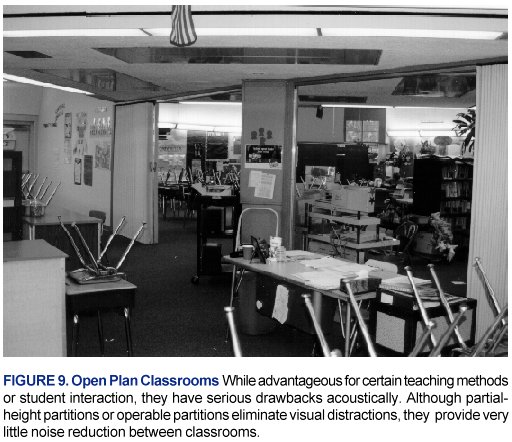
But school design and user experience have hardly ever been joined. Even the John Dewey influenced schools with all the doors to the outside of the 1950s and 1960s (really just a recall of William Alcott's ideas of the 1830s-1840s) were taken from the architects by school administrators who never asked the kids how these spaces could be used. And the "failure" of the 1970s open classroom school buildings was never a failure of architecture, but a failure of almost every adult who worked in those buildings to comprehend the idea of "user experience" - they tried to run Henry Ford's 1913 assembly line in a renaissance studio.

Simply put, the reason we find ourselves stuck in Industrial Revolution Era schools, the reason school success in the United States has only crawled from the 1850s adult design of succeeding with 20% of students to our present succeeding with 33%-40% of our students, lies in our inability to begin to match the User Experience of education to what we really want education to accomplish.

Third graders create their computer lab
So, what do we want for our children? If we want them - all of them - to grow up to be critical thinking global communicators who can investigate and succeed with the widest range of choices possible... effective citizens of democracies able to collaborate with each other and make a better world... voracious creators who absorb stories and information and use all that to dig out the problems which bedevil us and build solutions to those problems... empathetic, healthy members of a planet, a society, a tribe, and a family... well... what is the design of our schools - again, spaces, schedule, pedagogy, curriculum - contributing to those goals? and what is doing the opposite?
Working voluntarily and comfortably, in many ways
Last week we turned to our users to try to understand. We asked 500+ "elementary" school (primary, grades K-5) students - all the students of one school - to participate in a charrette to help begin to design the future of their school. We did show them a few images to begin to free them from "the understood," but we worked really hard to limit any adult influence on this work. We adults have seen so many schools, and we "know" way too much - especially about what we think is impossible - and we needed kids to show us the vision they would build with their unblinkered eyes.

We got many, many ideas - from Kindergärtners wanting cow tables and a castle with a dragon (what good is a castle without a dragon anyway?), to multiple requests for rooftop reading decks and reading treehouses, a cafeteria softserve machine, a soft student lounge, rolling science labs, movable cubes to read/work in, carpets, bean bag chairs, more outside doors, a big slide to get between the upper and lower playgrounds (ending in a trampoline or not), more art, gym every day (they currently have it four times a week), a zip line to get from one end of the school to the other, far more color - and kid-relevant color - in the school, a "giant robot bluebird which would walk the hallways saying hi to students," and choice - choice - choice...

Third and Fifth graders at work in Charrette, we had paper, and we had video cameras
they could explain ideas to...
Choice in classroom seating (or choosing not to sit), choice in tables/worksurfaces, choices in how to read books, choices in when to do what, choices in working inside or out, choices of where to play, and the choice to do work in school - with their peers - not at home with their parents.

The ideas spilled out in all directions...
None of this is absurd. None of it. Why can't kids get softserve frozen yogurt after lunch? Why can't the school build a castle and a dragon with the 5-year-olds? Maybe a zip line could cross the playground? You'd have to be a pretty weak teacher not to be able to use that in teaching many parts of the curriculum. When I mentioned the robot bluebird to Melissa Techman, one of my favorite school librarians, her immediate response was, "that's why I need those big cabinets I want so I would have all the stuff to build that kind of thing all ready."

And why can't school teach constant, continuous, internal feedback informed choice? How else can we help kids grow up into citizens of a true democracy, and able to make choices which work for them as adults?

Fifth graders eat lunch and debrief the ideas - "what will grownups say no to, and
how do we argue with them?"
Essentially, if I took in the vast amount of ideas and grouped them quickly - they wanted choices, comfort, warmth (many requests for wood floors), the ability to be outside, better lighting (dimmer switches, lamps), and places to both work together and to get away to quiet. They wanted to explore the world not just read or hear about it. Plus they wanted a school that was fun and that they looked forward to entering every day.

Anything radical there? Anything which really isn't part of our kids learning how to be the mid-21st century citizens and humans we want them to be?

Our next steps seem like a curriculum built in a great dream - some kids will inventory the school and grounds - what do we have now? how do we use it or not? Others might label the trees and plants around the school. Some might consider how a swing becomes a place to teach physics and math and perhaps poetry and decide how that might work. Still others might work over the idea of what might be quick, and what takes big resources and thus more time, along with what might be easy - and what might be very hard.

And we think the end result will be a better school, better learning, and kids with more skills and more capabilities. Which is what we want our user interface to help create, right?

- Ira Socol

29 June 2012

Heroes of the Republic of Ireland

An Open Letter to Uachtarán na hÉireann Michael D. Higgins:

President Higgins:

In May of this year I was privileged to be invited to Ireland to speak to, and work with, the fabulous educators of your nation. At the ICT in Education Conference|Comhdháil ICT san Oideachas
at the Limerick Institute of Technology campus in Thurles, County Tipperary, and in schools from the center of Dublin to the shore at St. Finan's Bay in
Baile an Sceilg, we met, conversed with, and worked with many transformational educators who are seeking to create a future full of possibility for their students, for their nation, for their Europe, and for their world.

But what we also saw was a national government, if not a society in general, forgetting that most basic axiom of Irish history... when times are tough we worry first about our children and our future.

And we saw these wondrous educators, among the finest on this planet, struggling to understand how that could axiom could be forgotten.


Children play outside at the An Scoil ag an Ghleanna|Glen National School at St. Finan's Bay
On the edge of the world in County Kerry we found one tiny Gaelscoil leading a small group of rural students both into the future and deep into the collective past. The words were in Irish, the storytelling as ancient as the rocks on which the Atlantic crashed outside the windows, but the children were connected to the world through both technology and their committed, devoted teachers.

At a Shehy Mountains pass in County Cork we found an even tinier school, Cuppabue National School, which has won, in the past year, national awards for everything from maths and sciences to film-making, but whose teachers, students, and parents fear Ruairi Quinn's policies ("Very few young children now would walk to school. Many of the schools in rural Ireland were located because of the fact that people walked to school. The arrival of traffic… makes it virtually impossible, certainly not safe, for people to walk to school. The face of Ireland has changed, not just urban or rural Ireland. We have to reflect that change.") will shutter a school which has educated students brilliantly since the Catholic Emancipation.

St. Mocholomog National School/Cuppabue National School has been a place of learning
for as far back as the stories recall. That students "could go elsewhere" according to the
Minister of Education and Skills should not shutter a fabulous school.

(below) the (pre-K-grade 6) students' award-winning film on the fiscal crisis
In Dublin we found Bridge 21 Learning offering secondary students with few traditional paths to opportunity coming to a "school" on their off-hours just to participate in collaborative community learning, yet euros are short, and the program can only reach a small percentage of the adolescents who desperately need this support.

In Thurles the Presentation Secondary School, a beautiful place filled with higher level thinking, arts, and music struggles with furnishings so old, and classroom spaces so tight, that students are wedged into desks with, yes, inkwells.

St. Martin de Porres N.S. multiage choir says it all.
(below) students at St. Martin de Porres know how to leverage technology to
overcome learning issues.
And in Tallaght we found the remarkably diverse and exciting St. Martin de Porres National School with an incredible technology program powering every learner which needs newer equipment and greater bandwidth if they are going to continue their children's growth.

Before I began the visit I wrote...
"Ireland is wasting time and energy worrying about “efficiency,” “saving money,” “teacher pay,” and battles over the Junior and Leaving Certs, instead of investing in imagining, and moving towards, a lifespan educational structure which will carry Ireland into the future. In this, this nation is hardly alone, but perhaps the stakes are much higher for a small island nation which knows the ability of education to transform a society, which saw the changes of the 1970s and 1980s, in all levels of schooling, lead a societal and socio-economic revolution... we will not focus on “rigour” – the making of things difficult for the sake of difficulty, nor on “efficiency,” an odd concept to embrace as we discuss the raising of our children, nor on “standards,” which involve statistical tests originally designed to ensure the consistency of barrels of Guinness. Instead we will begin with the idea of creating “learning space,” real, virtual, even imagined, where every student, at every age, has the opportunity to not just succeed, but to thrive."
And just last week, Ireland's Secondary Teacher of the Year answered in an impassioned address, which included this:
"Obviously I have a personal agenda here - I want to save my job. But I don't have a political agenda.

My grandfather was a proud Fine Gaeler and I have many friends in the Labour party. I want to believe that Fine Gael and Labour can find a way to be better than the idiots who got us into this mess in the first place.

Some positive things are happening in education: our minister Ruairi Quinn is determined to bring about changes in our in-many-ways antiquated educational system - and for this I admire him.

The proposals for the new Junior Cert have the potential to bring about real and meaningful change (but the department need to listen to the teachers) and this is a change I want to be a part of.

But we need to make sure we're making things better not worse. Destroying the morale of the teachers who will be implementing this change is not the way forward.

Minister Quinn will no doubt throw his hands in the air and say there is no money.

Well I say to Ruairi Quinn and the Department of Education, if this is the limit of your creativity, imagination and passion to protect our children's education - shame on you."

Secondary Teacher of the Year Evelyn O'Connor
President Higgins, much of what I, and Dr. Pamela Moran of Virginia, saw on our visit demonstrated that Irish education - especially Irish primary education - could be the envy of the world. We saw a wondrous commitment to natural child development unhindered by the panic over "grade-level standards" which have threatened to destroy education in the United States and United Kingdom.

We saw a level of humanity, a commitment to arts and the whole child, which should be "the standard" everywhere. We saw local control and local opportunity which allowed teachers to build classrooms around the needs and passions of their children. We saw teachers that anyone, in any nation, would want supporting our next generation of leaders.

We saw a commitment to the concept of "the public space" you so beautifully express in your book . Renewing the Republic. A belief in an unselfish dedication to a shared future that should be the pride of any nation.


Of course we saw problems. We saw secondary education far too bound by test preparation, and tests which, though in some ways excellent, are graded on the wrong parameters, are taken with the wrong (19th century) technologies, and which hold far too great a sway over both individual and national futures. We saw a lack of investment in learning spaces, a lack of investment in this century's communications technology, and a lack of support for a fabulous teaching community.

Grades 2 through 6 at Dualla National School
One afternoon in Dualla in County Tipperary we visited the Dualla National School. There we met brilliant educators working with another small cohort of children, and making the best of limited, old, technology. It was wondrous what Principal Teacher John Manley accomplished with a few old laptops and an old iPhone with a shattered screen, and how that combined with a fully inclusive multiage environment (and a heavy dose of hurling) to offer a broad path to success for every child. But their energy should be poured into their students, not concerns about how to update antiquated communications systems.

On another day we met Hellie Bullock of Limerick, a brilliant young educator who should be working every day with children - and being paid a respectable wage for that. On other days we met some of the world's leading university experts in the future of education, who should be going about their work without panicking about the ability to care for their families.

President Higgins, we must, as you know, measure nations and societies by their commitment to their children, and their commitment to a better future. Ireland, like many nations, has deep problems and little in the way of available funds. But Ireland also has a grand tradition of putting education and children first. From the ancient monasteries to the hedge schools of the worst occupation days, from the re-birth of the education system after entering the European Economic Community to, hopefully, today, Ireland has sought whatever creative solutions were necessary to protect its communal future.

Seeking creative solutions to ensure our future: CoderDojo Thurles
The educators we met, President Higgins, are the heroes of today's Republic of Ireland. They are fighting, working, and struggling every day to ensure the future of this nation, and to protect its children from the ravages caused by the greed of another generation, and they, whether Hellie, or Evelyn O'Connor, or Stephen Howell at the Institute of Technology Tallaght (who has given our children Scratch to Kinect) deserve the support of their nation, in their work and in the security of their positions and ability to live.

So I ask you to join us President Higgins in our conversations, to join us in our search for creative solutions, to join us in our drive for universally designed learning spaces which can carry all of our children into successful futures, in our attempts to bring the Labour and Fine Gael leaders into true conversation about what our children need.

I write this not as a meddlesome outsider, but because I have been welcomed into this conversation warmly by the education community of the Irish nation. I know this community views you as a hero, as a man who has stood for what is right for half a century, and so I ask you to, please, become a part of this essential discussion.

- Ira Socol


Please don't stop us now... the future can be wondrous

30 June 2010

A Half-Dozen Things Your Middle School Should be "Teaching"

My experience in school from the age of, say 11 or 12, to 14 often leads me to the conclusion that the best "middle school" would be almost no school at all. Kids have so much to learn during this period of their lives, but almost none of "that" is academic. They need to learn how to function as independent "adults." They need to learn their bodies. They need to discover the world. They need to pursue passions of all kinds. They need to learn how to hurt and how to recover. And they need to begin to imagine their future.

With all that to do there is precious little time for reading nonsense like A Separate Peace or caring about Algebra, and even less time for putting up with the arcane rules and schedules of early secondary education.

So "middle schools" don't work. They are way too often brutal places of boredom mixed with terror.

If summer (and, not counting Australia, New Zealand, South Africa, etc, it is summer) is a "rethink" time, let's rethink some of this. We won't tear these buildings down before September, we can't even reconceive the whole curriculum, but here are six things we could do for the next school year.


One: Teach kids how to "hide" when they need to. This seems counter-intuitive for schools which are constantly trying to get kids to "man up" and "pull yourself through it," but we all need to hide at times, to escape, and whether we're good at that or not has a big impact on our success in life.

How and when to disappear, to tune out, to self-protect, is a crucial adult skill. We learn to do via various tabs on our laptops - flicking between what we're doing and what we're "supposed" to be doing. We learn to do it by closing our office doors or putting the phone on "private." We learn to do it with long walks to the toilet, or copy machine. We learn to do it with tasks around the house. If we have nothing else (and we usually give these young teens nothing else), we learn to do it through cigarette time (nurses and doctors all used to smoke simply because this "required" you to leave the patient floor) or by disappearing into alcohol or marijuana hazes.

So let's get better at this. I think every middle school classroom needs three things it doesn't usually have: (A) A big soft chair facing the window, (B) A small tent, (C) "Do Not Disturb" signs kids can put in front of them ("No being called on, no being asked to read, no involvement in the moment's class activities"). All of these are escape options, chances to hide, to take the pressure off, without needing to flee the classroom. They shouldn't be used constantly, and they shouldn't be used inappropriately, but, of course, that's what we're teaching.

Remember, they need to hide. Sitting in class for 45-90 minutes is almost impossible for these kids (or for me), and middle school hallways are no break in a tension-filled day.

Two: Teach kids how to dream big. Subject learning in these years does not work unless it feeds into a framework built on a student's imagined sense of the future. They will, in effect, learn what they think they need to know. So the only way to encourage diverse learning is to encourage big, diverse dreams. Dreaming big requires project-based-learning where students can chase their passions and discover what lies along the path to that future. And project-based-learning, in most middle schools, requires faculty cooperation so kids can work on one project across the curriculum. I don't care if the passion is video games, I can bring math, history, language, biology, chemistry, physics and more into play, if you just toss out "textbook order" and start working from the learner's perspective.


Three: Teach kids how to manipulate their world. Chris Lehmann of Philadelphia's Science Leadership Academy still thinks "technology should be like oxygen, invisible." I could not possibly disagree more. I believe Heidegger was right, and that "technology is how we manipulate our world." And if technology is how we manipulate our world, we have to understand how technology works, or we have no hope of ever producing students who will invent new technologies.

So students need choices, and time to investigate, and time to play. Toolbelt Theory is not just a "special needs" thing - it is a fundamental vision of how to help all students become better tool users, because the thing which makes human's special on this planet is our constant invention of new tools (many animals use tools, but their tools do not evolve).

So, toss out that pre-designed middle-school-planner. Stop buying all of one kind of computer. Consider different kinds of desks and chairs. Give kids choices and help them find what works for themselves, for each given task.

Four: Teach kids real skills. The old American "Junior High" used to have lots of different curricular components. For many of "us," shop was the best part of the day. In my Junior High I learned to been wood, to wire electricity, to arc weld, to replace sparkplugs, and to cast aluminum. I built a radio and a coffee table. Barry Gundelach built a rowboat. Other people ("girls") learned to cook and sew and stuff.


At some point we decided that none of that was important, and now we have a nation which needs a class at Home Depot in order to replace a light switch.

I think these skills were, and are, important. Not just as survival skills - I not only know what to do if I have to do it myself, I know whether someone doing the job for me is ripping me off or not - but also as windows into possibility. Why can't our students aspire to be chefs? Or electricians? Or welders? Or auto repair techs? Or fashion designers? Or whatever? By refusing to include these skills in our middle school curriculum we rob our children of this moment of introduction and this moment of aspiration.

So skip those silly study hours, or even some "enrichment" hours, and get your kids outside and dirty.

Five: Teach kids how to control their day. Young teens are caught in a bizarre middle ground. Remember when you were old enough to pay full price but too young to do "anything" without a parent? It not only sucks, it is a really bad training system. Kids learn that life is totally unfair. And if life is totally unfair then choices like cheating or giving up are perfectly acceptable decisions to make.

So let's begin to help kids be responsible for their world. Not through negative grading practices ("You forgot your homework!"), but through real world choices. Do I want to listen to my music while I work on stuff? Do I want to work in a group or on my own? Do I want to hand in assignments on paper, or via email, or via Google Docs? Do I want to sit on a chair, or sit on the floor, or stand up? Do I want to read on paper, on a computer, or on my phone? Do I decide that "I know this" and can thus "tune out" this lesson and work on something else?

Life not only becomes fairer when the critical comfort decisions are in your own hands, it becomes a valid learning experience as well. Kids learn what works for them and what doesn't. And the payoff for that learning is huge.

Six: Teach kids the value of global communication. I'm probably overly optimistic when I imagine a "post-nationalist" future, but sometimes when I see young Europeans gather, or I watch online teen conversations, I can see it - boundaries matter much less to this next generation, and ideas flow around the globe. We can encourage that, and we can offer it to all kids, even if their homes/families are disconnected.

Bring the globe into your classroom. If your school filters it (and you have tenure) tether your computer to your phone and bring the globe in. Introduce them to Twitter, to social bookmarking, to foreign newspapers and radio. Have people Skype into your class from other nations. Do Google Apps projects with schools across the sea. Visit history sites and museum sites from other continents.

And most of all, encourage the kids to do more of this on their own. They will not only grow up better educated and more prepared for their economic future, they will be much more open and tolerant.

That's my quick half dozen, feel free to add your own in the comments...


- Ira Socol

26 March 2010

Ordering School Books?

What should the contract say when your school purchases textbooks, either ink-on-paper ones or digital ones?

NIMAS has suggested this, to ensure that accessible texts will be available for students with "documented disabilities" (a description which varies by US state):
"By agreeing to deliver the materials marked with "NIMAS" on this contract or purchase order, the publisher agrees to prepare and submit, on or before ___/___/_____ a NIMAS fileset to the NIMAC that complies with the terms and procedures set forth by the NIMAC. Should the vendor be a distributor of the materials and not the publisher, the distributor agrees to immediately notify the publisher of its obligation to submit NIMAS filesets of the purchased products to the NIMAC. The files will be used for the production of alternate formats as permitted under the law for students with print disabilities. Note that the delivery of print versions should not be delayed in cases where the NIMAS fileset has yet to be completed, validated and/or cataloged by the NIMAC."

But this is not really good enough. First, the "documented disability" limitation works against both common decency and educational practice (providing students with what they need), but also against the entire idea of Response-to-Intervention, which requires that we test accommodations and remediations before labelling kids.

Today, at the CSUN 2010 Technology and Persons with Disabilities Conference, Jeff Diedrich of MITS made a better suggestion.

If you buy books for your school your contract should state that the entire contents and formatting of the purchased texts be available by the delivery date in a fully accessible digital version available to every student (I'm paraphrasing his exact wording). And that version will either be (your choice) provided by the publisher or prepared by the school district (the latter option will require early delivery of a copy which can be cut apart and scanned).

Thus, we skip right past all the controversies and ambiguities of US copyright law and the Chaffee Amendment, and move ourselves directly to universal design, where students get to choose their content delivery system. And you do that simply via the power of the consumer.

We don't really want to, another speaker today, re-open the copyright law thing, since, inevitably, that would become all about Disney's 500 year copyright to Snow White and the RIAA's right to sue random people for millions of dollars and the Authors' Guild ability to stop people from reading books. Instead, we simply want to use the powers of the purchase order to create "the change we need."


A few notes are in order: 
(1) Remember, digital does not mean accessible. Many textbook publishers go to great lengths to provide completely useless digital versions, which cannot be read by screen readers, or otherwise be used creatively by students. However, Pearson Publishing is beginning to offer highly accessible html versions, so consider that.
(2) You always want format flexibility. The more digital versions you can easily create, the more accessible your school will be. DAISY versions do a lot, but can be clunky and hard to learn, and not all versions work with all DAISY players. Plain Text (.txt) or .doc (Microsoft Word) versions are easy to use, but often lack the formatting basic to many textbooks. HTML has a lot of advantages, as is shown by those produced by the Accessible Book Collection.
(3) Bookshare is a fabulous resource but books tend to come in just one format. Conversion isn't always easy.
(4) There are good resources at the Accessible Instructional Media page on the MITS-Michigan's Integrated Technology Supports site.
(5) You might also want to take a look at "The Right to Read," so we build understanding that unless access to what is in books is the same for all, we are choosing to leave people behind.

- Ira Socol

17 May 2009

Solution Sunday

On Twitter this morning, I just started reacting to "overnight posts" and found myself making ten statements about truly changing schools. Please, add your own, agree, disagree...

I've linked these to SpeEdChange posts.

Solution Sunday: (1) Grade level expectations fail all who develop at different rates (almost everyone) Multiage is way to go.

Solution Sunday: (2) Subject divisions kill natural learning instincts. All subjects need to be integrated.

Solution Sunday: (3) School time schedules prevent education. Flex time according to student needs.

Solution Sunday: (4) Individualized Education for all. All Students are gifted, all have special needs.

Solution Sunday: (5) All students need to start learning contemporary technology from the start. Especially those from less rich communities.

Solution Sunday: (6) Treat your students equitably and bullying will drop. It's a fact - schools encourage bullying through of adult actions.

Solution Sunday: (7) Text-To-Speech systems help all readers, should be in use right from the start (build sightword recognition, teach the value of what reading offers by providing access to content).

Solution Sunday: (8) Teacher training needs to change. Probably via interning in University Lab Schools. Learning better ways, not old ways. (and unlearning the systems of social reproduction)

Solution Sunday: (9) As long as there are high-stakes Standardized Tests, differentiated instruction is a fraud.

Solution Sunday: (10) More learning opportunities, less explicit instruction before age 8. Don't make young kids hate books and math. Stay flexible and tolerant, and natural curiousity will lead to learning.

- Ira Socol