18 October 2012

Five Questions on the US Election your Students should Wrestle With

There are many resources for kids studying the current US election, including one from Lynn University's School of Education focusing on the final Presidential Debate.

It was in looking at that site, and trying to ask questions about it with Dean Craig Mertler that I began to really wonder about all the questions we do not ask our kids to wrestle with. Because there might be value in a 17-year-old working on: "Reforming the Electoral College: The students will, as a whole class, debate the Electoral College; examining the merits and problems associated with the current system and each of the proposed reforms. The students will propose an amendment to the Constitution to reform the system and vote on it as a class," or a 13-year-old practicing: "The voting process: (Common Core - SS 7 C 2 7 Conduct a mock election to demonstrate the voting process and its impact on a school, community, or local level). The students will run for student council elections. They will campaign for themselves and create a brochure providing information about themselves and why their peers should vote for them," but I think our students are not just capable of much more, I think they need much more if they are going to be effective citizens of this nation, and this world, in this century.

So, here are five questions you might raise in your school:

(1) Why do Americans vote the way we do? Should we continue to do that?

This is a question I keep begging educators to engage with, because how we vote largely determines how we are governed, and in a global century the ignorance of Americans about democracy around the world - even around their own nation - is both absurd and dangerous.

An Irish General Election Ballot, choosing five "TDs" - members of the legislature
by ranking candidates in preference order.
There are many ways to vote, not just the "single-member-constituency" and "First Past the Post" systems the United States inherited from 18th Century England. There are consequences to the choice of any system, for First Past the Post, the key consequence is the diminishment of choice:
"The main reason for America's majoritarian character is the electoral system for Congress. Members of Congress are elected in single-member districts according to the "first-past-the-post" (FPTP) principle, meaning that the candidate with the plurality of votes is the winner of the congressional seat. The losing party or parties win no representation at all. The first-past-the-post election tends to produce a small number of major parties, perhaps just two, a principle known in political science as Duverger's Law. Smaller parties are trampled in first-past-the-post elections."—from Sachs' The Price of Civilization, 2011
First Past the Post Voting with three parties gets confusing. The inner
circle in this graph shows percentage of the votes British parties
received in the last general election, the outer ring shows the
percentage of seats won in Parliament.
A few US states - Louisiana is one - use the "French" system of runoff elections for some offices, requiring a majority win. But in most elections in the United States, the more parties, the fewer votes one needs to be elected.

In Canada, for example, in the last election, the Conservative Party received 39.68% of the votes against four left-of-center parties (Liberals, New Democrats, Parti Quebecois, Greens) yet ended up as the "majority" party in Parliament with 53% of the seats in a nation in which over 60% of voters strongly disagree with their policies.

In other words, choice is discouraged. If there were just two Canadian parties - as the US has - the Conservatives would not have won a Canadian election since 1988.

But what might happen if we had multi-member-constituencies with "proportional representation" ("PR")? What if we had, as Ireland does, "transferrable votes"? What are the implications - what else changes - if we chose another electoral system? Get your students talking.


(2) Should it be easier to get on the ballot everywhere in America?

Does democracy require choice? Who gets to limit what your choices are in an election? In Pennsylvania a group called the Pennsylvania Ballot Access Coalition says they (like many in other American states) are, "seeking more choices for all of us on Election Day. Current Pennsylvania law makes it difficult for independent and minor party candidates to appear on the ballot — much more difficult than in most other states. The result is less political competition, less political dialog, and fewer choices to vote for in November. The current system is simply not fair and does a great disservice to the ideal of democracy and to the voters. In 2006, independent and minor party candidates were required to collect over 67,000 valid signatures simply to get on the state-wide ballot in Pennsylvania on Election Day. Legally, Democratic and Republican candidates require no signatures to get on the state-wide ballot, and even the 2,000 signatures required for the Primary Day ballot are ridiculously smaller than the virtually impossible hurdle of 67,000." So, first question, should it be easier to get your name on the ballot because you say you are a "Republican" instead of saying that you are "Green" or a "Socialist"?

Voters in Israel pick between 18 political parties (Wikipedia Photo), what are your choices?
What choices you have on your ballot are limited in many ways. Most US states prohibit "Electoral Fusion," a ballot system which helped break "one party rule" in New York City. Fusion voting empowers smaller parties in remarkable ways. New York City mayors John Lindsay and Rudy Giuliani owed their election victories to New York State's Liberal Party, while New York State's Conservative Party elected a United States Senator, and no Republican has been elected to statewide office in New York since Nelson Rockefeller without Conservative Party cross-endorsement.

Limited ballot access in the United States is a battle without traditional dividing lines, with everybody from the Green Party to Michelle Bachmann weighing in, from Oklahoma to Georgia, and the inconsistency of these laws mean you may not have the same choices as your neighbors a hundred miles away. As USA Today says, "It is a quirk of American democracy: Your choices for president depend on which state you live in."

(3) Should all votes be counted in every election?

West Virginia, and many other states, refuses to count the choices of many voters: "Only votes for official write-in candidates will be counted" says their website. And an "official" write-in candidate is one who, "submits a Write-In Candidate's Certificate of Announcement to the proper filing officer."

Why would there be a law like this? A law which also has a date limit on when someone can become a "write-in" candidate? 

Let's begin with the "ridiculous" - suppose a whole bunch of people decided to write in "Mickey Mouse" or "Bart Simpson," is that "joke voting" or "throwing their vote away" or might it suggest a deep unease about available candidates which should be recorded?

Or, what if people chose to write-in the name of someone who had not chosen to become an "official" candidate? Surely that person has the right to refuse office if elected, but shouldn't voters be allowed that choice?


And finally, let's consider this situation. In my county in Michigan about half the people on the ballot are running unopposed. It is pretty much a one party community (like the old Soviet Union). But what if the only candidate on the ballot dies eight days before the election? (Michigan has a formula for a candidate dying under 7 days before election day )Or gets arrested for robbing a bank? Voters where I live are then deprived of any choices at all.

It gets worse, if you run a write-in campaign ("officially") in a party primary, you can win that election but not get on the general election ballot because you did not get "enough" votes according to th state ["
if the office involved appears on a partisan primary ballot, a write-in candidate is  nominated to the office if he or she 1) receives more votes than any other candidate seeking nomination to the position and 2) meets a vote threshold provided under Michigan election law. (MCL 168.582)]. If a write in candidate gets three votes and nobody else gets more than two, doesn't that mean he or she won the election?

And in seven US states, write-in votes for President are prohibited!

(4) How many people should be in the US House of Representatives? How many in your state legislature? City Council?

Wikipedia has attempted to list legislatures by size:
Jurisdiction Type of
jurisdiction
Population Lower
house
Upper
house
Total
China People's Republic of China Nation-state 1,333,370,000 2,987 [1] 2,987
United Kingdom United Kingdom Nation-state 61,634,599 650 786 1,436
Italy Italy Nation-state 60,114,021 630 315+7 952
France France Nation-state 65,073,482 577 321 898
India India Nation-state 1,169,850,000 552 250 802
European Union European Union Intergovernmental
organization
499,794,855 754 27[2] 781
Japan Japan Nation-state 127,540,000 480 242 722
Egypt Egypt Nation-state 77,420,000 454 264 718
Indonesia Indonesia Nation-state 229,965,000 560 132 692
Germany Germany Nation-state 82,002,000 622 69 691
North Korea North Korea Nation-state 24,051,218 687 [1] 687
Ethiopia Ethiopia Nation-state 79,221,000 546 112 658
Thailand Thailand Nation-state 63,525,062 480 150 630
Mexico Mexico Nation-state 107,550,697 500 128 628
Russia Russia Nation-state 141,883,000 450 168 618
Cuba Cuba Nation-state 11,177,743 614 [1] 614
Spain Spain Nation-state 45,929,476 350 259 609
Democratic Republic of the Congo Democratic Republic
of the Congo
Nation-state 68,692,542 500 108 608
Nepal Nepal Nation-state 29,331,000 601 [1] 601
Morocco Morocco Nation-state 31,993,000 325 270 595
Brazil Brazil Nation-state 191,956,000 513 81 594
Poland Poland Nation-state 38,100,700 460 100 560
Turkey Turkey Nation-state 71,517,100 550 [1] 550
United States United States Nation-state 307,635,000 435 100 535

So, is the United States Congress too big or too small? You might ask students to start doing some math to begin. How many people are represented by one member of the United Kingdom's House of Commons (62,000,00/650) vs the US House of Representatives (310,000,000/435)? How does that compare to Germany (82,000,000/622) or France (65,000,000/577) or, say Ireland (4,600,000/166)?

How does that compare to your state legislature? To your County or City government? Each "TD" in Ireland represents about 27,000 people, each member of the New York City Council represents 159,000 people. Each member of the Michigan State Senate represents 238,000 people, but each member of New Hampshire House of Representatives represents just 2,350 people - or far less than the members of most local American Boards of Education.

Consider all that this implies. If I, as a candidate, need to get to the voters of a New Hampshire district I could probably drive around and meet almost every voter, but if I want to be in the Michigan Senate I probably need to spend a lot of money on radio, mailings, phone calls, perhaps even television. If I need to spend money I need to either be rich, or I need to have lots of rich friends, or I need to promise things to lots of rich people. None of that is necessary in New Hampshire, where the legislature meets part time and members are paid $250.00 annually. Will that difference allow differing kids of members to get elected?

Who benefits when a legislature is smaller? Who benefits when a legislature is larger? How does size impact function? In what ways? Many questions...

(5) What would happen if the US Electoral College no longer included electors for Senators?

Simple question: Right now each state's electoral vote is based on the number of members of congress - representatives plus senators. What if it was just based in the number of members of the House of Representatives?

Wyoming, its as if all the animals in this photo get to vote for President.
This year, Wyoming gets one electoral vote for every 190,000 people, but California only gets one electoral vote for every 691,000 people. So, every Wyoming voter, effectively, gets more than three times as many votes for President as a Californian.

How might this change things? Consider the contested 2000 election - without those "senate" electors, George W. Bush's electoral vote would have dropped from 271 to 211 (he carried 30 states), while Al Gore's electoral vote would have dropped from 266 to 224. In other words, it wasn't Florida which changed the nation's political course, it was Wyoming, Alaska, and North Dakota.

What would be fair? Who would be hurt? It is important to note that the United States does not have - and has never had - any kind of "national election." All elections in the US are state-by-state affairs, but in this one instance - what is fair when the state's come together? Is the Senate enough protection for small states? Do we really have "one-person-one-vote"?

- Ira Socol

07 October 2012

The System Effect

The interesting thing to me about Ayn Rand - well, it's not her writing, her books are as fourth rate literarily as they are philosophically - is that she is perhaps the last Leninist quoted by any "mainstream" American political figure.

portrait of a young Leninist:
a 1925 Ayn Rand bookcover
Now Ayn Rand is, of course, no Marxist. Marxism being a rather "Catholic" utopian vision of the perfectability of all humanity (my translation). But Ayn Rand is a pure Leninist - "The principle of democratic centralism and autonomy for local Party organisations implies universal and full freedom to criticise, so long as this does not disturb the unity of a definite action; it rules out all criticism which disrupts or makes difficult the unity of an action decided on by the Party." (Lenin, V.I. (1905) Freedom to Criticise and Unity of Action, from Lenin Collected Works, Progress Publishers, 1965, Moscow, Volume 10, pages 442-443. http://www.marxists.org/archive/lenin/works/1906/may/20c.htm  ). Leninism includes ideals of global revolution - which Ayn Rand also insists on - as well as a belief that one is not permitted to disrupt the "inevitable march of history" - and that basic framing, "the ends justify the means," which is the point of Ayn Rand's novels.

Just as, no matter how he might object to the label, Nathan Harden, author of that new right-wing porn best seller Sex and God at Yale (which I suspect all male Romney campaign staffers are reading on their private jets at night while their wives are at home banging the pool boys), is a "classic Yalie," as smug and superior and intolerant of the world as any sexually-active Ivy Leaguer in New Haven, Connecticut has ever been. In this - and not at all intellectually - does Harden reflect one of his claimed heroes, William F. Buckley, Jr.

"The hidden curriculum is the curriculum," my friend and mentor Lynn Fendler is fond of saying, and Rand, Harden, Buckley are all deep proof of this concept. Ayn Rand is a proud product of Petrograd State University in the early 1920s, one of the students there who most purely absorbed the Leninist theories flowing around here, no matter her reaction to whatever academic content was in play. She writes like those other boring Soviet polemicists of her time, she argues as they do, she is as one-sided as they are. 

She cannot really help it. The affect of the educational system which "created" her has had its expected effect. Compare Rand, for a moment, to John Reed, the oft-forgotten early developer of "New Journalism." Reed was the child of wealth, but in the America of his time, a kind of "wild west wealth." He was a "poor student" who, upon admission to Harvard in 1906, failed to become part of the club and football culture, and instead ran with a kind of "Cambridge underground" of swimmers, Lampoon writers, theatre majors, and socialists. "All this made no ostensible difference in the look of Harvard society, and probably the club-men and the athletes, who represented us to the world, never even heard of it. But it made me, and many others, realize that there was something going on in the dull outside world more thrilling than college activities, and turned our attention to the writings of men like H.G. Wells and Graham Wallas, wrenching us away from the Oscar Wildian dilettantism which had possessed undergraduate litterateurs for generations," he later wrote. (Hicks with Stuart, John Reed, pg. 33.)

Sergei Eisenstein (and Company), Oktyabr. - or - Ten Days that Shook the World, film 1927
Reed was a Marxist. A dedicated Marxist.  But Reed could never quite get to Leninism, no matter how hard he tried, and he tries very hard to convince both the reader and himself in his masterwork, Ten Days that Shook the World.

Reed tried very hard to be a Leninist, but remained more poet than committed revolutionary (Beatty, Warren. Reds, 1981)
John Reed remained the system outsider he was from the moment he entered school. The weird kid. The poet, the comedian, the one who never saw his name on an honor roll, and with the comply or defy choice schools offer their students, he defied, every bit as much as Rand, Buckley, and Harden complied. All, however, might be considered victims of their educations.

Rand and Buckley, Mitt Romney, and even - to an extent - Barack Obama, never acquired the empathy needed by real leaders who could understand and work for others. Reed, like Scott Fitzgerald who followed him from west of the Appalachians into struggles with the Ivy League, could never turn his skill as one of the greatest writers of his generation into a way to communicate successfully with, or negotiate successfully with, "power" - and so suffered all of his life.

"[My brother is] a really, really smart guy, and where I was always great at memorizing facts and applying rules, he was always able to look more deeply into subject matter and understand it in a different way.  But schools wanted people like me and not people like my brother, who has dyslexia, ADHD and other learning difficulties, and who was called by one horrible teacher "stupid" in front of an entire class filled with his peers.  And who still believes that teacher." - Rachel Ash on Google+

The System Effect

Teachers need to be better, sometimes much better, at what they do. I understand this, I have said this. But when the Carnegie Corporation of New York says, "that quality teachers have a greater influence on pupil achievement than any other school-based factor," they are so completely wrong it is embarrassing to hear them say it. Because the Carnegie Corporation - largely responsible for at least the secondary education system we struggle with today - never bothered to include as a variable the system of school itself.

The Carnegie Corporation - education research which hurts American children for more than 100 years (?)
School is an environment - a built environment, a social environment, an authoritarian environment, a temporal environment - and like all living things, humans respond to all the clues and components in their environment.

I might focus on teacher education (for example), because it does not matter how 'progressively' we speak at the Michigan State University College of Education, as long as our undergraduate teachers-to-be go through prescribed class hours in a prescribed and divided curriculum while sitting in chairs in classrooms and getting graded - traditionally - on both their work and their attendance, we are reinforcing the system we claim to be overturning. "Let's all sit down for the lecture on differentiation," as we say.

Nor, no matter how brilliant our conversations in PhD seminars, will we not create change-agent leaders unless we stop making the doctorate a program of prescribed hoop jumpings. Successful hoop jumpers are far too likely to become hoop setting leaders. Students taught "the old way" tend to reproduce that - or to flee the profession. Comply or Defy. (Pink, Daniel)

None of this is said to let individual educators off-the-hook - I believe in the moral responsibility of all of us to subvert the system in any way that we can - but I also know that real change requires system change. The "Prussian Model" plus the factory system of treating human children as industrial parts - championed by the Carnegie Foundation at the turn of the last century - are the dominant influences on every child entering an institution of American education today. The biggest influence? Of course it is home socio-economics. But the reason that remains the biggest influence is that every systemic part of our education system was designed from the start, and remains designed to, exacerbate those home differences and reward wealthy parents, instead of creating equitable opportunity.

Yes, everything. Age-based grades. Grade-level content. Grade-level "standards." "Common Core" curricula. Classroom shape. The early focus on symbolic languages. Classroom chairs. Standardized testing. The school clock and calendar. Homework. Many "behavior standards." The division of secondary content. The way we pay, or don't pay, attention to students. Our view of attention... All of it is designed to control who wins and who loses in a way which will protect, not reduce, the class divide in the United States (and in England, and elsewhere).

And if we want to change that, it is a political question. And if, as I believe, education is the most important thing a society does, then this is the political question.

So we need to ask the questions, every day, and of every leader. Really? as Yong Zhao recently asked, will the Common Core increase equity? What, exactly, is the point of "value added" assessment - other than to emphasize the "defective" nature of many incoming students? When we say "high standards," whose "standards" are these? When we insist on grade-level curriculum, or grade level content, who are we rewarding, and who are we hurting? When we insist on multiple years of algebra - or anything in particular - for secondary graduation, who are we turning into losers? When we create arbitrary behavioral standards - from insisting that children sit in horrible chairs to banning mobile phones - who gets the win?

The system affect is very difficult to escape from, as Ayn Rand and John Reed indicate. And the the system effect will stay with our children for their lifetimes. Change seems almost impossible.. but if we are responsible adults, change must occur as rapidly as possible.

- Ira Socol

04 October 2012

Changing Pedagogy vs. Teacher Identity


Those who watch my Twitter stream closely may understand that I cycle through two very different approaches to the night - either I stay awake "working" through the dark hours, fighting my way, or I hide as I did as kid, still mostly awake, just waiting for dawn when sleep can come...

Anyway, that's not the point...

But awake one late night I watched The Story of Louis Pasteur on Turner Classic Movies. And in that movie I realized something - that it took Louis Pasteur and Joseph Lister forty years to convince the world's doctors to wash their hands. This seems - to us, as it did to Pasteur and Lister - a tiny thing with huge results, patients stopped dying at a 50% rate from infections, but it was massive because it threatened the entire self-image of the doctors. In order for the doctors to make this change - in order for them to stop killing half their patients - they had to admit that they were not quite the "healers" they imagined themselves to be. And the doctors of the 19th Century couldn't quite get there...

Joseph Lister explains the whole germ-infection thing...
Today, education is caught in the trap which suffocated medicine 150 years ago. Pedagogy and the structure of schooling does not change because so many of those who practice and lead it refuse to confront their egos and their self-images - and this ranges from the teacher who still uses worksheets and grades compliance to Arne Duncan, Michael Gove, and even Barack Obama.

And the result is... we are "killing" kids - both figuratively and literally.

Educators get caught in an awful "Anti-Virtuous" Cycle. So many did well in traditional schools for very traditional reasons. They were born to wealth and privilege, or they were born to educationally successful families. And/or, they simply are the kind of student "school" - that culture of compliance and passivity - enables.

Then, because "school" worked for them, they stayed in school - many teachers have never been anywhere else since heading off to nursery school/preschool: Primary, Secondary, University, Graduate School, Working in School, it is all they know, and they only know the schools they have succeeded in.

Thus, they mimic the teachers who honored them, and then... surprise, surprise... the kids who succeed in their classrooms, in their school buildings, are the kids most like them. This is powerful reinforcement, it ensures these educators that their life's successes are not the accidents of privilege but are because of their inherent superiority.

"It worked for me..."
So when we challenge the old pedagogies and old school structures we attack the entire self-image of these educators. We not only challenge their life's work as "educators" - we are in fact saying that often they are doing as much damage as good - but we are also challenging their entire identity and self-worth.

That's a big deal...

And it is a horribly destructive deal, just as the self-image of those ancient doctors was so destructive.

So we need to decide... who is more important in education? The kids or the recalcitrant teachers?

Because if we are going to move from replicators to design thinkers, we must move our focus from the needs of those who work in schools to the needs of those for whom schools exist. And beyond that, if we are to succeed where we have not, we must begin to see and understand that "user experience" of school from the perspective of those students for whom it is not working.

That's "design think." When Ford Motor Company decided to become truly competitive in the United States they really began to look at the choices made by all those who did not buy their cars. They focused on their "users," their customers, and they tossed out virtually every old management structure. Compare a 1995 Escort and a 2012 Focus, and you'll see the difference. They knew they had to win back all those who had walked away from their products... and we, in education, must win back all of those who - quite logically - walk away from our "product," literally and figuratively, every day. Just as General Motors spent years in denial, pretending they built cars people wanted, our schools live in denial, claiming that "there's something wrong" with all those kids who won't bother to pick up the passive parcels of knowledge we dump on their mental doorstep. Because we are so often part of that one third that waited for those parcels back in our day, we never stop to imagine why anyone wouldn't grab it.

So, here's the beginning... I am not going to pick on teachers or the teaching profession because I believe it to be the most important job in the world. But I am going to say that teachers must learn every day, from brain research, from observation, from great practitioners. And that learning must change their practice every day, otherwise, they are simply not demonstrating their learning.

And I will say that teacher excuses, "I don't have the time," "I'm busy," "I don't get paid enough for this," "We tried this before and it didn't work," can only be used by teachers who consistently accept those excuses from their students.

great teachers do not wait to do the right things

I understand - even if I don't really - that it is very hard to be told that you've been doing a "not very good" job. I don't really understand because people have told me that pretty much all my life. So, its ok... my goal is to keep changing every day so I do it better. But if you've never heard that before, I'm going to imagine that it's devastating. Maybe almost as devastating as it is to be student in a school which pays no attention to how you learn and what you need.
"Scientists are now discovering massive structural changes in the adolescent brain through extensive functional MRI scans, changes that apparently shake the internal mechanisms of a teenage brain to its roots. If this is true – and all the signs suggest that it is – these must be seen as essential evolutionary adaptations that ensure the survival of the human race by forcing teenagers to break away from their parents and teachers. “Get off my back,” adolescents down the ages have pleaded. “Leave me alone. Give me space.” Adolescence is about growing up and no longer thinking like a child. It’s about ceasing to be a clone. Sitting still (if only for part of the time!) may be an appropriate learning environment for the pre-pubescent child, but it is largely inappropriate for adolescents, whose biological pre-dispositions, we now know, urge them to find out things for themselves.

"And here is the crux of the present advanced world’s dilemma. Little more than 100 years ago, American psychologists started to define this rebelliousness of adolescence as a disease, an aberration that made teenagers a threat to themselves. Psychologists and educational bureaucrats alike concluded that something had to be done to prevent teenagers from threatening the carefully controlled world that teachers had created.

"Educational administrators saw only one answer to this problem: put adolescents into school for longer and longer, and give them so much studying to do that they wouldn’t have the time or energy to question what an adult society was actually doing to them.

"We’re still doing this today. Policymakers, with little background in the neurological processes, expected that, by the age of 22 or 23, the next generation of young people would have been “broken in” to the currently defined way of doing things. Their thinking resembled that of horse breeders who, until very recently, thought it necessary to break in a young foal after it had run relatively wild for two years. Now horse breeders carefully study the temperament of every foal, and then define unique training programs that build upon what each can do naturally. Human adolescents crave and deserve no less. Deep down, there stirs within them the urge to climb the mountains of the mind and see what possibilities lie before them; they are innately “big picture” thinkers and frequently upset older generations by questioning the compromised lives so many of us lead. That is their nature; it is what their brains have evolved to do. It is the apparently unreasonable dreams of adolescence that, years later, drive the progress of what we are proud to call our civilization. It has always been so." - Education Canada
- Ira Socol

01 October 2012

Art and Invention Across the Curriculum

Lights in the Night by Mark Carpenter and Dan Johnson

It is ArtPrize time in Grand Rapids, Michigan and this past weekend was the World Maker Faire at the New York Hall of Science in Flushing, Queens, New York, and it is a fascinating chance to "re-discover" Christopher Columbus on 59th Street in New York... and all of this adds up to some key questions about how we have failed in education by failing to embrace the arts fully enough.

Cities: Departure and Deviation - Milwaukee to Youngstown detail (above)
and New York, Newark, Philadelphia detail (below) Norwood Viviano

I sometimes note, from a historical perspective, that before Gutenberg and the Reformation and the Calvinist devotion to text, "the arts" were the dominant thing in - and form of - education. Symphonies and operas, frescoes and sculptures, choral works and theatre, storytelling and simple folksong were the ways in which culture was both transmitted and reimagined.

Disabilities and Sexuality by Robert Coombs
But our "western" schools were created principally by Protestant ministers - in the US by Calvinist New Englanders of Yankeedom - in British-influenced nations by the Anglican and Presbyterian class of industrialists - and thus became places of a single form of "reading" and "writing" with a definite hierarchy of subject matter we cling to still. A hierarchy with art, music, theatre and other creative arts at the bottom, or, if not quite at the bottom, only just above the workaday skills of every day life - how we make things.

So, neither Michael Gove nor Arne Duncan really gives a s*** about how your students are "doing" as artists and creators. Neither Pearson nor NewsCorp has figured out how to turn evaluations of the creative into profits which can then become campaign contributions, so it is of no interest to those who hold power in this time... but it is very important to me, to you, to our children, and to the future.

Columbus Tranformed and Reconceived: The statue of Christopher Columbus in New York City's
Columbus Circle (Gaetano Russo, 1892) is being cleaned and restored, but as it is,
it is being rediscovered and reconceived via artist Tatzu Nishi's incredible installation...
Our children will either grow up to be "consumers" or they will grow up to be "makers." They will either solve their own and society's problems or they will turn to someone else's "app store" to purchase a canned solution. They will either see possibility with an artist's eye or they will simply accept what is placed before them.

Which of those directions are our schools leading our children toward?

As I moved through ArtPrize, as I watched images from Maker Faire, as I looked around this weekend I wondered why art and the maker ethos do not dominate our school days? Isn't the Lights in the Night a magnificent way to express all kinds of science and aesthetics? Aren't giant Van de Graff generators another way? Who could imagine a more powerful way to see population growth and (perhaps) decline than the tactile glass are of Cities: Departure and Deviation? (you were perhaps thinking of a Microsoft generated chart?).

Who could force a more powerful conversation around Columbus Day than by - literally - placing the "great explorer" (or "great colonizer") into our living room and making us consider all that he did - intentionally and unintentionally? How could we open the conversation about "the disabled" being fully human - or not - than with Robert Coombs' photographs?

And what could mean more to students than to abandon the nonsense of the "five paragraph essay" and the arithmetic worksheet and to create - to make - their own explorations and explanations?

- Ira Socol

23 September 2012

Finding UX, Designing UI

Rocking Reading Duck
If you want to design your school... from scratch or in reshaping... you need to begin with two questions...

First: What is the point of your school, in blunt terms, or, in more "professional" words, What is your school's ethos? Why should a child come to your school? What will your students have at the end of their time in your school which will move them toward being happy, competent, capable, passionate adults who will have real choices in their lives in the Mid-21st Century.

And Second: What is the "User Experience" of your students, and what should that User Experience be to best move all students who come through your doors to get to their goals?

Only if you answer these questions can you begin to imagine/design/create the "User Interface" - which in schools is our building, our grounds, our schedules, our curriculum, our pedagogy, and all of our rules - so that all that our "process" is contributes to our goals.

A few days ago I asked a group of elementary (primary) teachers who were wondering about their cafeteria, "begin with, what are you trying to help students learn while they are eating together in your school?"

In the user experience of "school" our users, our kids, see and respond to absolutely everything. Yes, adults do that as well, but adults, in that "the more you know the less you see" filtering, actually see/hear/feel/smell/taste far fewer environmental clues than do kids. So, when a group of American teachers told me, after I had told a story from an Irish Primary School, that "those teachers are teaching life philosophy and not just content," I responded, "I think we are teaching philosophy every minute, it just might be life philosophies we don't much like."

Kids respond to everything...

Henry Barnard, the "evildoer" who designed the American multi-classroom school as we know it, wrote that everything which students saw and did from when they first saw the school in the forming was important - that every entrance, corridor, even where a child hung up their coat was part of the educational process. And he was, in this, absolutely right. It explains why school architecture from 1850 to 1950 often mimicked the authority structures of their age, from churches to courthouses, and it explains why students were pushed to line up - to form queues - entering the school, as compliance, order, and hierarchy were being enforced long before a kid ever got to his or her seat. And why schools after World War II looked like the factories and military facilities of that age.

An hour before school - high school library, Charlottesville, Virginia
website where I found this 1960s
school image sees nothing in doors
to the outside but, "poor security"
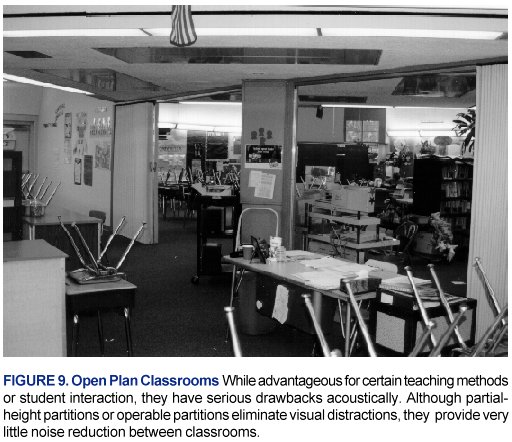
But school design and user experience have hardly ever been joined. Even the John Dewey influenced schools with all the doors to the outside of the 1950s and 1960s (really just a recall of William Alcott's ideas of the 1830s-1840s) were taken from the architects by school administrators who never asked the kids how these spaces could be used. And the "failure" of the 1970s open classroom school buildings was never a failure of architecture, but a failure of almost every adult who worked in those buildings to comprehend the idea of "user experience" - they tried to run Henry Ford's 1913 assembly line in a renaissance studio.

Simply put, the reason we find ourselves stuck in Industrial Revolution Era schools, the reason school success in the United States has only crawled from the 1850s adult design of succeeding with 20% of students to our present succeeding with 33%-40% of our students, lies in our inability to begin to match the User Experience of education to what we really want education to accomplish.

Third graders create their computer lab
So, what do we want for our children? If we want them - all of them - to grow up to be critical thinking global communicators who can investigate and succeed with the widest range of choices possible... effective citizens of democracies able to collaborate with each other and make a better world... voracious creators who absorb stories and information and use all that to dig out the problems which bedevil us and build solutions to those problems... empathetic, healthy members of a planet, a society, a tribe, and a family... well... what is the design of our schools - again, spaces, schedule, pedagogy, curriculum - contributing to those goals? and what is doing the opposite?
Working voluntarily and comfortably, in many ways
Last week we turned to our users to try to understand. We asked 500+ "elementary" school (primary, grades K-5) students - all the students of one school - to participate in a charrette to help begin to design the future of their school. We did show them a few images to begin to free them from "the understood," but we worked really hard to limit any adult influence on this work. We adults have seen so many schools, and we "know" way too much - especially about what we think is impossible - and we needed kids to show us the vision they would build with their unblinkered eyes.

We got many, many ideas - from Kindergärtners wanting cow tables and a castle with a dragon (what good is a castle without a dragon anyway?), to multiple requests for rooftop reading decks and reading treehouses, a cafeteria softserve machine, a soft student lounge, rolling science labs, movable cubes to read/work in, carpets, bean bag chairs, more outside doors, a big slide to get between the upper and lower playgrounds (ending in a trampoline or not), more art, gym every day (they currently have it four times a week), a zip line to get from one end of the school to the other, far more color - and kid-relevant color - in the school, a "giant robot bluebird which would walk the hallways saying hi to students," and choice - choice - choice...

Third and Fifth graders at work in Charrette, we had paper, and we had video cameras
they could explain ideas to...
Choice in classroom seating (or choosing not to sit), choice in tables/worksurfaces, choices in how to read books, choices in when to do what, choices in working inside or out, choices of where to play, and the choice to do work in school - with their peers - not at home with their parents.

The ideas spilled out in all directions...
None of this is absurd. None of it. Why can't kids get softserve frozen yogurt after lunch? Why can't the school build a castle and a dragon with the 5-year-olds? Maybe a zip line could cross the playground? You'd have to be a pretty weak teacher not to be able to use that in teaching many parts of the curriculum. When I mentioned the robot bluebird to Melissa Techman, one of my favorite school librarians, her immediate response was, "that's why I need those big cabinets I want so I would have all the stuff to build that kind of thing all ready."

And why can't school teach constant, continuous, internal feedback informed choice? How else can we help kids grow up into citizens of a true democracy, and able to make choices which work for them as adults?

Fifth graders eat lunch and debrief the ideas - "what will grownups say no to, and
how do we argue with them?"
Essentially, if I took in the vast amount of ideas and grouped them quickly - they wanted choices, comfort, warmth (many requests for wood floors), the ability to be outside, better lighting (dimmer switches, lamps), and places to both work together and to get away to quiet. They wanted to explore the world not just read or hear about it. Plus they wanted a school that was fun and that they looked forward to entering every day.

Anything radical there? Anything which really isn't part of our kids learning how to be the mid-21st century citizens and humans we want them to be?

Our next steps seem like a curriculum built in a great dream - some kids will inventory the school and grounds - what do we have now? how do we use it or not? Others might label the trees and plants around the school. Some might consider how a swing becomes a place to teach physics and math and perhaps poetry and decide how that might work. Still others might work over the idea of what might be quick, and what takes big resources and thus more time, along with what might be easy - and what might be very hard.

And we think the end result will be a better school, better learning, and kids with more skills and more capabilities. Which is what we want our user interface to help create, right?

- Ira Socol

12 September 2012

How to talk about what we don't have words for...

Language limits us. Surely, written and spoken language limits us, written, perhaps, most of all.

That isn't a knock on language, an incredible tool - technology if you will, which has enriched the lives of humans in remarkable ways. But every tool has its limits, has things it cannot do. Even my "Sawzall" really isn't even that, and its a crappy hammer by any measure.

So, at times, we must reach beyond language, with ourselves, surely with our students, and see if we might liberate our brains.

2001 A Space Odyssey - Arthur C. Clarke and Stanley Kubrick don't use "language" to
describe their tablet computer device, well, not word-based language
Next week we're going to attempt a charrette on the future idea of school with an elementary school in Virginia. A charrette including all students from age 5 to age 11, with a mission to imagine far beyond the concepts of "school" we all know.

our imagination can look a lot like the past,
a 1958 TV version of 2050
But how do we free these kids from what they know? That's not an easy thing. In all the science fiction I have seen from before 1980 only two authors, Arthur C. Clarke and Douglas Adams imagined anything like the computers which have come to be. Everywhere else we see analog dials, old radio-style tuners, and 1950s shaped TV screens. Yes, Star Trek had slide controls, an idea which came from theatre lighting controls, but its pretty much like today in education, where people speak of "the iPad (2010) as the future," because they have no words for what is coming next.

So, if we say, "a place for education ten years from now," how do we avoid the deeply constructed definitions we now have about "school," the "school day," the "classroom," and everything else?

We all know what a trap these definitions are. Lots of supposedly intelligent adults moan and groan in whatever forum will give them space about "kids today not reading" because they cannot comprehend "reading" as anything not associated with the Gutenberg-Era definition of a book. Many school librarians still think that if "it" is not traditionally edited - if it might contain contributions from the 'academically unwashed' - "it" is not valid. Many teachers - most state legislatures - the US Department of Education - believe that a report must be "written" to have real value, and that "knowledge" is not "knowledge" unless it can be expressed via a multiple-choice exam. Plenty still believe that I cannot read because I listen to books.

The library at the College of William and Mary is still fighting Wikipedia,
which, is not a "book."
And let's face it, if you really can't understand crowdsourcing (the present), how are you going to imagine the next thing? If you can't imagine the classroom without student (or teacher) desks, how do you imagine - or even understand a description of - what the students of 2020 will need? If you still think "tardiness" or "late assignments" are a problem, how can you comprehend the evolution of continuous learning?

Always a problem: In 1900 the French imagined some radical changes,
but the classroom looks suspiciously similar (now and then).
Thus, I hope we can get these kids up and moving, talking, writing, drawing, moving blocks, moving furniture, making, playing, drawing in the dirt - a sandbox? really... - singing, dancing, doing whatever they can to give understanding to their imaginations, so we will not be limited to the ideas we already have words for. For if we already have the words, the ideas are not really new, right?

This is our challenge. Imagination without the limitations of our experience might be the single most difficult thing a human can do. But if we can help our kids do it, their school experience will be worth the time they've invested in it.

- Ira Socol

14 August 2012

One Ethos, Open Culture, Many Paths, Many Tools

"Ethos is a Greek word meaning "character" that is used to describe the guiding beliefs or ideals that characterize a community, nation, or ideology."

A Twitter conversation led me to this place. What does a place of learning need to welcome all, to offer all the kinds of paths to the future which our children need?

I settled on a set of four thoughts: One Ethos, Open Culture, Many Paths, Many Tools.

If that is the belief system, I think that the rest - the pedagogies, the spaces, the schedules, the ways we treat each other, and the kind of deep, inspired learning humans deserve - will follow.

One Ethos

High School Math Teacher (1996): "That damn kid, he's rather go to Saturday School than come to my class."
High School Librarian (replying): "Well, you'll have to think about that!"

Why would a student come to your school, if she/he were not forced to? This is a question you must ask every day, as every teacher ought to ask, Why would a student come to my class...?

What does your school, as a whole and in every space inside, offer children? Safety from unsafe families or communities? Food which otherwise be in short supply? A chance to hang out with their friends? Do they come for just one teacher, or only because of music or sport? Is that good enough for you?

These kids of questions are rarely asked in American education, though we fill millions of square feet of wall space with "mission statements" and "learning goals." We just don't ask, "What is this school for?" In fact, we avoid that question so deeply that last January the US President got up in front of the nation and actually suggested that the solution to high school dropouts was to make dropping out illegal. Talk about giving up...

So why? What do you - as an entire school - offer every student that would make them come if compulsory attendance laws and the parental need for babysitting disappeared? Would they come because they understand that your school is a safe and happy place in which they are offered a world to learn in a somewhat less-risky-than-real-life situation? Would they come because they are excited about what they invest in when they walk through your doors? Would they come because they find the push to discovery, learning, and growth to be inspirational instead of coercive? Would they come because you offer a great collection of paths to an independent future? Would they come because you offer a laboratory for democracy and life - that you are - all together - creating a future better than the present?

I cannot tell you why... but you must find this answer, and that answer is the ethos your school must embrace - universally.

Open Culture

I'm not against the"Common Core" because I'm a crazed postmodernist. There are other things I'm against because of that. And I'm not against the "Common Core" because I doubt the need for us to share some commonalities of knowledge.

I'm against the "Common Core" because it is neither "common" in my experience nor is it generally at the "core" of what people need. Instead it is part of a long history of education as Pygmalion - to use George Bernard Shaw's lovely mythological metaphor.

"None of this is new. "Established in 1914, the Ford English School taught the company’s immigrant workers more than just how to speak English. It taught them about American culture and history and instilled the importance of such virtues as thriftiness, cleanliness, good manners, and timeliness." There has always been a tension in the United States between the expressed ideal of a multi-ethnic, multi-cultural society - you know, that brilliant combination of ethnicities in any World War II film - and the reality on the political ground, which is that "our leadership" would find things "much easier" if we were all "white, protestant, straight, northern Europeans,"' I wrote more than a year ago, while pointing out that even that belief is a lie, a cover for something else, that is, if school is about being a "white, protestant, straight, northern European," it guarantees that those now in power will watch their children begin school with an insurmountable lead on everyone else, thus assuring social reproduction.

People think the "Common Core" is inclusive because teachers can choose books, but in this, they miss the point. The "Common Core" is "white protestantism" because of the values it suggests while pushing all children to meet Middle Class Age "Appropriate" Learning Targets - or in their carefully crafted words - "provide teachers and parents with a common understanding of what students are expected to learn. Consistent standards will provide appropriate benchmarks for all students, regardless of where they live."

What if it doesn't really make a f---ing bit of difference to my kid's, or my community's, life, if my 7-year-old doesn't... "by the end of year, read and comprehend informational texts, including history/social studies, science, and technical texts, in the grades 2–3 text complexity band proficiently, with scaffolding as needed at the high end of the range"?

Pygmalion, why are you superior? 
Could my 7-year-old spend that year investigating physics with balls and paper airplanes and by building bridges instead? Or learn to speak the languages which might surround her in our community? Or learn measurement concepts by learning to cook? Or might he just want to listen to, and tell, stories? Or, as was the case of my kid at that age, was he far more interested in adult reading and music than in the "grades 2-3 text complexity band"?

In Finland, much of Scandinavia, kids don't even begin school until they're 7-years-old, and since the "Common Core" claims to be built on "best practices," and Finland tops those international comparisons, maybe the alphabet is the best cultural target. In Ireland I watched 7-years-olds from all over participating in classrooms with kids up to age 12, with all that subject matter, but mostly... participating by listening and talking.

A culturally diverse school is not about flags in the hallway or "welcome" written in a bunch of languages, its about being a learning space where kids get to negotiate how their culture meets the others around them. Where, say to begin, holidays are shared on equal terms, without pressure to either "opt in" or "opt out." Where time is respectful of cultural differences, whether it is Ramadan and Yom Kippur or "on-timeness" or "appropriate speed." Where communication is accepted and developed because it is authentic, not because it meets E.D. Hirsch's cultural expectations, and as it is developed, we all learn to communicate more widely, and we learn far more about communication choices.

A culturally diverse - a culturally "open" - school also refuses to grade by compliance to Anglo norms. It is not a question of why read For Whom the Bell Tollsinstead of The English Patient, but rather, the violence you will do to The English Patientif you try to analyze it and write essays about it "the common core way"?

Many Paths

Where is the student now? Where does the student want and need to go? What are the possible ways to get from point A to the much more nebulous point B?

There is really never one way to learn anything, to read anything, to write anything, to calculate anything. There are always choices, and there must be choices - unless we plan to never improve as a species. "Why is fastest better?" I once heard James Gee ask. "Why is the shorter proof better in Geometry? Why is it better to finish an assignment faster?"

Or why is a five paragraph essay better than a one paragraph argument? Or a ten page rant? If this were true Tom Clancy would be a better writer than James Joyce or Virginia Woolf or Colm Toibin, and (let me just assert this truth), he is not.


If all the rules were true, this wouldn't be great literature
Or, why should addition come before calculus? Or biology before physics? Or why is music composition less important than reading about Abraham Lincoln? Or why can't soccer practice count as math class? Is it about "rules," or is it because educators are not imaginative enough to help students pursue the world their own way?

It is way past time to stop imposing single solutions on our learners, Neil Postman and Charley Weingartnerrecognized the choices created by (then) new media in 1968 required teaching practice to radically change. You are now over 40 years late.

And that lateness has been horribly destructive. I am sorry to have to tell you this, but the majority of students leaving American schools at the end of 12th Grade (or before), will describe most of their education to that point as an irrelevant waste of time. That's because it is not "their education" at all, but something imposed on them by people who appear to have nothing in common with them.

Many Tools

"Most of us lack all kinds of powers. I can't lift my car by the bumper in order to change a tire. That's what jacks are for. I can't add long columns of figures in my head. That's what calculators are for. Tools give us the ability to make up for what we lack in native powers." John Perry in the Wall Street Journal.

I believe in Toolbelt Theory, which begins with the concept that we humans are, perhaps above all, toolmakers and tool users, and that thus, in the education of our children, the most important thing we can help them learn is how to be very good at both. "After all," I tell people, "without tools humans are a very long way from the top of the food chain."

It is human to make, choose, use tools
Schools need to stop limiting tool use and equating tool use with "cheating." The tools of today are incredibly powerful, incredibly diverse, and create never-before-seen opportunities for so many students failed, consistently, by our one-size-fits-all education system, that we must embrace these tools, and help students learn to get the most out of the technologies which sit - or will sit - in their pockets. We can't do that by limiting, filtering, and blocking.

Right now, right from the first day of school, every student can read from paper, from a computer screen, from a tablet screen, from a mobile phone screen, or listen to their computer, tablet, or phone read to them, or some combination of those things. Right now, right from the first day of school, every student can write with a pen, a pencil, a stylus, their finger, a big keyboard, a little keyboard, a touch screen, or just by speaking. Right now, right from the first day of school, every student can communicate through text or speech, audio or video, music or art, with much of the world. Right now, right from the first day of school, every student can pull in information from anywhere on the globe, at any time - and truly - that is a skill you must help them learn to do well. And we can't do that unless the tools are present every day, all the time, so that we can all learn what works for each of us.

One Ethos, Open Culture, Many Paths, Many Tools. Because if education matters, it matters enough to do the right things for our kids.

- Ira Socol

10 August 2012

Short Thoughts for the New Year: Zero Tolerance for Zero

If we must have grades - and I would argue that grades, letters or numbers suggesting some percentage of accomplishment, range in actual value to the student from meaningless to worthless - then, at least we ought to have fair grades.

So here's a school year start plan for administrators. Let's have zero tolerance for any teacher ever giving any student a "zero" on a "one hundred point scale." In fact, if you use digital gradebooks, and in the US and Canada you probably do, go in right now and change the parameters to make this impossible.

The reason we cannot tolerate zeros? It is completely absurd to give any student a grade below zero on any assignment, test, or task just so the teacher can f--- up the student's semester and year. And zero is always far below "zero."

In traditional grading there is a 36 point scale, with "64" equalling "failed to meet a minimum" and "100" equalling "did I everything I told you to do." This equates to the classic US university "Four Point Scale" in which 0.0 is "failed" and 4.0 is "totally compliant." And no one at a university ever gets a grade of -6.4, because, well, that's ridiculous, as is any teacher giving any student a -64%.

A scale is a scale, and failure is failure, if you believe in quantifying failure rather than teaching with it. There is nothing - in any rational grading system - below failure.

Zeros are one of those brutal coercion tools some teachers use, and brutality has no place in our schools.

Hypocrisy Alert:

"Five Kent County high schools are requiring students who park on campus to be signed up for a sheriff's department program that notifies parents when teens are pulled over.

"The STOPPED program -- Sheriffs Telling Our Parents and Promoting Educated Drivers -- provides signed-up families with a stop sign sticker with a unique ID number. That sticker is placed on the windshield in the upper corner of the passenger's side.

"When a vehicle with a STOPPED sticker is pulled over, deputies report the reason for the stop to the Michigan Sheriffs' Association using the ID number, which then sends an email to parents regardless of whether or not the teen is ticketed."

or, as we might say, "OMG!"

Now, Kent County, Michigan has its problems with law and respect. After getting blasted by the state and the federal government for violating both minority group and disability rights in school suspensions, the Grand Rapids Public Schools (the county's largest school district), promoted the chief "suspender" to superintendent and vowed to continue to lead the state in kicking out the few students who haven't yet fled under Michigan's Schools of Choice law. (not a problem limited to one district in the county)

Voters in the Republican Primary just nominated a candidate accused of election fraud, and, of course, one school district there is famous for hounding a fabulous teacher to death because he got married. So little surprises me, but...

Whenever I see schools leaping onto the massive hypocrisy bandwagon, the "let's distrust all students" bandwagon, and even the, "let's usurp parental rights" bandwagon, I know the moral compass is way off.

For schools with no alternative parking options (which includes some of these), the right to, say, work after school is no dependent on a student giving away constitutional rights - that presumption of innocence. It is also dependent on giving away any right to privacy. If I attended one of these high schools, this rule would push me right out the door, permanently - and honestly, I think I'm a pretty damned good driver.

Why not just implant a GPS device under the kids' skin? Well, they'd probably like to do that. Most of these communities are incredibly unsure of their abilities as parents - so unsure of themselves and their morality that they automatically assume any child out of their sight will be doing "the wrong thing," so, again, no surprise, but...

I have another idea. I think that any adult involved in the school system - faculty, administration, staff, school board, should be subject to the same rule, except, in this case, every police stop will be reported to the students in their schools and to the newspapers and television stations. After all, mistrust is a two-way street.

- Ira Socol


08 August 2012

of handball and hurling, archery and inclusion


Team Handball, basketball without the height issues, equipment cost? near zero
Like many in the world, I've been watching lots of sport(s) this month. And as I do most Olympic years, I wonder why American schools spend so much money on so few sports for so few students.


Archery... why not? It might allow boys and girls to compete together,
it would surely allow kids who might use wheelchairs to play team sports with other kids.
This isn't an issue for schools elsewhere in the world who can rely on intact communities to support youth (and adult) sport(s), but in the United States it is a huge issue. In most communities I visit certain sport-activities receive massive funding from the schools, while most students miss out entirely on the benefits of this kind of physical activity joined to social learning.

As I used to say, often, when I was fighting for soccer programs for boys and girls at North Muskegon High School in Michigan - if varsity athletics have educational value they need to be available to every student who wishes to participate, if varsity athletics don't have that kind of educational value schools surely should stop including them in their programs and budgets.

Hurling, another relatively low-cost sport with high participation potential
(much cheaper in equipment costs than lacrosse, and without the negative role modelling)
My thought has always been this... the purpose of varsity athletics is participation, pursuit of the personal best, and teamwork. It is not - it cannot be - about American public schools needing to entertain an overweight population snacking on hot dogs after tailgating. It infuriated me that when I suggested that Penn State play football without fans, many said this was "unfair to the players." As someone who played sports few, if any, watched, I wondered, how sick is our academic athletics environment if the only purpose is externally-provided gratification?


Croquet... why not?
With this in mind I am always on the lookout for athletic opportunities which could involve a bunch of kids, especially kids usually left out, while using shared - not new - facilities (even if that cuts down some practice time for some other sports, which is a side benefit for everyone). If you have a pool, do you offer boys and girls water polo? If you have a field do you offer boys and girls lacrosse, hurling, field hockey, rugby (you might do both Rugby Union and Rugby Sevens)? If you have a gym do you offer boys and girls team handball, and team volleyball? If you have some space outside do you offer boys and girls archery, and croquet?


Women's Rugby Sevens. The equipment will not break your budget.
None of this will cost much, beyond a certain diversion of resources (including assistant coaching positions from some sports being shifted to head coaching positions for these new activities), except for lacrosse (and perhaps archery), equipment is cheap, and lack of many opponents is not a problem - a multi-high school or middle school district or division could form its own league, or just a couple of nearby towns could do this together. Remember, the National Hockey League played for 25 years with just six teams. It is still remembered as the glory days.

And most importantly, opportunities to redefine the school culture and climate will be created. There will be less of the elitism which inevitably surrounds the few "important" activities.

So dive into the list of Olympic sports, past and present, and see what opportunities your school can add.

- Ira Socol