Showing posts with label world trade center. Show all posts

08 September 2011

The Stories of 11 September 2001

In the posts below I, really we, suggest ways in which you can get your students thinking and writing about September 11th, and history, in ways which help them understand how their world is constructed.
9/11 in photographs, a Guardian multimedia piece
There are so many stories, and so many sources. Two newspapers stand out in collections your students can use. The Guardian's 9/11 Decade Archive is remarkable in its global and emotional breadth. The New York Times Learning Network has assembled many fabulous resources and ideas. Of particular interest for older students is the Guardian's short fiction project.

I believe in storytelling. I believe in helping students to become storytellers and story hearers. I believe in helping students understand why people tell stories, and how people tell stories. Because I believe that there are two things which truly make us human, our use of tools, and our ability to tell, understand, and appreciate stories.

So, with that in mind, here are links to the stories I have written about 9/11 and the World Trade Center. They are stories which struggle to say what I want say - and that struggle to find your words through multiple attempts is something I would hope you will let your students experience with their writing, their storytelling.

Morning Arrivals
(a World Trade Center very new and still quite empty, with artists lofts filling some of the space)
The Beach (in adolescence we experience spaces differently, and that is a good thing)
A River Runs Through It (trying to map lost places)
March Seventeenth (terrorism comes to New York, but life is a personal thing)
September 11, 2001: In Moments (trying to capture chaos in words)
Finding Ends (11/19/2001) (what is left after everything has happened)

But there is one more story. I had a friend. When we met I was a New York City cop and he was a busboy at Windows on the World on the 107th floor of One World Trade Center. He was a quiet guy who loved New York in every way. We were just about the same age, and yet, our histories were so incredibly different. And sometimes, late, late at night, we'd climb the stairs from that restaurant's kitchen up to the roof. Two World Trade Center had the observation deck, but this was just a roof anchoring a massive broadcast antenna which still made this the World's Tallest Building. And we'd lie there on the roof, suspended between the city and the stars, and we'd tell stories.

Later, I moved away but he stayed. Became a waiter. And was at work that morning.

- Ira Socol

07 September 2011

September 11, 2001: History Remembered, History Forgotten

Teaching "9/11": Why? How? (The New York Times Learning Network)   
Remembering September 11, 2001
      Iconic Absence       Knowing History
Lessons developed with Dr. Pamela Moran - Albemarle County Public Schools
with thanks to
The New York Times Learning Network - Holly Epstein Ojalvo and Katherine Schulten


One way of looking at the history of September 11, 2001 is to look at how history is constructed. Some events which seemed huge in their time become forgotten. "VJ Day," the day that Japan surrendered to end World War II was a massive holiday when it happened, but now very few in the United States or Great Britain could name the date.
On the other hand, sometimes an event which goes un-noticed at the time it occurs becomes mythic. Birthdays of famous people are one example. So history is a question of storytelling. And to explore this, here are six historic events groups of students might explore.


Exploring the creation of history...


The stories of September 11, 2001 are very recent in the minds of most Americans, and they are still being formed in political and cultural debate, but other attacks and catastrophes from times past might give us clues to how history is created through storytelling.


How do we understand a previous event or why is an event no longer recalled? Might the event have impacted your community in some way, or the families of other students? How did things change or not as a result of the event? If we were writing history, how would we decide whether to include the event? If not, why not?

In our groups we will consider and investigate how the stories of these other events were “constructed” and how those stories have changed - in the telling and importance - over time. Do different groups within the United States remember those events differently, and how do those differences affect the way we think and what we do? As individuals and as a community or a nation?
The design of the National 9/11 Memorial at the World Trade Center.
The memorial is currently under construction. Pools with waterfalls
mark the centers of the location of One and Two World Trade Center
What kinds of questions can we ask about these events? How will we research how such events might have touched their own families and community? How will we tell the stories we learn to all the other students, from different places, in our groups?

We will start to explore the past as historians do. We will begin by looking for stories and images from the time of the event, and then we will look for stories told afterwards. You and your groups will begin to decide whether what you find is reliable and confirmable (verifiable) information, not just an opinion. You will try to find out about the authors of the stories. Why did they tell or write these stories?

We will think about all of ways that events are recalled, and we can do this by accessing global news sources. Newspapers carry many kinds of stories around big events, including retrospectives. Comparing what seemed important on the day an event was first reported with coverage years later will help us build a sense of how history is written, and how that writing changes over time
.

Moment 1


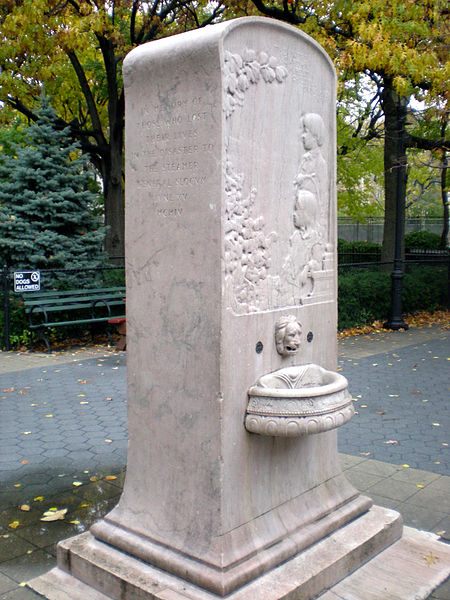
General Slocum Fire. 1,021 died on June 15, 1904 when an East River (New York City) excursion steamboat, filled with church group family picnickers, caught fire. This fire caused people in the United States to think deeply about safety in public transportation.

Wikipedia Popular Culture General Slocum Articles 
(portrayals of event in books, films, etc)
On this Day
The New York Times Primary Source  


Manhattan Melodrama
(1934 film including fire on this ship)


Above: The General Slocum in New York City's East River
Above: The General Slocum after the fireBelow: the New York World

Moment 2


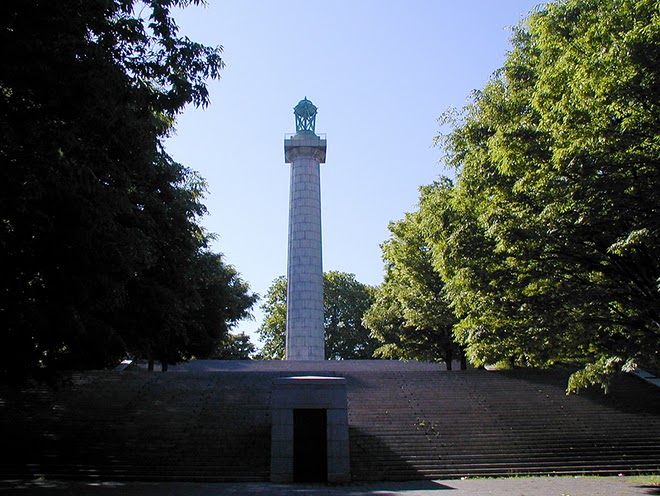
The Prison Ship Martyrs. Over 11,500 American soldiers and sailors who had been taken prisoner during the Revolutionary War died in what were early “death camps” aboard ships in Wallabout Bay on the East River in Brooklyn (what later became the Brooklyn Navy Yard). Anger in New York was so great that New Yorkers celebrated the day British troops left at the end of the Revolutionary War for more than 100 years (until the beginning of World War I). To celebrate they burned British flags.
(image: the Prison Ship New Jersey)

The New York Times on Prison Ship Martyr’s Bones (1908)
The New York Times on History of the Prison Ship Martyrs (1900)
The New York Times Remembering the Prison Ship Martyrs (2008)
The New York Times Student Connections

Video of Prison Ship Memorial (YouTube)


Prison Ship Martyrs’ Monument, Fort Greene Park, Brooklyn, NY

Above: Wallabout Bay showing the shore around the time of the American Revolution (can you find the current area on Google Maps or Google Earth?).  Below: The Brooklyn Navy Yard around 1850 (can you find pictures of "the yard" during World War II?)

Moment 3

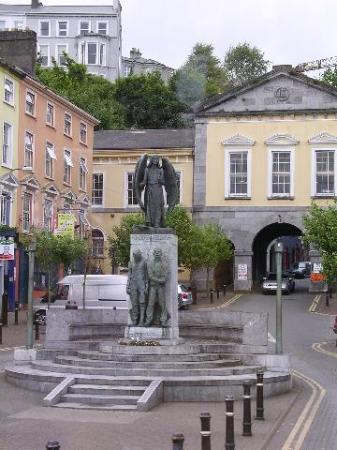
RMS Lusitania
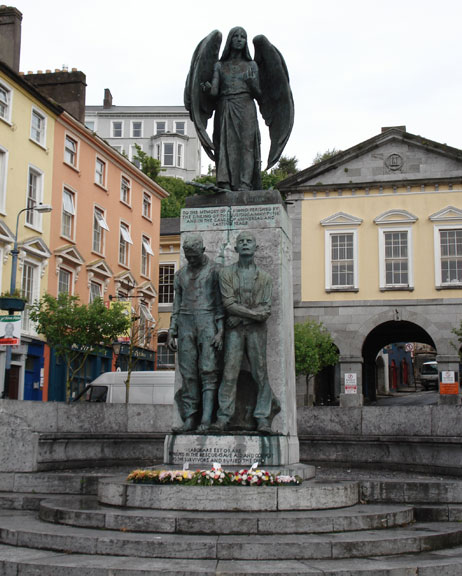
. 1,198 people, including 128 Americans were killed when a German submarine torpedoed the British ship Lusitania near Ireland on May 7, 1915. The ship had been travelling from New York to Southhampton, England. The sinking had a major impact on American opinion about the “Great War” going on in Europe, and indirectly led toward US involvement in World War I beginning in 1917.
The New York Times
front page from the day after the ship sank
.   

American Memory from the Library of Congress


Video about Sinking of the Lusitania (silent short film, 1918)


Above: the Warning issued by the German Embassy in Washington, DC before the sailing.  Below: the Lusitania, the world's fastest ship (of the time) in a postcard
Below: A 1916 newspaper diagram of the sinking

Moment 4

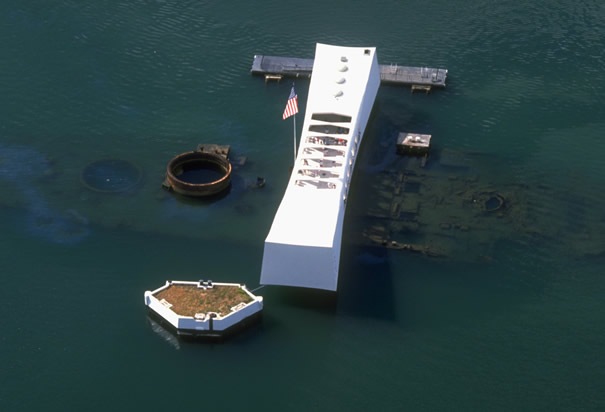
Pearl Harbor
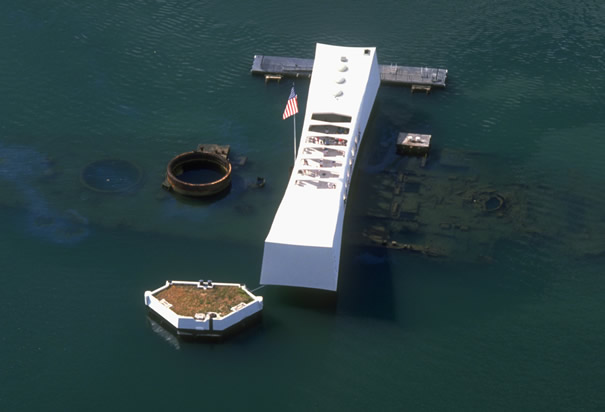
. 2,402 Americans, mostly military personnel, were killed in an attack by Japanese aircraft on Honolulu, Territory of Hawaii, on December 7, 1941. Within 24 hours of this attack two other US Territorial Possessions were also attacked by the Japanese Navy, Guam and the Philippines. These attacks and Japanese attacks on British controlled territories in Asia linked the Japanese wars against Korea and China to the war raging in Europe since 1939 and created “World War II.”

The New York Times front page (December 8, 1941)
FDR Speech December 8, 1941 
Pearl Harbor Wikipedia Entry  


Pearl Harbor (YouTube movie, 2001 excerpt)


Above: USS Maryland (left) and USS Arizona (right) on December 7, 1941
Below: Ships at Pearl Harbor December 7, 1941


Below: New York World-Telegram December 8, 1941
Moment 5

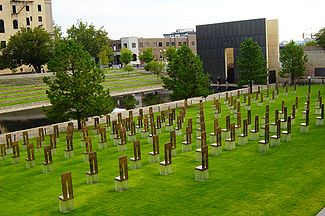
Oklahoma
City
. 168 Americans were killed on April 19, 1995 when two American citizens, men with extreme views about the government exploded a truck bomb outside the Alfred P. Murrah Federal Building.

The New York Times front page
(April 20, 1995)
Presidents Speak to National Tragedies
: Johnson, Reagan, Clinton, Bush, Obama (The New York Times video footage)
The New York Times Bill Clinton 15 years later
(April 18, 2010)


Above: heavy equipment brought to search through the rubble in Oklahoma City Below: the Baltimore Sun April 20, 1995

Below: Timothy McVeigh

Moment 6

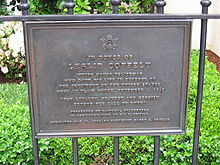
The Attack on Blair House
. A White House Police Officer was killed when two terrorists attacked the temporary home of President Truman on November 1, 1950. This assault on the American Executive Mansion (the White House was being reconstructed at this time and could not be used) was conducted by people seeking full independence for the United States’ Commonwealth of Puerto Rico.

The New York Times
Attack on President Truman
(November 1, 1950)

Wikipedia Entry on Blair House Attack
  

Protest at the White House
 

The New York Times
Remembers Attackers of Blair House
(February 23, 1994)


Attack on President Truman at Blair House (newsreel, November 1, 1950)

Above: Blair House in 1951
Below: One of the attackers lies dead

How will September 11, 2001 be remembered in 50 years? in 100 years? in 200 years? In 2111 will people wonder about the memorial now being built?

- Ira Socol

September 11, 2001: Iconic Absence

Teaching "9/11": Why? How? (The New York Times Learning Network)   
Remembering September 11, 2001
      History Remembered, History Forgotten       Knowing History

Lessons developed with Dr. Pamela Moran - Albemarle County Public Schools
with thanks to
The New York Times Learning Network - Holly Epstein Ojalvo and Katherine Schulten

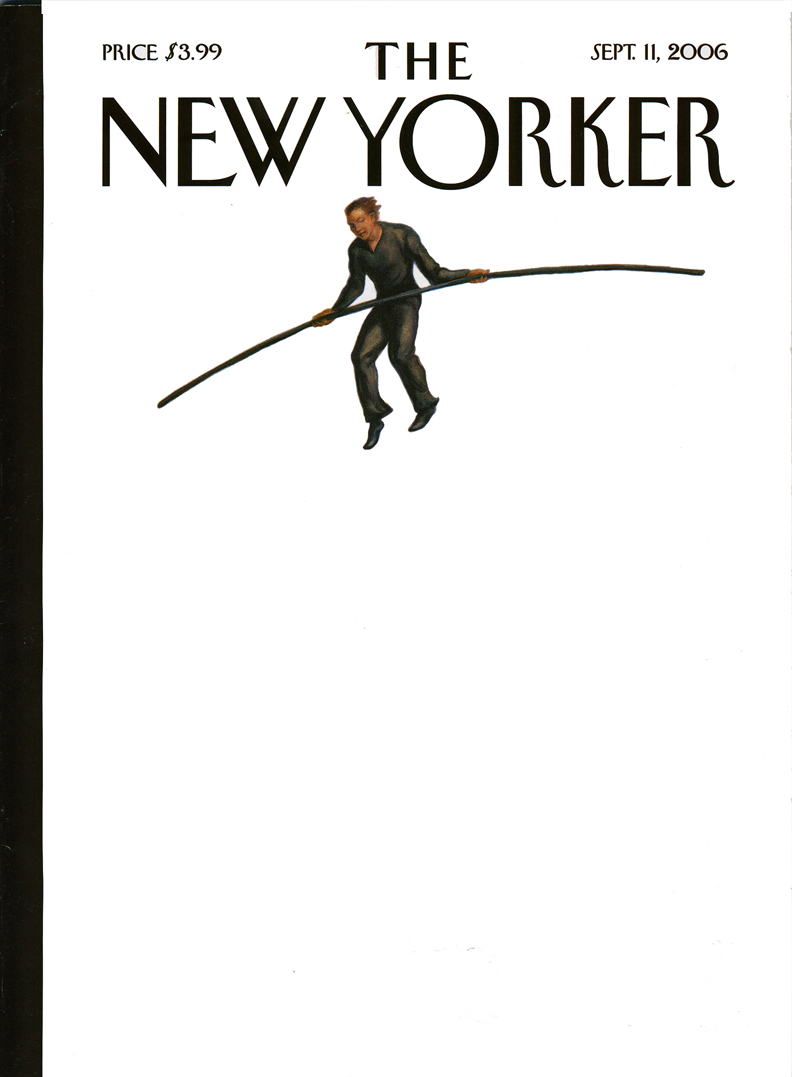
The New Yorker cover on the fifth anniversary
of September 11, 2001
“I am talking about the skyline because it has become very clear to me that while the horrendous loss of life is of course first and foremost in peoples' minds, the affection that people had for the skyline follows pretty closely behind. People really did care about the skyline as an object. They did not see it only as the sum total of the buildings. They saw it as a thing unto itself, and it was the violation of that thing that has so shaken people, including many - myself included - who did not necessarily feel any great affection for the World Trade Center towers themselves as objects of architecture.” - http://www.paulgoldberger.com/lectures/9

For many New Yorkers a physical sense of loss dominates their memory. The World Trade Center had anchored the skyline of the city since the late 1960s, and was visible from much of the city. It had become iconic, a symbol of the city, an essential part of daily life, and part of the self-image of New Yorkers.
Consider just the thousands who would gather each sunset along the "Promenade" in Brooklyn Heights, to see the sun fall into the western sky between the Statue of Liberty and the towers of the Trade Center. In that hour, Yamasaki's towers would first glow golden, and you could see the light pour through their columnless and mostly wall-less interior, and then they would assume their night time role, twinkling with the millions of lights inside. Or all those who rode trains or drove into the city each morning, watching the towers again glow golden in the sunrise, before settling into their daytime silver.


“For as long as I can remember, the World Trade Center has been a part of my consciousness.  I grew up in New Jersey, and my father commuted to downtown Manhattan every weekday, via NJ Transit to Newark and then the PATH to the WTC.  Even if I’d never visited there myself, the towers were still plainly visible from Newark Airport, from a large stretch of the Turnpike, and even from a lookout point in the Watchung Mountains near my home.” -Willis Boyce 

So, what "remains" when New Yorkers over a certain age look up from Brooklyn, or down Manhattan's Seventh Avenue, or east from New Jersey, is a ghostly absence. This New Yorker is even trying to build an "augmented reality" smartphone app which will show visitors how the towers looked.

When so many died, it may seem odd, or even insensitive; to discuss buildings, but the image of any community is important. How does a place deal with landmark loss? Why might it be very important to many New Yorkers to have the site rebuilt, to have, once again, towers of that size? Some New Yorkers wanted to reconstruct the World Trade Center, as the Pentagon was reconstructed after September 11. What would you think of that idea? What landmarks define where you live? Have any local landmarks been lost?

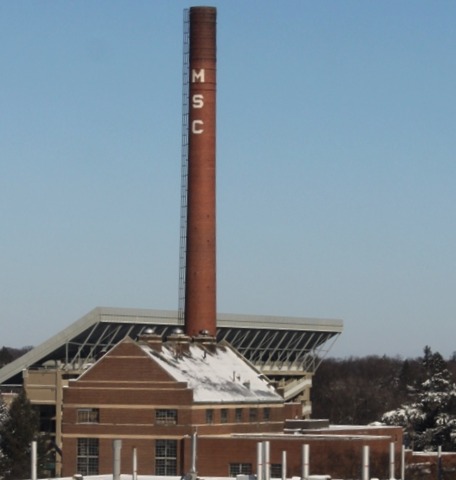
These are not unimportant questions. From water towers to grain elevators, church towers to giant chimneys, big schools or big office buildings, certain structures come to define our communities. Consider the Space Needle in Seattle, St. Paul's Cathedral in London, the Golden Gate Bridge in San Francisco, the Water Tower in Chicago, the Eiffel Tower in Paris. But also think about the old grain elevators which dominate the waterfronts of many cities (this one in Buffalo, NY) and the centers of many small towns. Or just an old smokestack, such as this one which rose above the football stadium at Michigan State University.

So, as they explore the many meanings and impacts of the events of September 11, 2001, students may want to search local history to find their own lost landmarks; they may go out and photograph locations where landmarks once existed. This delves deeply into the psychology of history. How will they search for reports of how locals felt when these landmarks were lost? What is the memory now?

An exciting next step for students would be to create QR codes to tag locations in their community. These QR codes might lead to images of landmark views of the past, or to interviews with those who remember the landmark, or to stories about the landmark.

How to make your own QR codes The New York Times
QR Codes help tourism
QR Code Tours of New York

Making QR Codes: Resources
http://qrcode.kaywa.com/
http://www.qrstuff.com/
http://delivr.com/qr-code-generator
http://keremerkan.net/qr-code-and-2d-code-generator/
https://market.android.com/details?id=excelsior.qr.generator
http://qrdroid.com/generate

Possible associated viewing, the film Man on Wire (2008)

- Ira Socol