Showing posts with label school architecture. Show all posts

01 April 2011

Why space matters

A very long time ago I was a young architecture student in Brooklyn. Pratt Institutes's School of Architecture was, at that time, a wild, ungraded, non-competitive place with no dominant style, and only, perhaps, a commitment to contextualism and social justice holding it together. One night they showed The Fountainheadand the the audience in Higgins Hall booed Howard Rourke/Gary Cooper intensely at the end. Ayn Rand's selfishness would find no footholds in the Fort Greene of the 1980s, but I digress...


In a design studio one semester we were greeted with a poster announcing a contest to design "The McDonald's of the Future." At first this seemed frivolous - we had been working on things like libraries, hospitals, the Vietnam Veterans' Memorial - and now? Fast food?

But encouraged to take it seriously I began an investigation which changed my sense of design forever.

I grabbed a sketchbook. And with that sketchbook I wandered through every fast food restaurant I could find. The urban storefront ones in downtown Brooklyn and the standardized suburban restaurants. I also plumbed my memory, thinking of that "first" McDonald's on US-1, and the trips there in the old Rambler. All of us eating in the car - there was no inside. And thinking of one winter night, stumbling off a frozen Interstate 96 in Brighton, Michigan - hitch-hiking between East Lansing and Ann Arbor - and finding the warm glow of a McDonald's on the horizon.


The original McDonald's design, success through subtraction
I realized that no building I had ever seen was more "purpose-built" than a McDonald's restaurant. Everything, absolutely everything, was design to (a) lure you in, (b) make you hungry, (c) get you out, and (d) make it easy to clean up after you. Other fast food buildings of the time, though often pretty good at expressing their differences (Wendy's were carpeted with those plastic Tiffany lamps - attempting to say "upscale," Burger Kings were "woodier" - more "adult"), didn't come close.

Example: All the Burger Kings of the time had their service window just inside the doors, on the left as you entered, with "dining" space on the right. All "new" McDonald's of the time (those 'post-Golden Arches') had the service counter in the back. If you drove, or walked, past a Burger King you saw people waiting in line, if you you rode, or walked, past a McDonald's you saw happy people eating.

Example: The McDonald's of the 1980s might be garish inside, but it glowed yellow - a warm glow of childhood memory - to all of my age who had discovered it as children. Burger Kings and Wendy's looked dim from outside. Fine if you were headed to a pub, but... And why did we have such great childhood memories? Not because of what McDonald's had added to the American Drive-In, but what was taken away. The restaurants which went global under Ray Kroc eliminated four 1950s/early 1960s mainstays which attracted crowds of rowdy teens - the car hops, the juke box, the public phone, the cigarette machine - and thus made "Micky D's" the place families went.

OK, this isn't really about McDonald's. It's about your school.

What is your school designed to do?


The typical American school follows the design parameters laid down by Henry Barnard in the 1840s. He took the school room as designed by William Alcott two decades earlier and assembled it into a factory for learning. "Double-loaded" corridors created an assembly line for the Prussian System of learning according to chronological age - further separated by room (secondary) or by the clock (primary) into discrete areas of study. "The Facher system, as it is termed in Germany where it is most popular, consists in employing separate teachers for separate studies, or as we should apply it here, for distinct departments of government, and of instruction. This is the principle on which instruction in our colleges and most of our higher seminaries is given, and is in reality the mixed method carried to its highest perfection. The vital error in our common schools, as they are now organized, is the practice of employing one teacher for the government and instruction of fifty or sixty children of every age, of both sexes, in a great variety of studies, and in different stages of proficiency in each study." (Barnard 1848 p.80)


Barnard is very specific: "The school-room should be a parallelogram, the length about twice the breadth." (p. 81) "The lower parts of the windows should be at least 6 feet from the floor, in order that the light may not be inconvenient, and the walls be at liberty for the reading lessons, etc., which are to be attached to it." (p.81) "The center of the platform is the place for the masters desk; and on each side there may be a small desk for the principal monitors." (p.81) "The entrance door should be on the side of the platform, in order that visitors on entering the school, may have a commanding view of all the children at once." (p.82) "Over the black-board, are the printed and written alphabet, arithmetical and geometrical figures, the pauses, &c., for copying or general exercise." (p.95)

Barnard describes everything, from desk heights to symmetry in entrance halls. He establishes the need to truly separate the classrooms from the play-grounds. He installs blinds on the windows. Thankfully, he sets ventilation requirements. And, in so many ways, the schools he describes are those we have today.

What are your schools designed to do?

The last time people really tried to re-imagine the American school building it produced the "open classroom schools" which are now all carved up. These schools were built around big open spaces designed for between 100 and 150 children, which can be brilliant, unless, as all these schools attempted, you try to run 4 or 6 traditional classes in each giant space. Teachers tried to do just that, and the "open classroom" - and school re-design - got a bad reputation because of a complete failure of school leadership to re-imagine learning.

But it is time. Today, from the first moment your kids arrive at school we divide them and organize them. We tell them that the absolute priority is to get where they've been told to go on time. Should that be our first message? Today we announce to children that learning happens in a specific place - their specific place. That learning happens now, but not then. That learning is something which starts and stops according to Pavlovian training. Are those the messages we intend to send? Today we continue to divide children up, not by interests or passions, not even by specific capabilities as William Shearer (1894) wanted, but first by age and then - typically - by chance - you got this teacher and you got that teacher.

And then we line our students and teachers up as eggs in a crate. Isolated. Disconnected. If kids here are learning this, kids there gain nothing from it.

But our schools could be different. Take a look at these Danish schools... one newly built (top), one renovated (bottom)...


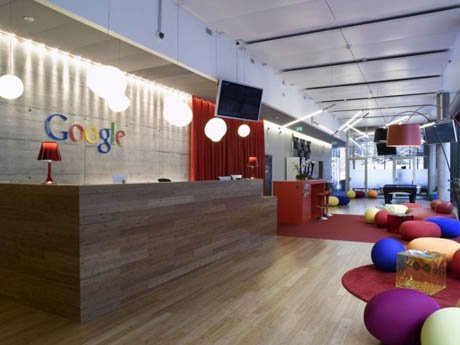
These schools send different messages, require different pedagogies, and create an entirely different sense of what learning means. They are not the schools of 1848 or 1898 or 1948 or even 1988, but then, our students are going to emerge into the world of 2018 and 2038, and if we look at workplaces even today - say Google or Quicken Loans or YNNO or Haworth or wherever, you will find that today's work environments don't much look like your schools either. Your schools are designed to turn out employees who work in offices like those picture in Jack Lemmon's The Apartment, or who work in factories best portrayed in Charlie Chaplin's Modern Times. Even the American universities we are supposedly preparing our children for long ago abandoned most of the nonsense... the rigid time schedules, the lack of recess, the required attendance, the assigned seating, the lack of choice which characterize huge parts of our school design. Can anyone besides our US President who has actually seen both a KIPP school and an Ivy League campus actual think that the former - in any way - preps students for success at the latter?

So take a walk around your school. Think, "spaces matter." Consider, even if you cannot reconstruct, how to re-imagine. Where can kids - of all ages - sit and collaborate in your hallways? Why do you have desks in your classrooms? Don't kids hate sitting there? Why do you have whiteboards mounted in one place? Wouldn't tablets or tabletPCs be better? Why do you have bells and discrete subjects? Shouldn't learning be integrated? Why do you have grades set by age? Aren't you eliminating both mentoring and the chance to rush ahead? Why would a teacher ever close their classroom door? Should learning be a secret?

Spaces matter because as human animals we all respond to our environments. And if your kids are all sitting at desks, if your classroom has a "teaching wall," you are back with Henry Barnard, you are creating children prepared for the world he wanted.

If that's not what you want, re-think, and re-design.

- Ira Socol

01 December 2010

Learning Space

Above is the best educational space in the College of Education at Michigan State University. Just off the building's entrance, in a heavily trafficked zone, there is this space overlooking the Red Cedar River. Behind "the photographer" is a coffee shop, and in this area there are booths and big tables and small tables, high tables and desk height tables. Regular chairs and bar height chairs. Bar stools. Benches, couches, and soft chairs. And a broad window sill to sit on. At the far end of the picture are quieter rooms with similar furniture mixes, including a couple of tables separated from other spaces by a level change. To the left, out of the picture above, is a small maze like zone of screens creating places for one to four people to gather quietly, and next to that, is an open zone filled with creation equipment - powerful computers and tools for video production, interactive white boards, giant monitors, etc.

This arrangement allows people to find their comfort zone, whether individually or as groups. It affords them "what they need" - whether that be fast wireless or "decent" coffee or a pita wrap or a doughnut or, yeah, a flip camera or a powerful scanner. You can have quiet and (a certain level of) privacy, or you can be loud and very public.

But most importantly, this space is an intersection. It is where people from every different part of the college bump into each other, meet, discover, talk, share. It is where silos break down and communities mingle and overheard conversations become opportunities for intellectual cross-pollination.

It is our "commons."

How different that is from our classrooms, our formal conference rooms. How different this is from the K-12 classrooms our students work in.

In 1832, when William A. Alcott wrote his "Essay on the Construction of Schoolhouses" and introduced the classroom-as-we-know-it, with desks and chairs all the same in rectangular rooms, he was advancing a certain idea of education, and a certain conception of society. He was trying to both make students more comfortable, protect female dignity, and support teachers. Alcott is no villain here, but we might think that (a) times have changed, (b) student needs have changed, and (c) our knowledge of the young brain and the learning process has grown in the 178 years since. Alcott, a keen observer, would - I think - be shocked to find his designs still central.


Alcott's classroom, 1832
This notion of "the commons" really matters, on so many levels. If your school is broken into little dis-connected rooms for discrete age-groups and subjects, if your classrooms are filled with one kind of desk and one kind of chair, you have created extreme limits on your pedagogical opportunities.

You have prevented much "peer" tutoring, you have prevented kids from joining ideas together, you have forced yourself into disciplining uncomfortable children, and you have blocked "natural" learning paths.

Remember, when Alcott created his rows of desks, at least his classroom already included all ages, dealt in all subjects, had no set time-schedule, and offered big windows looking outside on two-sides, specifically arranged to the natural sequence of the day would be obvious. Your classroom probably lacks many of those benefits.

Those are not the only ways in which we actually offer our students a "worse" experience than what Alcott was recommending:
"Again—no provision has been made for the pupils standing at higher desks a part of the time, because it is believed they may sit without injury for about half an hour at a time, and then, instead of standing, they ought to walk into the garden, or exercise in the play-ground a few moments, either with or without attendants or monitors. Sitting too long, at all events, is extremely pernicious...

"The relative position of each pupil should occasionally be changed from right to left, otherwise the body may acquire a change of shape by constantly turning or twisting so as to accommodate itself to the light, always coming from a particular window, or in the same general direction.

"If a portion of the play-ground is furnished with a roof, the pupils may sometimes be detached by classes, or otherwise, either with or without monitors, to study a short time in the open air, especially in the pleasant season. This is usually as agreeable to them, as it is favorable to health. A few plain seats should be placed there. A flower garden, trees, and shrubs, would furnish many important lessons of instruction. Indeed, I cannot help regarding all these things as indispensable, and as consistent with the strictest economy of space, material, and furniture, as a judicious arrangement of the school-room itself.

"Sensible objects, and every species of visible apparatus, including, of course, maps, charts, and a globe, are also regarded as indispensably necessary in illustrating the sciences. They not only save books, time, and money, as has been abundantly proved by infant schools, but ideas are in this way more firmly fixed, and longer retained. In the use of books, each child must have his own ; but in the use of sensible objects and apparatus, one thing, in the hands of the instructer, will answer the purposes of a large school, and frequently outlast half a dozen books."
In other words, we don't even afford our students today the best ideas of 1832, but a pale reflection of that design science.

So today we must do better. Today our students are much more isolated from society than they were in 1832. Today our students are not parts of big, multi-generational households with numerous siblings around them. Today our students do not play in village squares or farm-yards where all the news and sciences of the world are on display.

So we need not simply dispose of Alcott's rows, we must create Jeffersonian "Academical Villages" with the kinds of urban intersections and parks and coffee shops where people gather, get comfortable, and share human knowledge. We must allow - encourage - our kids to interact, to learn with each other, to collaborate and grow together.

Please, lets stop teaching in a bad replica of an 1832 learning space. We can do better.

- Ira Socol

23 August 2010

Who doesn't want great school buildings?

Architecture matters in education. It mattered when Oxford and Cambridge were built. It mattered when Jefferson designed the University of Virginia. It mattered in the 1830s when William Alcott first hoped school districts would build decent classrooms for their children. It mattered in the 1850s and 1860s when Henry Barnard recreated the American school building, hoping to make it seem important to students and community.

"Academical Village" at the University of Virginia, did architect Jefferson waste money making it beautiful?
I raise this because of this quote: "New buildings are nice, but when they're run by the same people who've given us a 50 percent dropout rate, they're a big waste of taxpayer money," said Ben Austin, executive director of Parent Revolution who sits on the California Board of Education. "Parents aren't fooled." about this school...
The new Los Angeles Robert F. Kennedy Community School (main entry, front, and performing arts center)
This school cost $578 million for a facility which will house 4,600 children 182 days a year for the next fifty or so years, or, as "California's Children" points out, $135,680.75 per student.

Or, as I might point out, just over than one-third the cost of the new Cowboys Stadium in Texas (used about 20 days per year) or less than one third the cost of the New Meadowlands Stadium in New York/New Jersey (used about 40 days per year). About the same cost as the George W. Bush Presidential Center at Southern Methodist University. Or, to be completely fair, for a bit less per person than the average Los Angeles price for a one bedroom home in the poorest part of that city.

Wow: Imagine wasting that kind of cash on our children.
Just a note about "Parent Revolution" - it is an "astroturf" (fake grass roots) "educational reform" organization primarily financed and coordinated by two charter school operating companies. It solicits contributions but won't even divulge who is on their board of directors.
My argument here will surely not be that the LAUSD does not need to do many things to improve their schools - starting with the State of California admitting that their "Reagan [tax] Revolution" has inevitably moved the state from the forefront of US education to someplace near the bottom. My argument is, instead, that schools - the facilities themselves - really matter. (see this old post, and this one)

Listen, my alternative high school was located within the RFK Community School of its time. An educational "Taj Mahal." New Rochelle High School has a planetarium, multiple auditoriums and performing arts practice rooms, an accredited museum, one of the most extravagant voc ed facilities ever built. A magnificent library, almost every conceivable bell and whistle, and it is beautiful - with extravagant architecture from 1923 to 2008.
New Rochelle High School (NY) - original design, front gates, view from across Huguenot Lakes, stadium and vocational/arts wing, arts and museum center.
And I am here to tell you that architecture matters. Walk toward that front door, and you knew you were coming to someplace important, someplace the community prized. Even if your inclination was to hate school, as mine was, the act of approaching and entering beneath that main tower was ennobling. Having the space and facilities to offer kids options makes a huge difference too. You may not have loved math class, but you had your orchestra space, art studios, planetarium, nursing school, auto paint shop, pool, wrestling room, theatre lighting booth - whatever - to make your day both your own and "OK." Inspiring matters as well. You could lie on the lawn which topped the front-side library, the towers of the building behind you, the lake and park in front of you, and your brain put things together, even if you were not in class.

It was hard to feel like a prisoner there. It was hard not to have a certain true pride in your school. It was even hard to be completely bored all day. If you made even reasonably intelligent course choices, you had to have good moments..

And The City of New Rochelle spent massively on this structure. Massively and repeatedly. Including choosing to reconstruct the original architecture after a devastating 1968 fire, as well as recladding the ugly 1950s additions during this century, in order to beautify the facility.

I'm convinced that this facility has been one prime reason that NRHS, a highly diverse urban school (New Rochelle has only one public high school, about 75,000 people live in the ten square mile city, it has a very large immigrant population), has kept itself among the top of the achievement heap in New York State over the past ninety years. (of course the district also has a very strong, engaged, teachers union - so that could be part of it too)

it's not all "Rob Petrie" and Ragtimein New Rochelle

So often we send our kids to school in concrete block bunkers, or collapsing old buildings, or uninspiring copies of 1956 factories. So often we tolerate, in our learning spaces, conditions we would not accept in our homes, in our restaurants, in our stores - much less our offices. So often we apply bizarre, twisted financial mis-information to our educational systems (if "the private sector" says it costs an average of $26,273 (US) to keep a student in class 15 hours per week, 32 weeks per year, what should we be spending to keep K-12 kids in school 35 hours per week, 40 weeks per year, plus transportation and special needs costs?). And it is time to stop all of that.

If education matters to us, as a society, we will make that apparent. We will spend what we need to. We will give our children great places to learn in. We will give them the technologies of our age. We will spend money to support continuous teacher learning. And we'll stop trying to get by on the cheap.


- Ira Socol

10 May 2010

everything we do...

Information and debates rolled across my Twitter landscape Friday night. Powerful questions and divergent answers. I was so struck by the quality of the conversation, and the fact that so many educators were up late on a Friday night worrying about how to improve on what is happening in and around their schools that, well, I could only be embarrassed for the likes of Arne Duncan, Christopher Christie, David Cameron, Wendy Kopp, even Barack Obama - those who make money or score political points demeaning teachers.

As I "listened" though, I began to think (again) about asking all the questions. Why do we do do everything we do?

Christian Long, Pam Moran and I began discussing school architecture, and the idea of classroom shape and the "teaching wall." And I asked why classrooms were rectangular, "didn't that shape," I wondered, "pulled from the architecture of the Protestant Church, create certain 'facts' in the classroom?'

Christian, a brilliant school designer, who tries to challenge everything, said, "all people/clients like "rectangles".  No example in nature.  Entirely a man-made concept. Suggests 'balance'/'focus'."


Yes, there is no example in nature. Yes, to Protestant Europeans and certain East Asians, the rectangular room does indeed suggest balance and focus. But is it a universally preferred shape for learning and gathering?

I've already written about a school which chose to switch to square classrooms with no "teaching wall." They even skipped the Interactive White Boards because they seemed to "focus" the classroom in one way. In human habitation around the world the square is much more common than the rectangle, or surely was. Squares are less "hierarchical." The point of focus is less obvious. And that may have had real advantages for human relationships and human learning.

But we can go back further. Humans really tended to start with circular spaces, from Bronze Age round thatched cottages, from North American tipis and kivas, to African village houses and Irish "beehive" monasteries.

What might a circular classroom suggest that a rectangular classroom does not?

What about a square?

What might those room shapes do to student perception, student participation, pedagogical form, student and teacher behavior?

There are, of course, other "learning environment" shapes. The Catholic Cathedral is a complex idea, filled with the kinds of "distractions" so despised by a certain (and self-admittedly completely uniformed) Protestant-trained power elite. "You're coming of age in a 24/7 media environment that bombards us with all kinds of content and exposes us to all kinds of arguments, some of which don't always rank that high on the truth meter," he told the students. "And with iPods and iPads, and Xboxes and PlayStations -- none of which I know how to work -- information becomes a distraction, a diversion, a form of entertainment, rather than a tool of empowerment, rather than the means of emancipation. So all of this is not only putting pressure on you; it's putting new pressure on our country and on our democracy." - Barack Obama

But then, the Catholic Mass has always been about teaching to the many intelligences in many ways - words and image, art and scent, movement and taste, and the mysteries of what lies behind that corner or that pillar. A style of teaching specifically rejected by America's Protestants, who built simple, hierarchical, text-centered and single "teaching wall" rectangles for both worship and education.

The rectangular room embraces one notion of focus... stair straight ahead, put down everything but that book, listen to one voice, there is only one way to learn. It was conceived - in education - for that purpose. And the rectangular classroom, like the notion that, "with iPods and iPads, and Xboxes and PlayStations -- none of which I know how to work -- information becomes a distraction," is a control system, and part of a method of limiting human potential.

We live, in most of our schools, with a system built on a few fatal assumptions. These assumptions are largely based in Reformation view of human development and the path to heaven. Children are, in our school design, inherently evil and ignorant - and so they must be controlled, managed, focused. Humans, in our school design, are inherently sinful and slothful - so, if their vision is not tightly controlled, they will do the wrong things. There is only one true path to salvation, in our school design, and so we must carefully lay out both the steps and the procedures - or our students will slip into perdition.

And we have lived with these assumptions for so long, we have - far too often - accepted them as "natural" instead of as the 16th Century political invention that they are. Of course. These assumptions define our educational environment, from our room shapes to our age-based grades to our grade-level-expectations and tests to our schedules, our blackboards or whiteboards, to the way - perhaps - that student seats rarely face the windows.

There are those who believe that the way to change schools is to change their management system to one based on profit. There are those who believe that the way to change schools is to stop training teachers. There are those who believe that the way to change schools is to go "back to basics." But for me, the way to change schools is to alter the assumptions which underlie them.

Because there is a counter-narrative. It is not unknown, rather it runs from Rousseau to Montessori to Dewey to Postman to Kohn. It runs from the Catholic Mass to the developing world village circle to the few field left where children play and learn on their own. This narrative understands human attention in a pre-Reformation, pre-Gutenberg way - when "multitasking" was, simply, being human. This narrative understands that we are all learners, and all instructors. This narrative understands that hierarchical spaces are not necessarily the best learning structures, and understands that human learning rarely effectively occurs "on schedule." This narrative thinks less about "molding" children into useful adults, and more about embracing human potential.

About five centuries ago Protestant leaders began building churches in simple rectangles. They stopped installing storytelling stained glass. They skipped instrumental music. They dropped the use of scent as an important sensory tool. The number of people moving in the front of the church at any time shrank from many, often to one. And they began to pass out books, as the essential learning tool. Books in which you were instructed which page to turn to.

And in our classrooms we too often live with all this still. We accept all this still. America's president is sure that information which comes from something other than a book or a teacher is "a distraction." Our architects assume classrooms must be rectangular. Our school administrators worry endlessly about students being "on time" for school and our teachers worry about assignment deadlines. We continue to expect children to sit still in far too many classes. And we rank reading and writing as more important than viewing art or creating music.

So, if you want to change schools - stop playing ball in John Calvin's court. Tinkering has gotten us nowhere. Perhaps changing assumptions will bring about change.

- Ira Socol

27 February 2009

Architectural Assistive Technology


A recent New York Times article on adjustable classroom desks which allow students to choose whether to stand or sit, ends with this teacher quote: “We’re talking about furniture here,” she said, “plain old furniture. If it’s that simple, if it turns out to have the positive impacts everyone hopes for, wouldn’t that be a wonderful thing?”

But it isn't "plain old furniture." Every bit of furniture in every classroom, along with every light-fixture, every bit of wall, floor, and ceiling covering, every window, the room shape itself, the hall outside... these are all educational decisions which we have made, and like every educational decision we make, these enable some and disable others, favor some and damage others, and help to create specific educational outcomes.

The classroom did not "just happen." In fact, it was quite directly designed. In 1832 William Alcott (yes, of those Alcotts) began a campaign to re-design the American schoolroom. He wanted to replace benches and long tables with individual desks and chairs with backs. He wanted a certain amount of windows providing a certain quality of light. In the early 1840s he became the leading proponent of the biggest changes in classroom technology, introducing teachers to the idea of using the new "chalkboard" and having the students use handheld slates because it allowed them to try writing, and to make mistakes, without wasting precious paper.

He was quite specific. In one article he discussed the feelings of some that, for maximum flexibility, at least one whole classroom wall should be painted as a chalkboard. But he warned against this, suggesting that would be "too distracting," and that it would be better if a neutral wall color was used "above and below the chalkboard in order to focus attention."

Are you reading this in school? Look around? See any changes?

Later in the 1840s Henry Barnard joined in, basically designing the American multi-classroom school in his book School Architecture (download and read away my friends).

These educational reformers were responding to very specific ideas of education at a very specific moment in time, as the United States attempted convert a large group of foreign-language speaking Catholic immigrants into Protestant thinking Americans who could begin to work effectively in the ever enlarging mills which were just starting to make America a nation which could largely depend on its own manufacture. These ideas were not aimed at the children of the nation's elite, who continued to either be privately tutored or to attend English style private academies, thus the architecture was not aimed at creating leaders or a creative class. Instead they were heavily influenced by the design language of the Protestant churches of America. Barnard's exteriors might suggest Catholic cathedrals, but inside the walls were straight (and usually white), the distractions minimal, movement limited, and all attention directed straight ahead.

So, what we often consider "natural," or "unquestionable," was once a decision based on pedagogical assumptions. It is not “plain old furniture," it is a designed learning environment.

So, should children sit in chairs to learn? Alcott thought so, but most kids I know would rather be standing or on the floor, depending on mood and task. Should display systems cover the walls? Alcott thought not, but lots of museums are starting to think differently. Should students file into school hallways so that they know they are 'in control'? Barnard thought so, though some school designers in the 1950s (and Californians) thought students might enter classrooms directly from outside. Should classrooms have uniform lighting? Early 20th Century school designers believed this, though most other interior environments show an understanding of the value of letting the human eye shift from dimmer to brighter and back fairly often.

I was once invited to speak to a class of high school students with learning, attention, and emotional "issues." We met in one of the school's Special Education rooms. Overhead ancient fluorescent lights flickered and buzzed. There were no windows. Instead every wall surface was covered with what seemed liked thousands of pictures and blocks of text in a hundred different fonts. The seats were in rows, but placed so that one group of students faced the side of the other students. Therewere four computers and and a television set. The TV was on, the computer screens all flashed multi-colored moving screen savers. "I just can't get their attention, they are all crazy ADHD," the teacher confided.

Outside that classroom the sounds of the cafeteria and slamming lockers echoed through uncarpeted, hard-surfaced corridors. The paint was old, the lighting grim. Further outside the building was an uninspiring series of brick blocks, surrounded by fencing and guard shacks at parking lot entries. Creative grafitti at one of those entry points had converted "West BlahBlah High School" to "West BlahBlah Correctional Center."

Now, I don't want the schools Henry Barnard wanted, but he was right: Everything about your school impacts your students - from when they approach the grounds to how they enter the building. From how they get to their locker to where they sit and eat lunch. From the light in your classroom to the desk to the carpet or lack of it. The sounds, the windows, the schedule - the fencing, the trees, the PA announcements. Everything about your schools impacts the students and helps to decide which students succeed and which students fail.

I am an absolute believer in classroom technology, you who read me know that, but remember, the first technology, the biggest technology, is the classroom itself, the school building itself. When we think of technology solutions, perhaps we need to start right there.

- Ira Socol